I have to say that, for an art exhibition, there are surprisingly few actual art works in Bonniers Konsthall’s The Defeated: The Aesthetics of Resistance 2026, an exhibition dedicated to writer, playwright, and filmmaker Peter Weiss (1916-1982). Weiss was, after all, both a prolific and gifted painter. Rooted in New Objectivity and Surrealism, the German emigré’s distinctive and dark visual world never really found its foothold in postwar Swedish art life, but it nevertheless became important as a point of reference – muted and unsettling, somewhat outside the bright mainstream. Weiss was particularly influential for many in the younger generation of Swedish artists who emerged around 1970 with figurative, politically engaged art.
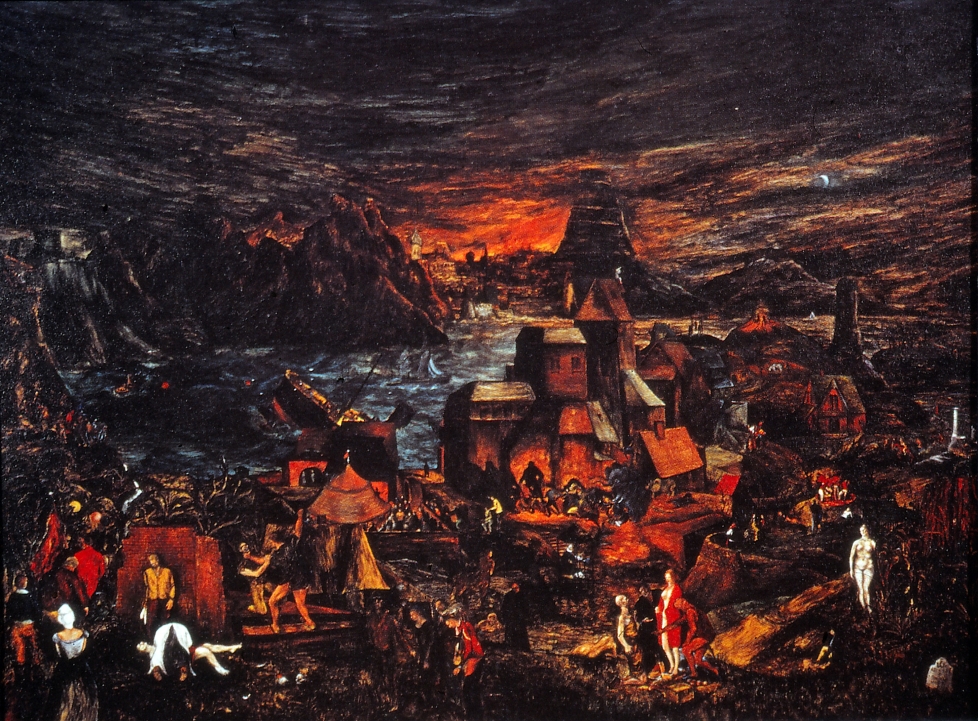
From this wealth of material, however, there is only a single example here: the teeming and powerful Das grosse Welttheater, an apocalyptic fantasy from 1937, which, in darkly luminous colours, seems to paint a prophetic vision of the disaster to come.
That’s all. I find it difficult to understand why.
There are other things I do not quite understand about this exhibition, but let me begin with what I take to be its starting point. Originally published in German between 1975 and 1981, Weiss’s enormous three-volume novel The Aesthetics of Resistance is already, by its title alone, a challenge to the philosophy of art. What does he mean by this? What would such an aesthetic of resistance look like today, in an age marked by resignation and anxiety (in fact, not so unlike the European 1930s in which the story is set)?
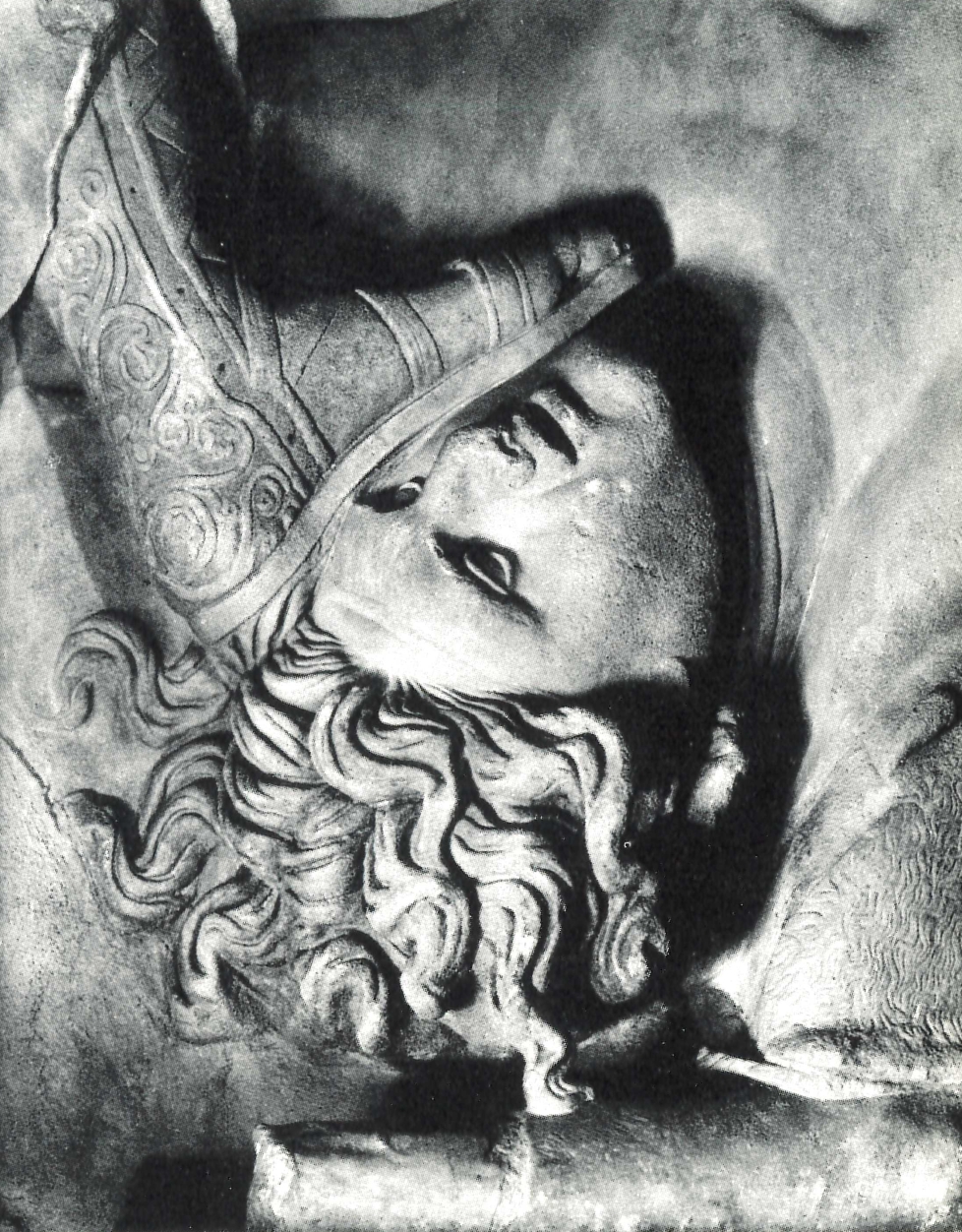
Weiss’s sprawling novel brims with insistent lines of thought, from the famous opening panorama of the violent sculptural frieze of the Pergamon Altar in Berlin, to the final pages, with their bittersweet sermon on the necessity of utopia. Hope survives despite setbacks and defeats, despite betrayals and missteps.
What would an exhibition that captures this paradoxical hope today look like?
At Bonniers Konsthall, the two-part title offers a hint as to the exhibition’s direction. The Defeated is a short lyrical novel from 1948, which is partly based on a series of reports the exiled Weiss penned for Stockholms-Tidningen after travelling back to war-ravaged Berlin. In short, fragmented textual passages, it depicts life after the German defeat as a timeless vision of destruction. Connecting these two written works is, in itself, not a bad idea; the starting point for the powerful synthesis woven together in The Aesthetics of Resistance is precisely the experiences expressed in The Defeated: the feelings of failure and guilt, of finding oneself at a moral and historical zero point.
And yet, this conjunction doesn’t quite work.
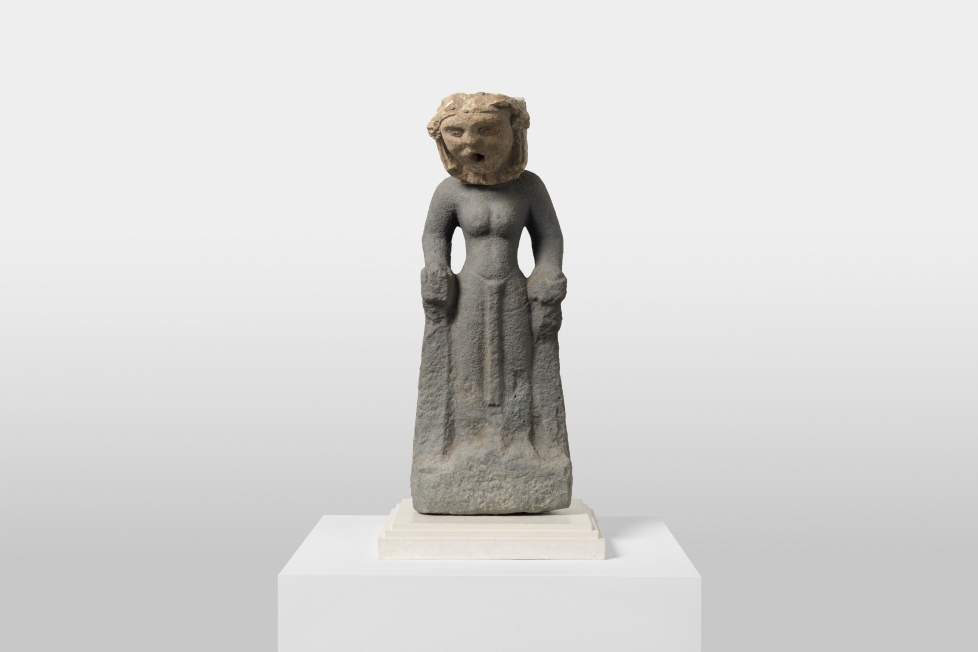
The Defeated: The Aesthetics of Resistance 2026 is unquestionably a very worthwhile exhibition, rich in perspectives and ideas that come close to the feeling of its main, thousand-page literary source. That its multitude of images and documents can feel difficult to survey is therefore not a weakness but rather, as I understand it, the result of a consistent aesthetic idea. Beginning with an elegant display of the covers of all of Weiss’s books – he often designed them himself – the exhibition makes a small detour through some early films and collages (this is also where his painting briefly flickers into view) before arriving at what turns out to be the exhibition’s centre: a thorough mapping of the theatrical productions that, over several years in the 1960s, made Weiss one of the leading names in contemporary European theatre.
This is truly a history worth bringing to light. Together with his wife, the artist Gunilla Palmstierna-Weiss, who made most of the set design for his productions, Weiss took the radical, Brechtian theatrical tradition and developed it into something entirely new and fiercely contemporary. With their documentary, stripped-down aesthetic, plays such as Marat/Sade and The Investigation cut straight through the painful subconscious of a divided Europe in a way that seemed both agonising and necessary. The exhibition provides a somewhat dry, but informative and endlessly fascinating overview of this unique body of dramatic work, which very logically culminates in Weiss’s involvement in the so-called Russell Tribunal in 1966–67. A kind of documentary performance theatre in its own right, but relocated to a broader public sphere, the tribunal provided a platform where intellectual giants such as Jean-Paul Sartre and Bertrand Russell lent weight to the accusations of American war crimes in Vietnam.
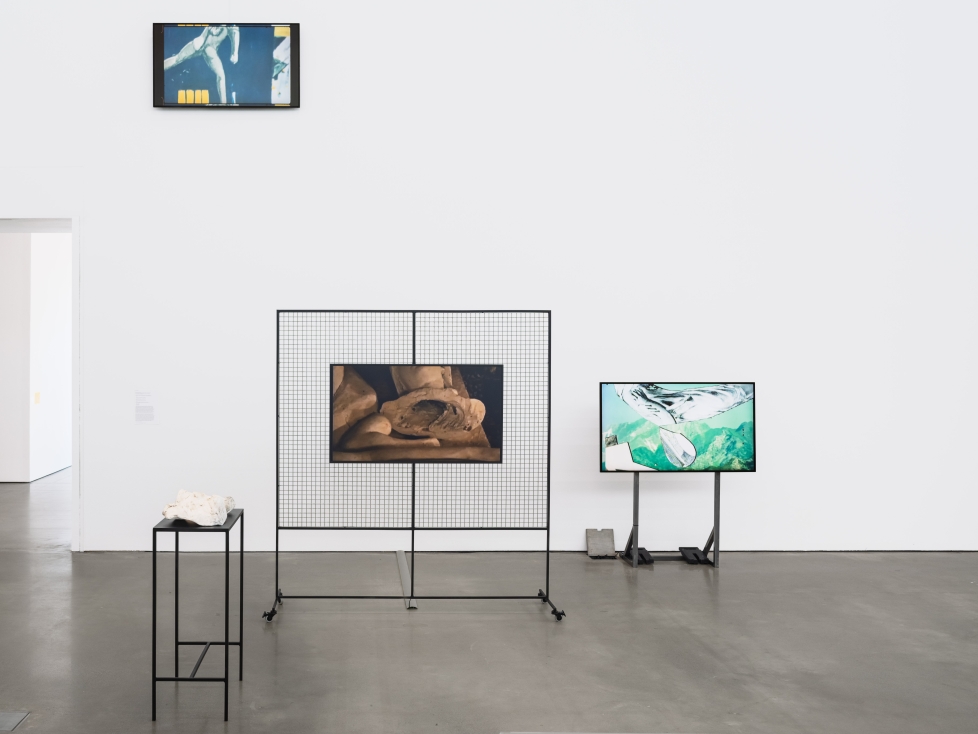
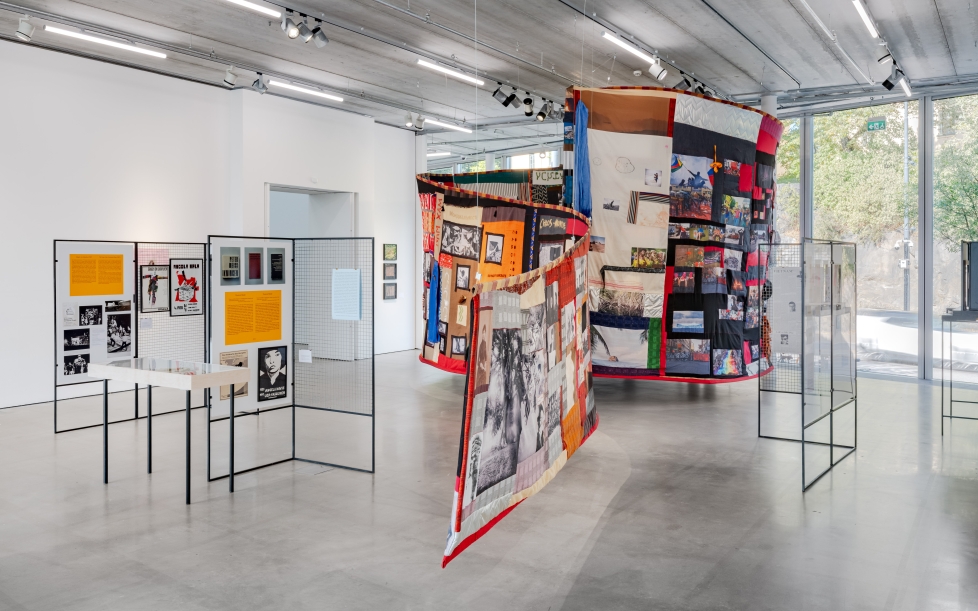
From here, the exhibition expands to include around a dozen contemporary artists who comment, more or less loosely, on different aspects of Weiss’s work. This is also where I begin to have problems with it. Although the contemporary works are sensitively and methodically woven among the art-historical documents, I get the nagging impression of an exhibition splitting into two separate parts, with the more recent contributions appearing incomparably weaker and less coherent than the foundation. There are several works here whose presence I do not understand at all; a few others feel casually and unimaginatively tacked on. Others connect more successfully: in the middle of one gallery, Hamedine Kane and Valérie Osouf, for example, erect a textile-based chapel of resistance furnished with hundreds of portraits of martyrs from world history, from Louise Michel to Pussy Riot.
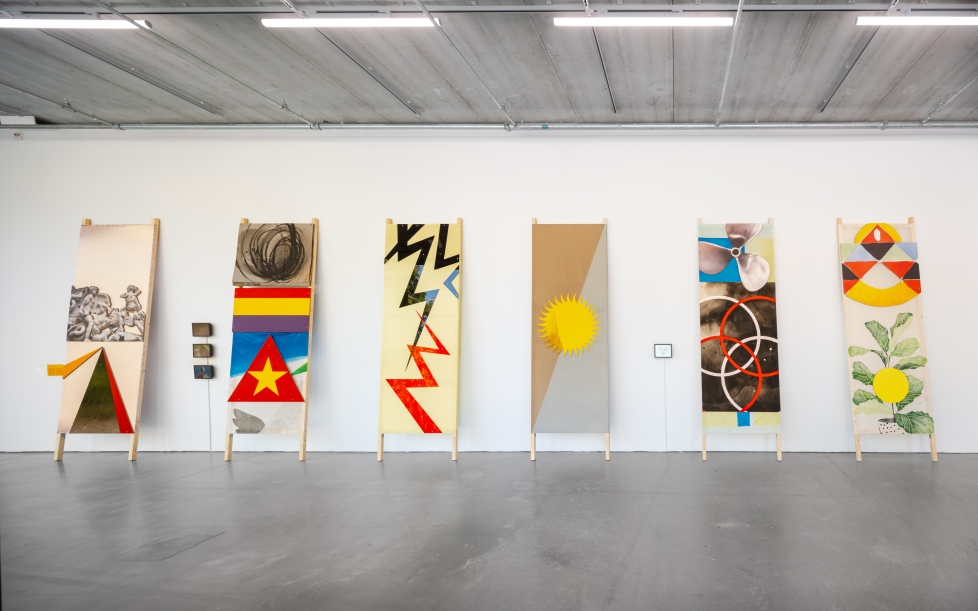
Finally, there are a couple of works that relate very concretely to Weiss and his novels –among them, Christoffer Paues’s Sketch for Six Anti-Fascist Flags (2026) and Lina Selander’s film triptych Binding the Dream (2026), which intricately cross-cuts material from the Weiss archive with news footage from Palestine and interiors from Carl Eldh’s Studio Museum in Stockholm. This, I imagine, is an attempt to achieve something resembling the process of transformation that takes place in The Aesthetics of Resistance: a prismatic collage whose political meaning is revealed not through its individual parts, but in the very act of putting them together.
But, as a whole, this contemporary appendix is an exhibition whose core I have difficulty finding. A more fundamental problem is also that this exhibition’s interpretation of Weiss’s work largely misses what his monumental novel actually is – namely, a history of class struggle. This makes its double title all the more confusing; the historical defeats worked through in The Aesthetics of Resistance are hardly the same as the German devastation depicted in The Defeated (to which Weiss, after all, returns from the victorious side). Instead, the novel is about the losses of the international workers’ movement, with a specific focus on the Third Reich and the Spanish Civil War. Under these terror regimes, hopes for the future were transformed into despair. It is these wounds the novel mobilises all of world art and literature to heal. The class struggle must encompass this as well: the powerless remain powerless as long as they have no access to the wonders of the world. “Nothing may stand above us,” as the novel puts it. This is where the heart lies, this is what it takes aim at. But there is still a long way to go. Perhaps a longer way than ever.
“The sphere of hope will expand,” Weiss prophesied in his novel, as an incantation.
I don’t know. Did it?