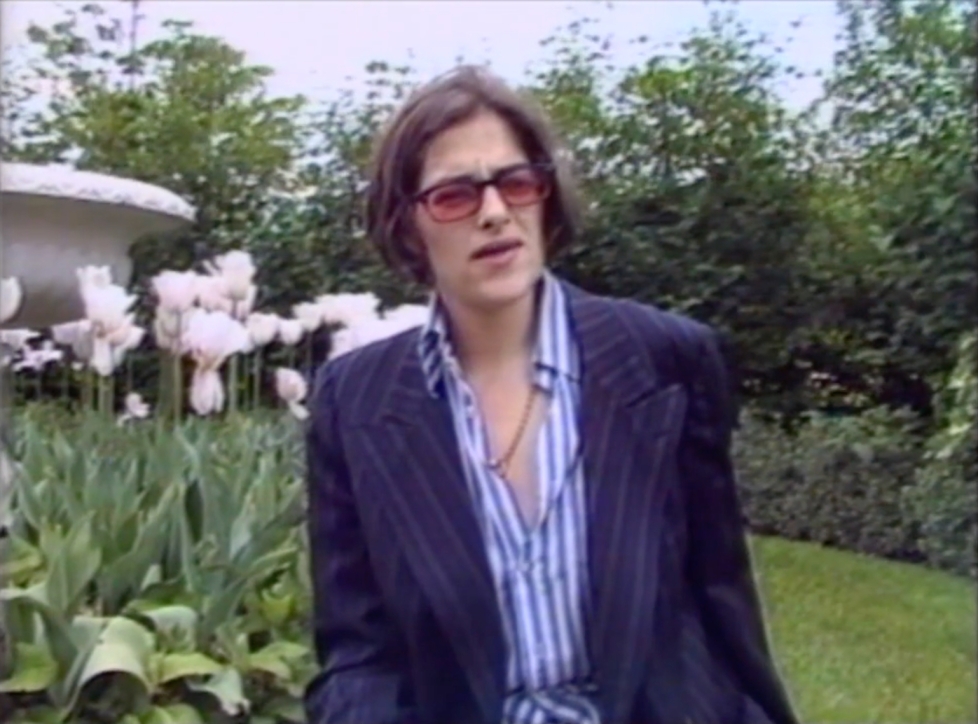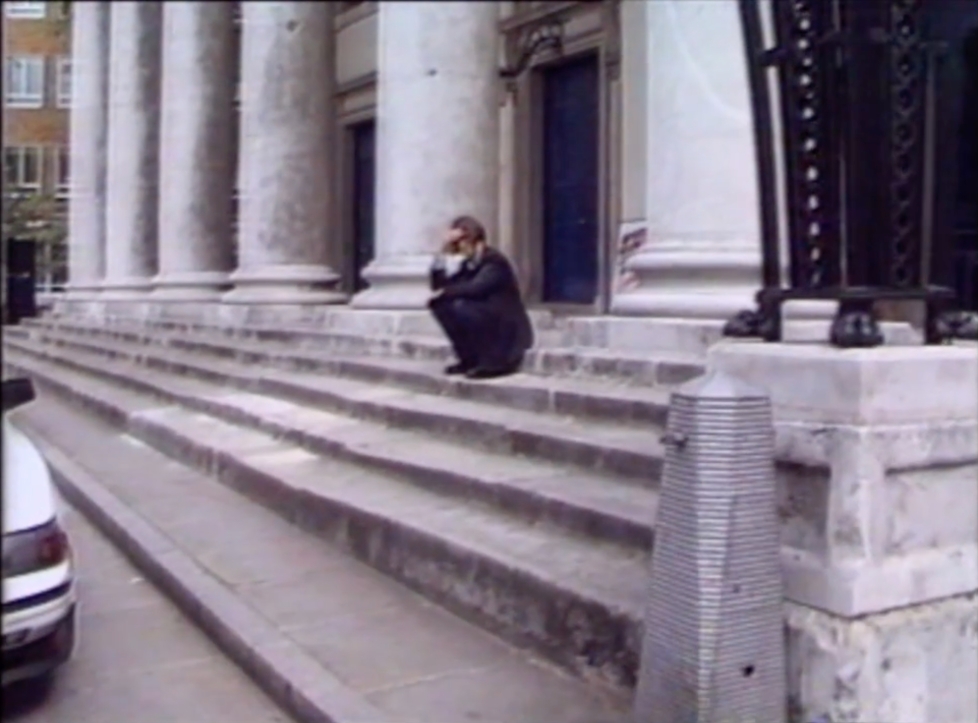
One simple sentence doesn’t leave my head. It becomes the lens through which I look at all Tracey Emin’s artworks. She says it casually so it’s easily overheard, she says: “My eyes are scarred.” She says this while wandering around London in the video How It Feels (1996), talking about her horrendous abortions. She looks radiant while noting that her eyes have scars. It is a simple sentence, it upsets me.
For three decades, Emin has been a superstar, a reckless, chaotic, and charismatic child of London’s blasted pre-financial-crisis art scene. For probably just as long, she has been categorised – in a more or less sexist manner – as a self-centred diva. And yes, she might have her whims; obviously she is self-centered (as any other successful artist), her face and body and their various disintegrations are omnipresent in her work. But then, she also just stands in a park in a trimmed tulip spring and notes, with an oddly peaceful voice and a velvet gaze, that there are simply scars on her eyes.
In my opinion, this sentence sheds a slightly different light on Emin’s work than the frothing, confessional vibe usually attributed to it. A scar is something healed, something relatively discreet. It is the trace after the blood and the crashes, something making less fuss about itself than the acutely broken. A somewhat altered subtlety, a more contained indomitability seems attached to Emin’s expressive, tormented style in light of those words.
Perhaps this is also because of the self-proclaimed new phase she has entered after many an unbearable year in the midlife condition she calls “the cave.” This new phase is what gives this travelling exhibition, launched earlier this year at Tate Modern and now at Louisiana, its name: A Second Life. It all starts, however, with the first life. The iconic and also slightly cursed piece Why I Never Became A Dancer (1995) blasts its strenuous and lovely disco, strenuous and lovely dance after some eternally active patriarchy. It slams out into a space also filled with early photo and text works, as well as a series of quilted textile pictures – all of it centred around biography and different types of pain. It seems more spelled out in this early work. Perhaps the eyes were still wounds back then, scars fresher.
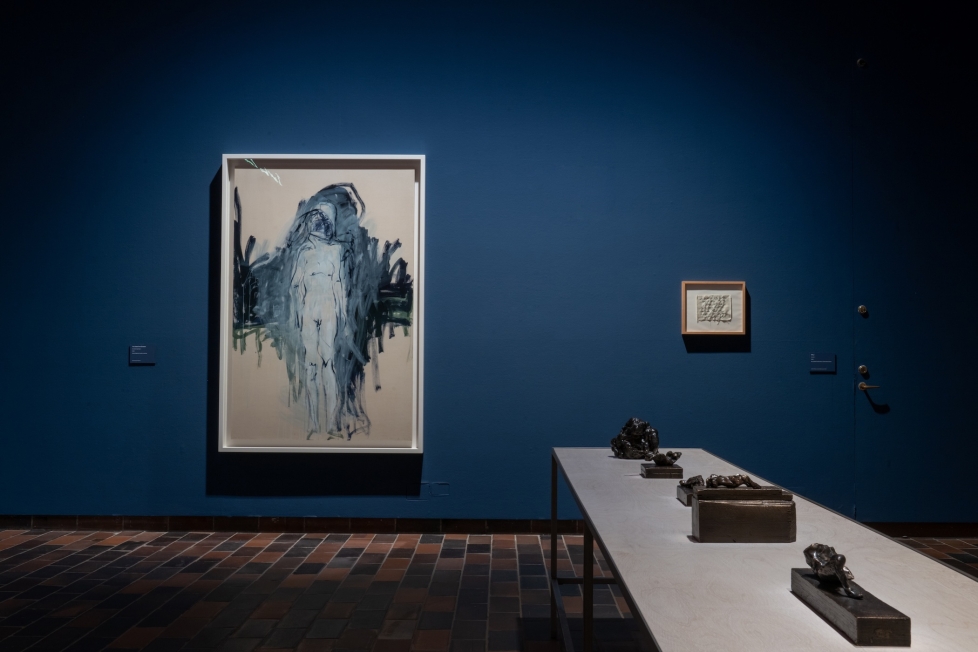
The exhibition continues with some of these very wounds: assaults and abortion, sex as something bloody and infested with betrayal. A row of small bronze bodies stand on a white podium. The longing is cast here, anguish embedded in titles and poses. Tormented reason (2016) and Crying for you (2014) show solo female figures on their backs, tense and faceless, one lacking an arm, while Being without you (2014) appears even more amputated and curled up.
Perhaps because biography is so present in Emin’s art, these bronze sculptures seems vividly saturated with the same anger and sensitive heart that gushes out from her handwriting, which figures in many of the works as a signature motif, including in the paintings hung around the sculptures. Red and bleak, these splashy contours of body – her own or any one else’s – appear wrenching and melting, aching. These bodies could potentially be read as cramped up in ecstasy, but titles like Rape (2018), You Heard Me Scream (2022), and You Keep Fucking Me (2024) indicate that the pleasure to do whatsoever exists along the violent backside (or frontside) of sex. Her strokes are vicious and dignified. She speaks in capital letters.
And letters are indeed present in Emin’s work. Here language is the art just as much as images and shapes are. Her rather grim upbringing is mapped out in Exploration of the Soul (1994), thirty-two handwritten, framed sheets of A4, while her unplanned pregnancies and horror abortions are spelled out in note writing, video speech, and sober yet crushing drawings.
The exhibition’s most magnetic piece – reason alone to go to Louisiana – is Conversation With My Mum (2001), a 40-minute film in which the artist and her mother discuss having children. A troubled working class mother of three from the 1940s appears as this warm, aging lady, who loves her children matter-of-factly and yet strongly advises her 38-year old daughter against having children. The radicality of such an advice from a mother to a daughter is obvious, but it’s even more interesting to sense how the love for the child is a split, self-contradictory matter.
Clearly, the mother has toiled her way through raising three children, perhaps having failed them a bit, though they have no doubt filled up her heart. With care in her eyes for her unrestrained, creative daughter, this mother’s ultimate declaration of love is recommending a childless life. She possesses a clear-sighted understanding of her daughter’s troubled situation and a mild acknowledgement of her own troubled situation at that age, and these insights point in very opposite directions. It sounds banal and it might indeed be so, but I don’t think I have ever seen a more beautiful, nuanced reflexion on the tremendous doubt felt by every potentially child-bearing person I know.
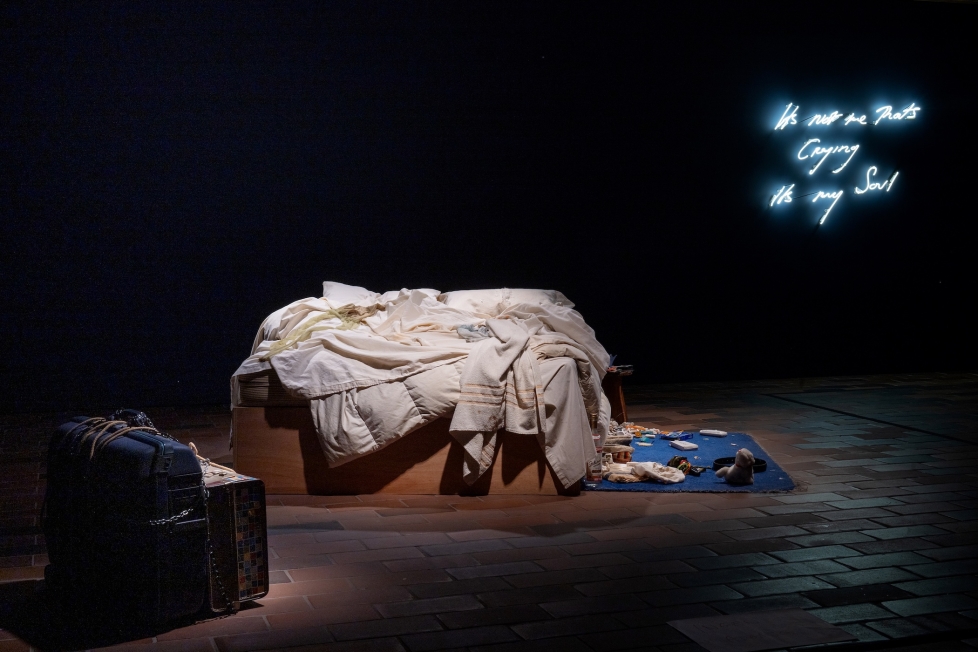
Generally, a simplicity – or banality if you may – permeates Emin’s work. Everything speaks in a clear language. One moment pits two different series that share the same simplified title ‘Self Portraits’ (2001) and ‘Self-Portraits’ (2020-2025). Photos of the artist as a young, erotic woman clad in lingerie and jewellery, face off against photos of the artist as a middle-aged cancer patient, a physically wrecked woman with a bleeding ostomy hole in her stomach. Two separate lives. My Bed (1998) is rightfully legendary: putting cigarettes and condoms, depression mess and cum sheets in the Tate Modern in the 1990s definitely rocks, but the work is also very didactic – maybe especially in this dense context, where the bed as an arena for suffering and pleasure is so thoroughly spelled out.
I’m thinking about why the banal is often something we write off. For Tracey Emin, it seems to condition the force of her art, and that force is, as I see it, indisputable. I do not love the paintings, nor the crookedly campy textile works, an increasing feeling of Teflon in the acrylic surfaces as the paintings get newer. Yet I’m overwhelmed by her presence, especially thanks to the video works, which remain the exhibition’s greatest strength. Emin’s voice in glimpses, her young and older face actually full of love, incredibly enough, even as she insists on the shameless exposure of a life shaped and shattered by violent men and a violent class society – sadly timeless (and interconnected) issues.
Probably, banality has to do with repetition, with being told stuff we know in simple ways. But if anything bears repeating, it must be abortion traumas and rights and aggressive cries about patriarchy’s ongoing disposition for abuse. Yes, this is unpleasant to listen to, but is that why it’s brushed aside as banality? Is it because the artist constantly points towards herself? Tracey Emin is everywhere in her own work, which is simple, brutally honest, and, yes, sometimes too much. It still remains an example of how the private is common. That her scars are everyone’s scars and that they should be brought to the eyes of those make it bleed.
Towards the end of the exhibition, the paintings get paler, the artist’s peaceful face appears as a death mask in a small vitrine. It isn’t exactly resignation, but rather a form of acceptance. A second life has begun. Wounds might have healed a bit. It doesn’t mean that they’re gone, but they’re not bleeding anymore. Scars are pale, too.