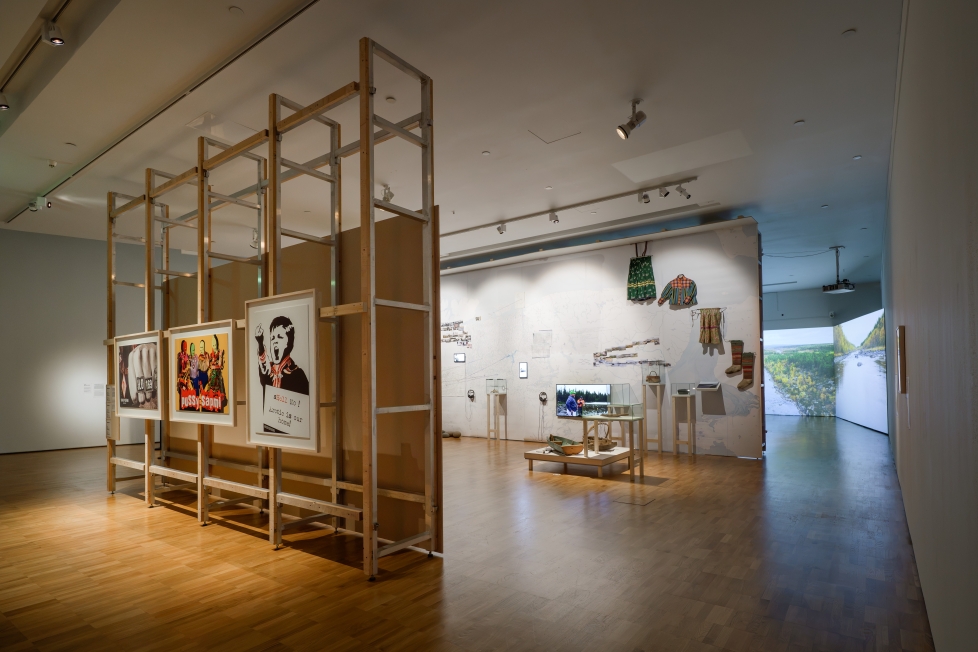
Three institutions – the Estonian Museum of Art, the Estonian Academy of Arts in Tallinn, and the Estonian National Museum in the university town of Tartu – have joined forces to offer two exhibitions and a conference reflecting on the Estonians’ longstanding engagement with the Finno-Ugric and Sámi peoples.
At Kumu, the flagship of the Estonian Museum of Art, the exhibition Expedition: Finno-Ugrians and the Power of Images shows how Estonians have boosted their self-image through their interest in kindred peoples. Meanwhile, no beginning, no end: Decolonial Gestures in Sámi Worldbuilding, curated by Ann Mirjam Vaikla, foregrounds Sámi artistic practices as a means of asserting indigenous agency. Together, these exhibitions ask a tricky question. How does cultural solidarity slide into asserting one’s own identity at someone else’s expense?
Full disclosure: I have been engaging with Finno-Ugric indigeneity, contemporaneity and nation-building for more than twenty years. In 2008, I curated The Continental Unconscious: Contemporary Art and the Finno-Ugric World, also at Kumu. Since then, I have written about the ethno-futurist movement in Russia’s Finno-Ugric republics, and included leading visual artists from Komi, Mari El, and Udmurtia in my exhibition-making practice, until the war made that impossible.
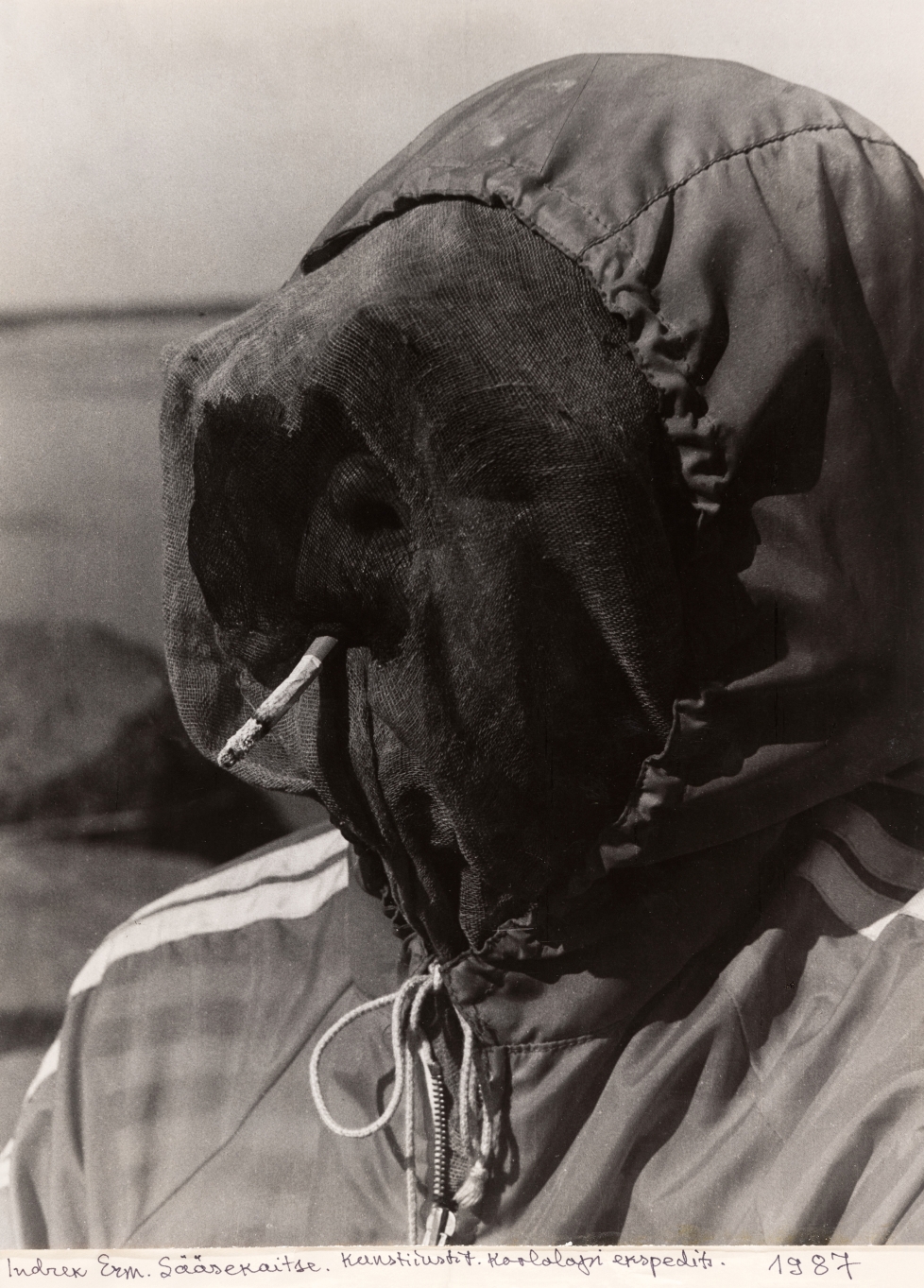
When I first suggested a survey of contemporary art and culture in this ‘periphery of the periphery’ to Kumu back in 2004, a senior team member dismissed it as “the worst idea, reviving that old nationalist ugri-mugri of the 1980s, those ethnographic expeditions our art students had to go on.” I must have misjudged the Estonians’ sense of humour because, in the summer of 2007, they sent me on a similar expedition, funded with EU money they had raised without telling me.
How is all of this interesting and important to readers of Kunstkritikk? Well, it resonates with current debates about decolonisation and museum practice across the Nordic region. I have seen my fair share of Sámi exhibitions in recent years, so let me begin by stating that Kumu’s no beginning, no end is one of the best-conceived and best-installed. The one inclusion that made me roll my eyes a little is Marja Helander’s Eatnanvuloš Lottit – Maan sisällä linnut (Birds in the Earth, 2017). I had already seen this film too many times, and always found it both too on-message and not precise enough, with the two adorable young ballerinas literally gesturing towards a narrative of Land and State, ecology and identity.
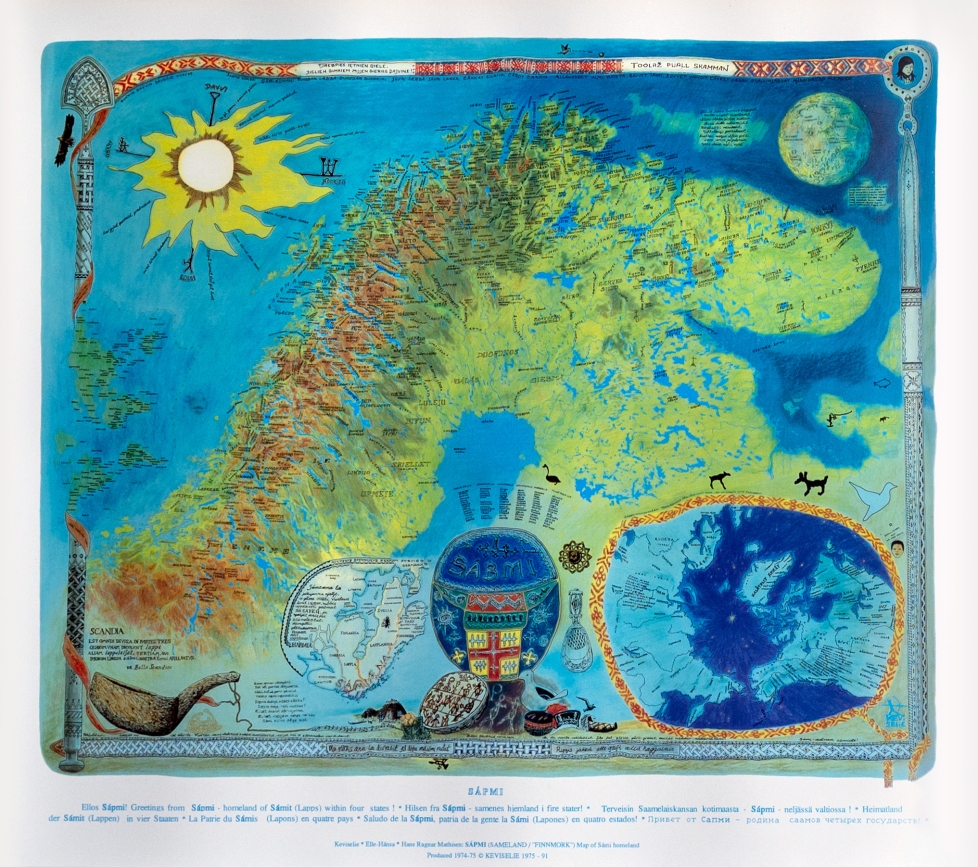
There are well-selected classics from the Sámi contemporary art canon (embroideries by Britta Marakatt-Labba, maps by Keviselie/Hans Ragnar Mathisen), a delightfully hybrid landscape-painting-and-fringed-shawl by Outi Pieski, and emotionally and visually compelling pieces by Carola Grahn. There is also the necessarily complex (but maybe a bit too sprawling) four-part installation Voyage (2024–26) by Jenni Laiti (also a curatorial consultant for the exhibition) and the Invisible Flock collective, about the prohibition against fishing Arctic salmon in the Deatnu/Tana River doubling as the Norwegian–Finnish border.
A particular feature of Estonia’s relationship to Sápmi – and one that connects no beginning, no end to Expedition – is the attention given to ‘the Russian side’ and its few hundred remaining speakers of Eastern Sámi languages. Before 1991, these were the Sámi that the Estonians could contact without crossing any state borders.
Indeed, the first ethnographic expedition of the Estonian State Art Institute (now the Academy of Arts), in the summer of 1978, went to the Lujavvr/Lovozero district in the Murmansk province. When the Estonia–Sámi Association was founded ten years later, as the Estonian independence movement was just firing up, it also focused on the Kola Peninsula. Today, the border with Russia is much harder to cross, and it remains unclear if any Sámi contemporary art practitioners are to be found behind it.
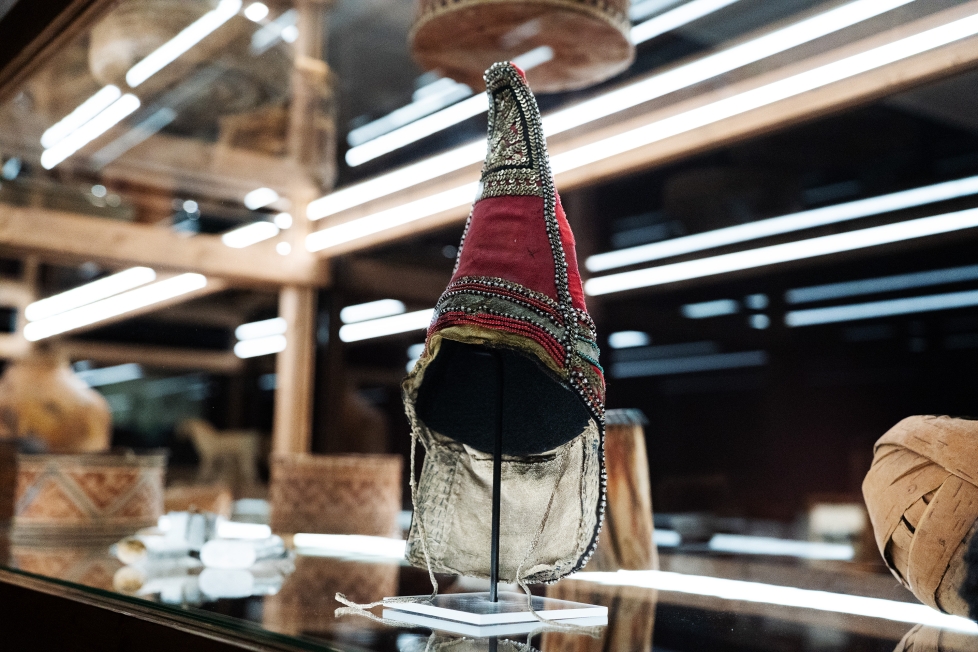
In no beginning, no end, the East Sámi area is instead represented by artists active in Finland. Čähččõslee’t – Coalitions of Waters: Siidas around Streams, a new video and installation by Snowchange Cooperative (Pauliina Feodoroff and Kaisu Mustonen), maps the homeland of the Skolt Sámi who were expelled from the area around Finland’s pre-war Arctic port of Petsamo after it was ceded to the Soviet Union. It also incorporates Eastern Sámi objects from the collection of the Estonian National Museum. Photographs by Lada Suomenrinne, another artist with Skolt Sámi roots, are prominently displayed, notably her series Land Back Masks (2023).
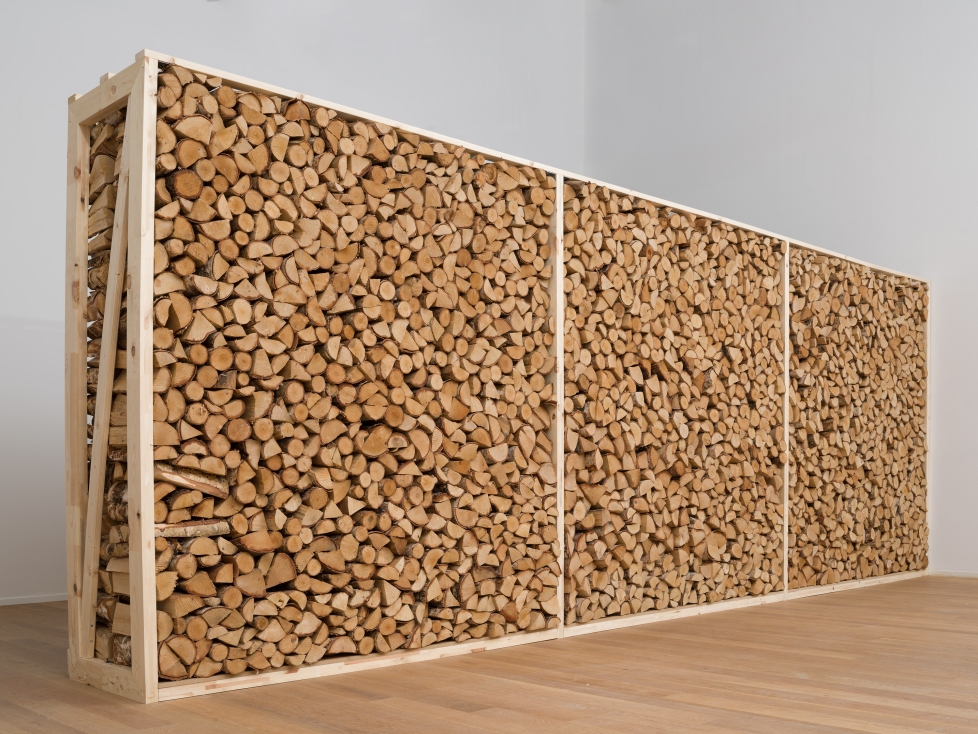
The spacious and somehow outdoorsy layout of no beginning, no end contrasts with the denser and more intimate setup of Expedition, designed by artists Karl Joonas Alamaa and Jaanus Samma (who also contribute pieces of their own) in a suave salon style that challenges the premise that ‘fieldwork’ is something uncomfortable or dangerous.
Expedition is about the imagined community of Finno-Ugric kinship and its continued impact on Estonian visual and applied art. The emphasis shifts from indigenous self-representation to images and objects tasked with documenting the ‘ethnographically interesting’ lives of others. Or, as the wall text asks: “Why did ethnographic research into other peoples become the form that Estonian self-exploration took?”
In the early 1920s, Finnish archaeologist Aarne Tallgren, freshly tenured at the University of Tartu, called the Finno-Ugric nations “a possible scientific colony” that would help Estonia “become a cultural great power.” This statement was pointed out in a paper during the conference by Piret Koosa and Svetlana Karm from the Estonian National Museum. It resonated with Finnish attitudes to their eastern neighbour as the elephant in the room, fearsome but also – as Kai Donner, another Finnish researcher at the time, suggested – at “the lowest level of western civilisation.”
The organisers of the exhibitions and the conference have carefully teased out some self-contradictions underneath the solidarity with faraway kindred peoples, like the Kildin Sámi, the Udmurt, or the Khanty, who are still directly exposed to Russian imperialism. In reports from those expeditions, different regimes of ‘othering’ come to the surface. The Estonians were sometimes baffled when representatives of the Finno-Ugric peoples included themselves in the ‘we’ of Russian (and before that Soviet) society. The unspoken expectation was that they should instead articulate a suppressed drive for nation-building.
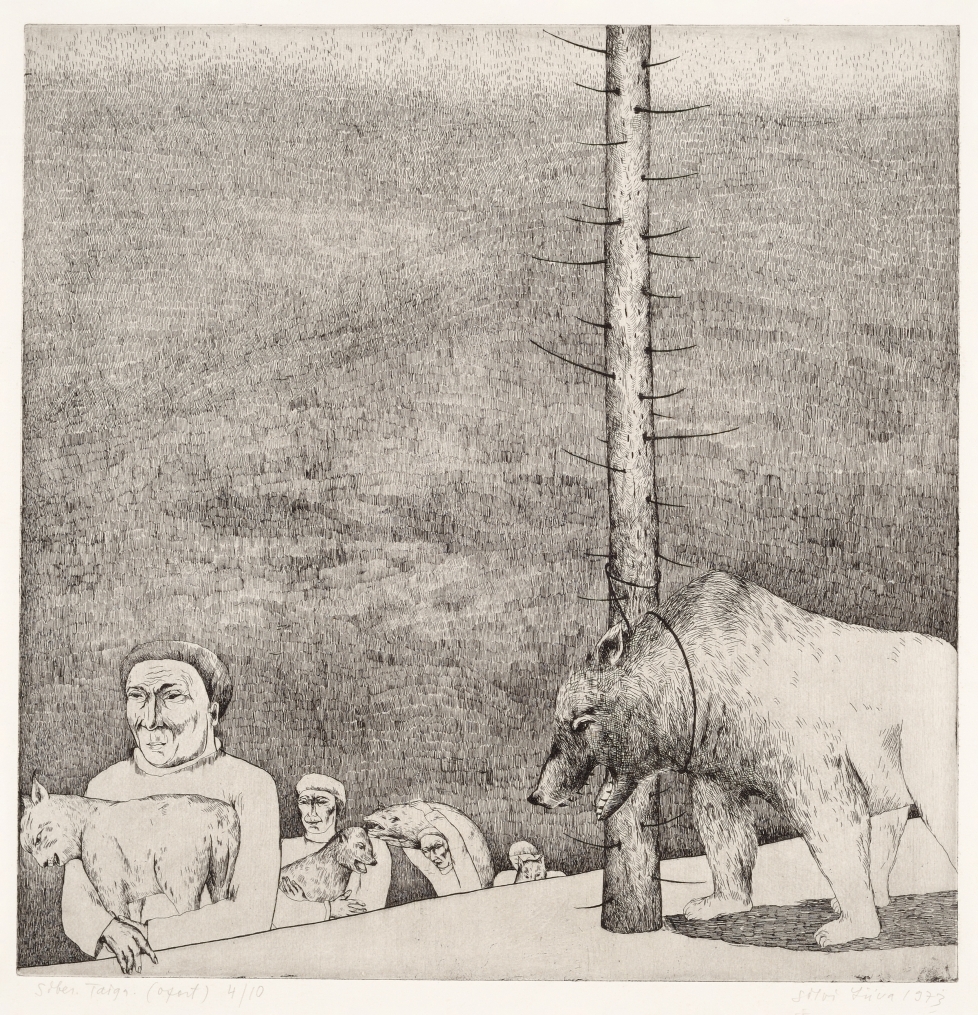
Ugri-mugri is an ironic term from half a century ago, interrogating the harnessing of cultural politics for rekindling a ‘bourgeois’ independent Estonia. The strategy was thought up by canny operators within the Soviet Estonian cultural scene, notably Lennart Meri, travel writer turned documentary filmmaker in the 1960s and President of reconstituted Estonia in the 1990s, or Kaljo Põllu, glass artist and drawing teacher turned ethno-futurist printmaker avant la lettre, and initiator of the yearly student expeditions that were discontinued only in 2017. Põllu’s mythologically inspired (and more than a little New Age-influenced) mezzotints are prominently featured in the exhibition, as is the clip of ‘Spiridon’s Monologue’ from Toorumi pojad (The Sons of Torum, 1989), Meri’s documentary on the Khanty bear ceremony.
Spiridon Tylchin was 44 years old at the time of the recording, a hunter and reindeer herder belonging to the ‘Khanty intelligentsia’. Meri interrupts his visual epic of the 7,000-year-old ritual comprising songs with 40,000 verses (some of his peers gently rebuked him for ‘over-cooking’ such numbers) to listen to Tylchin’s indictment of the destruction wrought by the oil and gas industry in the ancestral lands of the Khanty and their ethnic cousins, the Mansi. These two peoples number less than 44,000 together, and are the closest linguistic relatives of the Hungarians. They inhabit an area in western Siberia, larger than all of Western Europe, that has been the epicentre of Russian fossil fuel extraction since the 1970s.
All representation is a montage, a rendering of lived reality into intelligible form. Yet reality is rarely unambiguous. Meri’s documentary cinema is no exception, and neither are the Expedition exhibition and the two joint publications – a catalogue and a reader – that accompany it and no beginning, no end. To the credit of the curators and editors and their quest for objectivity, there are accounts of how Estonian companies built the roads and workers’ settlements that made the Siberian oil and gas exploitation possible. Some of these contracts ended more than a decade after the collapse of the Soviet Union. Linda Kaljundi, the curator of Expedition, writes: “Although the Khanty people’s closeness to nature and their cultural heritage were admired, the Estonians working in Siberia tended not to identify with them.”