Things have been shifting on Oslo’s gallery scene over the past couple of years. Three trends stand out. The first is a clustering of many of the most central commercial players in Frogner. That alone isn’t all that remarkable. For natural, demographic reasons, the scene’s centre of gravity has always been on the west side, even if it used to be more spread out. But set this “blossoming of Frogner as an art district,” as Kunstavisen has described it, next to another trend, the recent closures of a handful of the city’s heavyweights which a colleague bluntly dubbed “the gallery die-off,” and the situation looks grimmer.
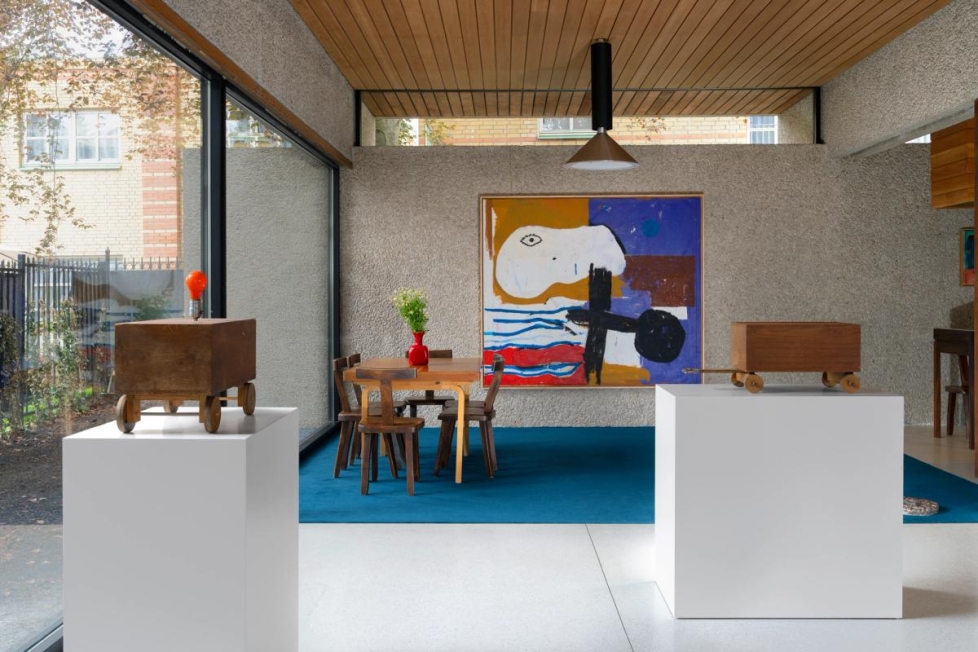
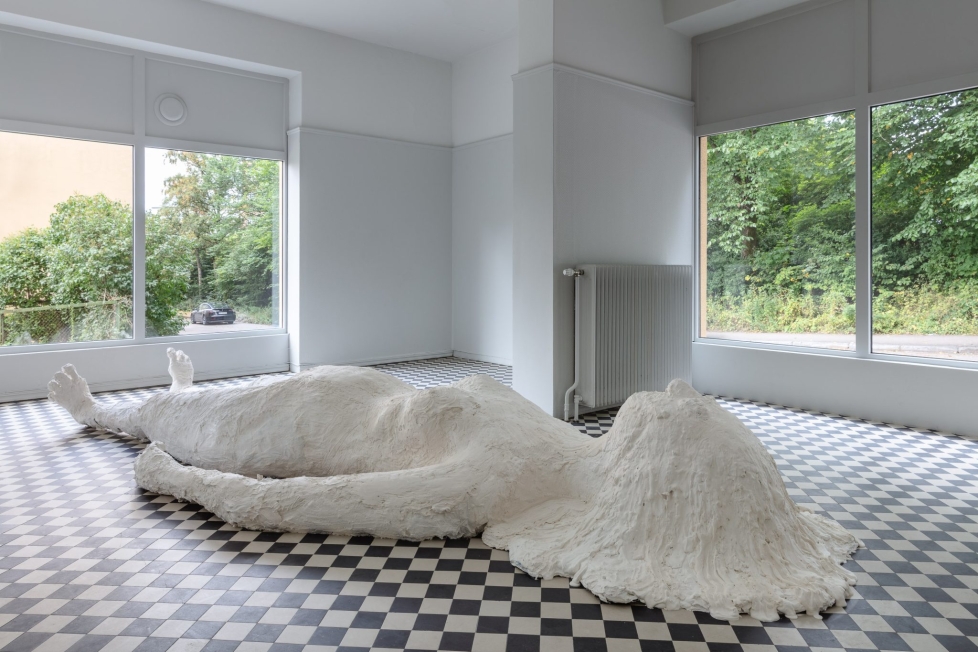
I’ll get to the third trend, but first, let’s take a quick look at the map. If my count is right, nine of the city’s leading contemporary art galleries now operate out of Frogner. OSL contemporary and Galleri K have had the longest tenure in the district. Galleri K has called Frogner home since its founding in 1977, while OSL (formerly MGM) has been in the area since opening in 2001, though it has shuffled addresses within the neighbourhood. In the past two or three years, these ventures have been joined by QB, Melk, Isca, Eiklid/Rusten (formerly Golsa), Christian Torp, Standard (Oslo), and, most recently, Brandstrup. Galleri Riis, which, since 2016, has occupied premises in Arbins gate, right by the Palace, can also be counted as part of this Frogner enclave. Last year, Frogner gained two new artist-run galleries, with fairly well-known names at the helm: Fredrik Værslev’s Allé Allé, off Bygdøy allé, and Ida Ekblad’s Spettacolo, housed in a charismatic brutalist villa.
The rush to Frogner has been clocked by several observers. Finansavisen touched on it in January this year in a piece on the galleries leaving Tjuvholmen. Rent increases, following a period of below-market contracts, were offered as an explanation, though none of the gallerists contacted – Peder Lund, Brandstrup’s Marit Gillespie, and Fredrik Nergaard of Galleri Haaken – would confirm this. All three were, notably, looking for new premises in Frogner at the time. Even if it is likely more affordable than the “financial district” of Tjuvholmen, Frogner is hardly where you find the city’s cheapest commercial spaces! Even so, there may be economic reasons for flocking there.
Whatever is driving it, this flight to Frogner is coinciding with that second, more morbid trend. For now, the empirical basis for the gallery die-off is somewhat thinner, but among those falling away are prominent actors who have been around for a while, hardly mayflies. The youngest is VI, VII, which started in a basement in Grønland in 2012 and quickly established itself as one of the most influential (and mobile) Oslo galleries of the 2010s. Last year it left the premises it had occupied in Bjørvika since 2021. Since then, gallerist Esperanza Rosales has curated sporadic exhibitions with sure bets like Eliza Douglas and Bjarne Melgaard at various addresses around Oslo, but the brick-and-mortar chapter of the gallery’s history appears to be closed.
While Brandstrup opened in new premises on Frogner’s Briskebyveien about a month ago, its former neighbours Haaken and Peder Lund have evidently changed their minds. Lund, who has run a gallery on Tjuvholmen since 2009, made it clear before the summer, in an interview in Kunstavisen, that he is bowing out as a gallerist to focus on advisory work and curating. Established as early as 1961, Haaken was one of the city’s oldest and, for several decades, most renowned galleries, which helped pave the way for nonfigurative art in Norway. Now, they too are folding. There may be several, intertwined reasons why these galleries are calling it a day, from slim margins and reluctance to move, to simply a lack of motivation to carry on. Who knows? Still, the concurrent wind-down of such solid names sends an audible signal that change is afoot.
There has been no shortage of pieces in the international art press over the past couple of years describing trends similar to those now seen in Oslo. The upshot is that the traditional gallery’s business model has become too costly for many to sustain and so other, more flexible and collaborative forms are pushing their way in to take its place. Steep inflation has made it all the more expensive to run a physical gallery space, with no matching rise in income. Even a modest space, reasonably central and of standard quality, weighs heavily on the budget, particularly when it also has to be staffed five or six days a week. Then, of course, there are the considerable costs of transporting, installing, and insuring artworks for exhibitions. At the same time, alternative and cheaper ways of reaching buyers have multiplied and improved, making it easier to earn a living as an art dealer without the burden of running and programming an exhibition space. As this kind of public display is no longer essential for getting art seen and sold, keeping a space for that purpose becomes, for many, a disproportionate financial drag.
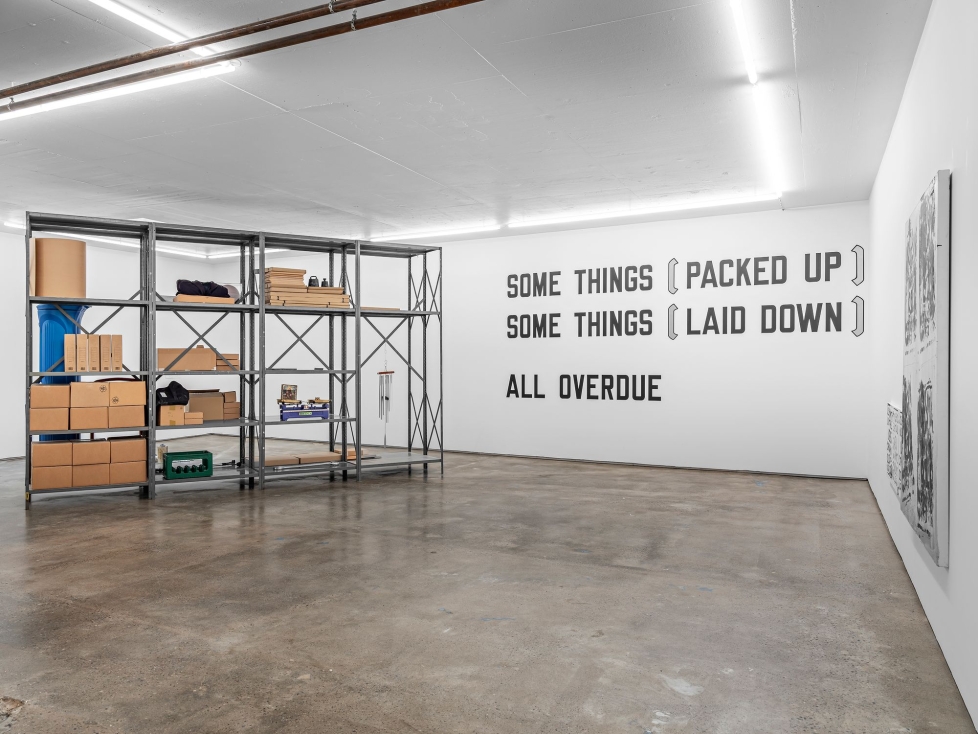
Perhaps the pull of Frogner can be understood in this light. Once you have committed to paying for an expensive space, you need to maximise footfall, and location matters more. The west side probably houses a substantial share of Oslo’s art buyers, and a high density of galleries can also bring a cluster effect that turns the district into a destination, drawing in more visitors. Once such a hub has formed, the incentive to move there grows stronger for others too. It is of course too early to say whether these galleries will start collaborating and sharing resources in more unconventional ways, but there are at least traces of a collegial spirit. The opening show at Standard’s new premises earlier this year, for instance, included Lawrence Weiner and Ane Mette Hol, two artists from the stable of its neighbour OSL contemporary. Frankly, I don’t know how unusual it is for competing local galleries to share artists like this, but it stood out as a possible early sign that practices are adapting.
It is undeniably a little paradoxical that these developments in the gallery sector – and I am thinking primarily of the closures – are taking place just as commercialisation tightens its grip on the art world more broadly. The Norwegian art field is something of a special case in this respect. As Kunstkritikk’s former editor Jonas Ekeberg pointed out some ten years ago in an interview with the owners of Galleri Riis, the commercial gallery system has historically not mattered as much to Norwegian artists as it has to their peers in many other places. Artists have been able to stay afloat on comparatively generous state grants and a well-developed network of art centres, artist-run galleries, and public institutions. That has allowed a majority of Norwegian artists to keep commercial pressures largely at arm’s length. As galleries now fall away, however, this appears to be changing, with artists positioning themselves for closer ties to the private market.
That is at least one way of reading the third trend I have noted: the artist-run scene has become palpably more market-oriented over the past decade. This is probably in part a response to an ever stingier, more business-minded cultural policy, which leaves artists feeling the need for a broader interface with the market. But the public funding system has clearly also fostered this shift in how these spaces see their role. Helped by schemes such as OCA’s subsidies for art fair participation and organiser grants from Arts Council Norway, artist-run spaces have gained a wider international reach and, at times, more stable operating conditions. That has allowed them to take on some of the function that more established galleries have traditionally had, as agents for their fellow artists. They are no longer simply producers of exhibitions and social events – often short-lived and mainly local in appeal – but also highly visible operators in a growing international circuit of like-minded venues, which generates both institutional and commercial exposure for other artists.
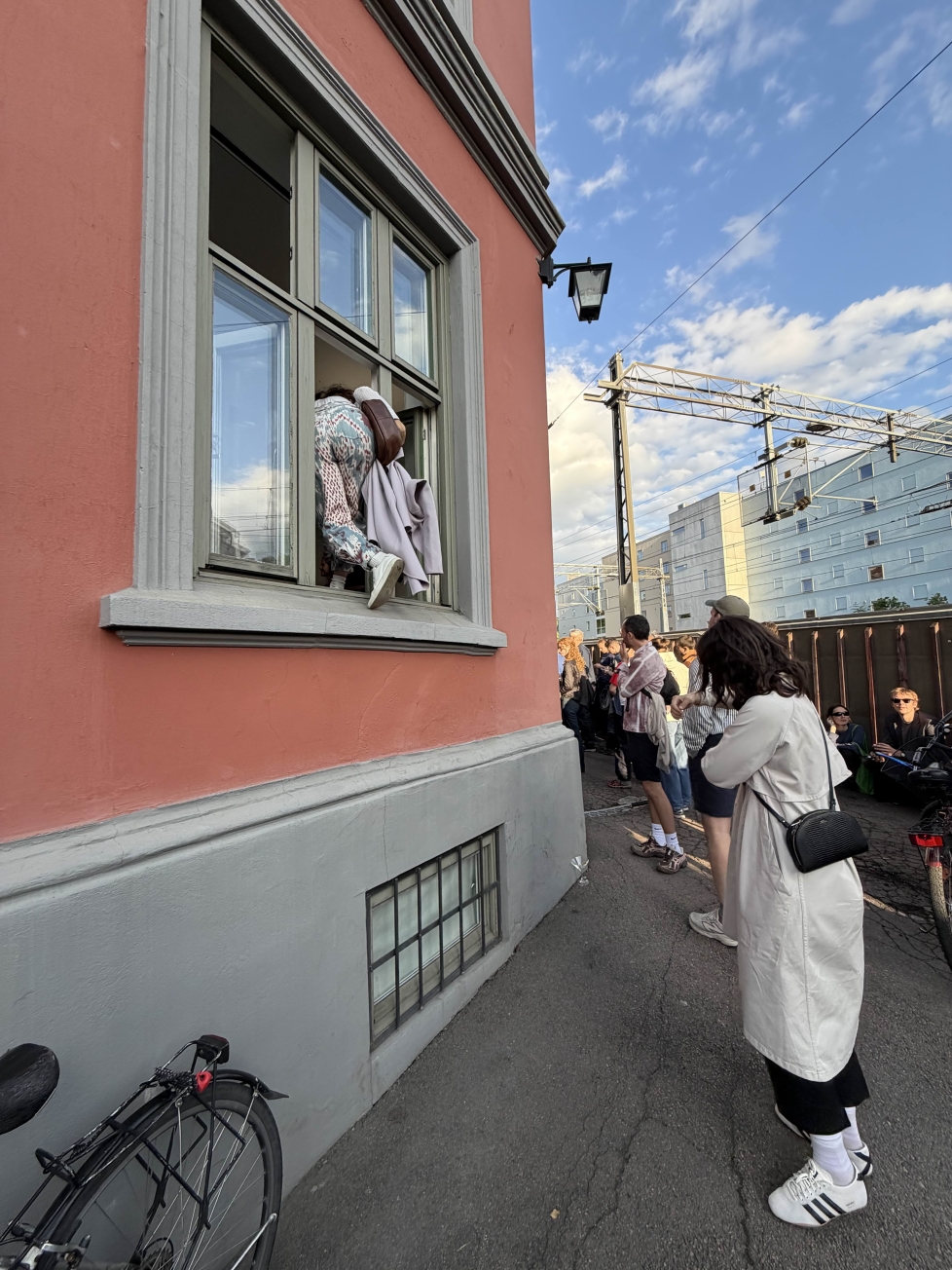
This drift towards a more commercial conception of the artist-run space has been under way for some time, but it reached a temporary peak during Oslo Art Weekend at the end of last May, when pretty much the entire cohort of the city’s artist-run galleries put on a fair of their own, called Barbara, in a former dentist’s office in Gamlebyen. Participants ranged from well-established names like Centralbanken, Pachinko, and Hulias, to more recent additions to the scene such as Sandaker Trialektek and Snails. The obscure Royal Flush Gallery had, true to form, installed itself in the toilet. I don’t know how high the turnover at the fair was, and it was hard to escape the feeling of a free-for-all. But the initiative still came across as carried through with conviction, and it expressed an unironic willingness to experiment with commercial frameworks for presenting and mediating art, even if for some of the participants it was perhaps mostly just LARPing. And that tells us something about how these players’ self-image and function have changed compared with their historical predecessors, who worked under more sheltered conditions.
Typical of this shift, too, is the emergence of spaces that operate at the intersection of the commercial and artist-run scenes. They look much like traditional galleries, with a fixed stable of artists, weekday opening hours, priced work lists, and regular fair participation, but they also receive operating grants from Arts Council Norway. Founded in a studio at Ila pensjonat in 2020 and now located in a former dairy shop in Sinsen, Femtensesse is arguably Oslo’s most telling example of this model at the moment. The aforementioned Melk, founded in 2009 as an artist-run space devoted mainly to camera-based art, has also gradually come to resemble a more typical sales-oriented gallery (though it still stresses that it is artist-run). A more eccentric place like Salgshallen similarly combines something akin to an artist-run project space (in a dilapidated but storied commercial unit in one of the city’s oldest timber buildings) with the trappings of a proper shop – even down to an online store.
At an opening recently, I spoke to an artist who co-runs one of the city’s exhibition spaces. He felt that many art buyers are stuck in a hierarchical way of thinking, in which the traditional commercial galleries are seen as guarantors of an artist’s investment value, while the artist-run spaces are considered more as experimental project spaces for younger, unestablished artists who are not yet primed for investment. As far as I understood, he was calling for a greater willingness among both private and public collectors to spend money in the artist-run field. Considering how few Norwegian artists are in the stable of an established commercial gallery, and how arbitrary (truth be told) it seems as to who gets this kind of representation, he is probably right that it is high time to retire such a bias, if it exists. Before long, the two models may be hard to tell apart anyway.
Translated from Norwegian