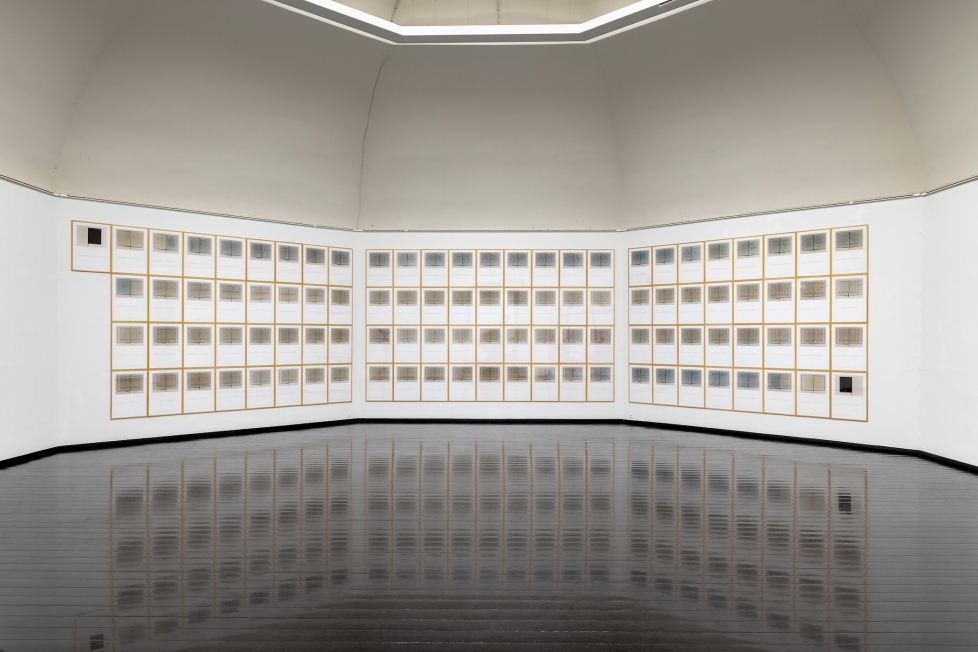
1. Hanne Darboven, Kalenderbuch 92, 1992
It’s pretty mind-blowing that right now we can simply stroll into a Copenhagen art venue and find a huge work by the German conceptual artist Hanne Darboven (1941–2009). Kalenderbuch 92 consists of 101 framed photographs of a 1992 diary, that reveal its open pages as well as the front and back covers. Every page is covered in crossings-out or nonsensical squiggles, a tangible way of marking time gone by. Each day’s entry also has its ‘Tagesrechnung’, or daily tally. On 10 August, this total comes to 29; yet all you can work out is that the number gets larger with each day of the week. Here and there are nods and messages to some of the older alpha males of the artist’s own generation. For Sol LeWitt: ‘If artists do write it is no litterature’ (sic). Carl Andre, meanwhile, is quoted: ‘Never apologize, never explain.’ The flowing handwriting is not always easy to decipher. Darboven is bone-dry, funny, and existential all at once. And, it strikes me, a temperament rarely to be found in contemporary art these days.
– On view in Nervetråde, Den Frie, Copenhagen, until 1 November.
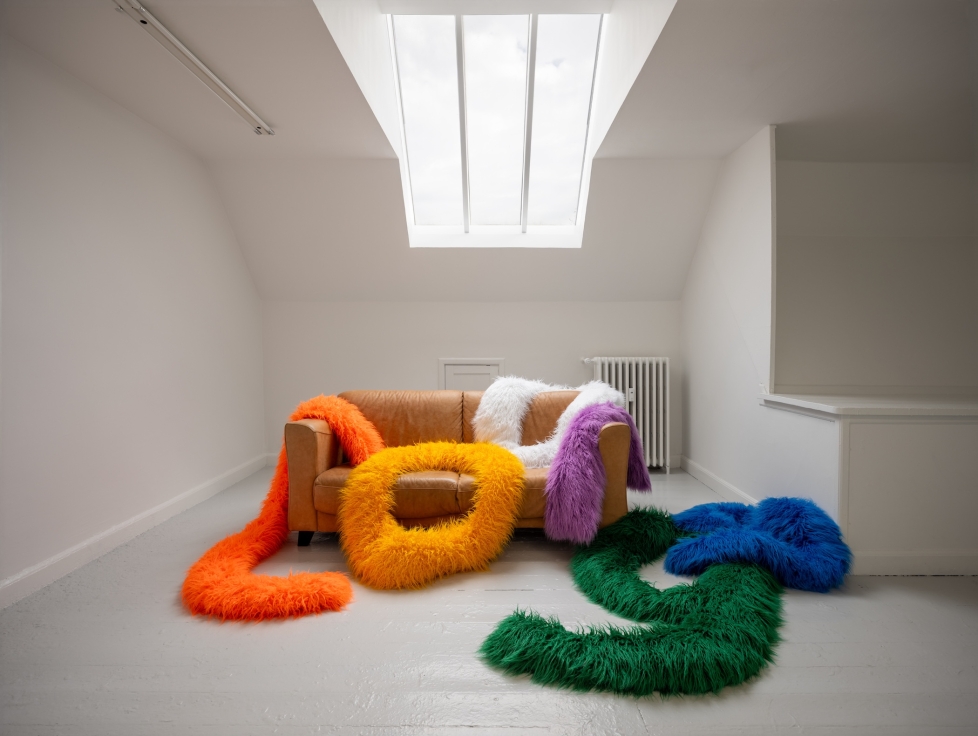
2. Bill Hayden, Cool as in cool ge as in get, 2026
The sofa isn’t part of the work; it acts as a kind of plinth that lets the furry letters sprawl and jut out into the room. From one angle, it looks as though they spell ‘Google’ on a day when the search engine is celebrating Pride, or something else that calls for festive lettering. But they don’t actually spell ‘Google’; they spell ‘Coolge’, as in the work’s title: Cool as in cool ge as in get. The rest of Bill Hayden’s exhibition is rather elusive. On the wall are meticulously executed ink drawings in frames; on the floor, the exhibition’s electrical component (apparently the artist always includes one): a fan, switched on. Perhaps it’s blowing the meaning of Coolge(?) around the room, as though tasked with making sure that signifier and signified never meet and nothing ever quite settles. Either way, I’m glad there are galleries in Copenhagen showing the sort of visual thinking I can keep mulling over and over.
– Bill Hayden’s exhibition Coolge is on view at Christian Andersen, Copenhagen, until 31 October.
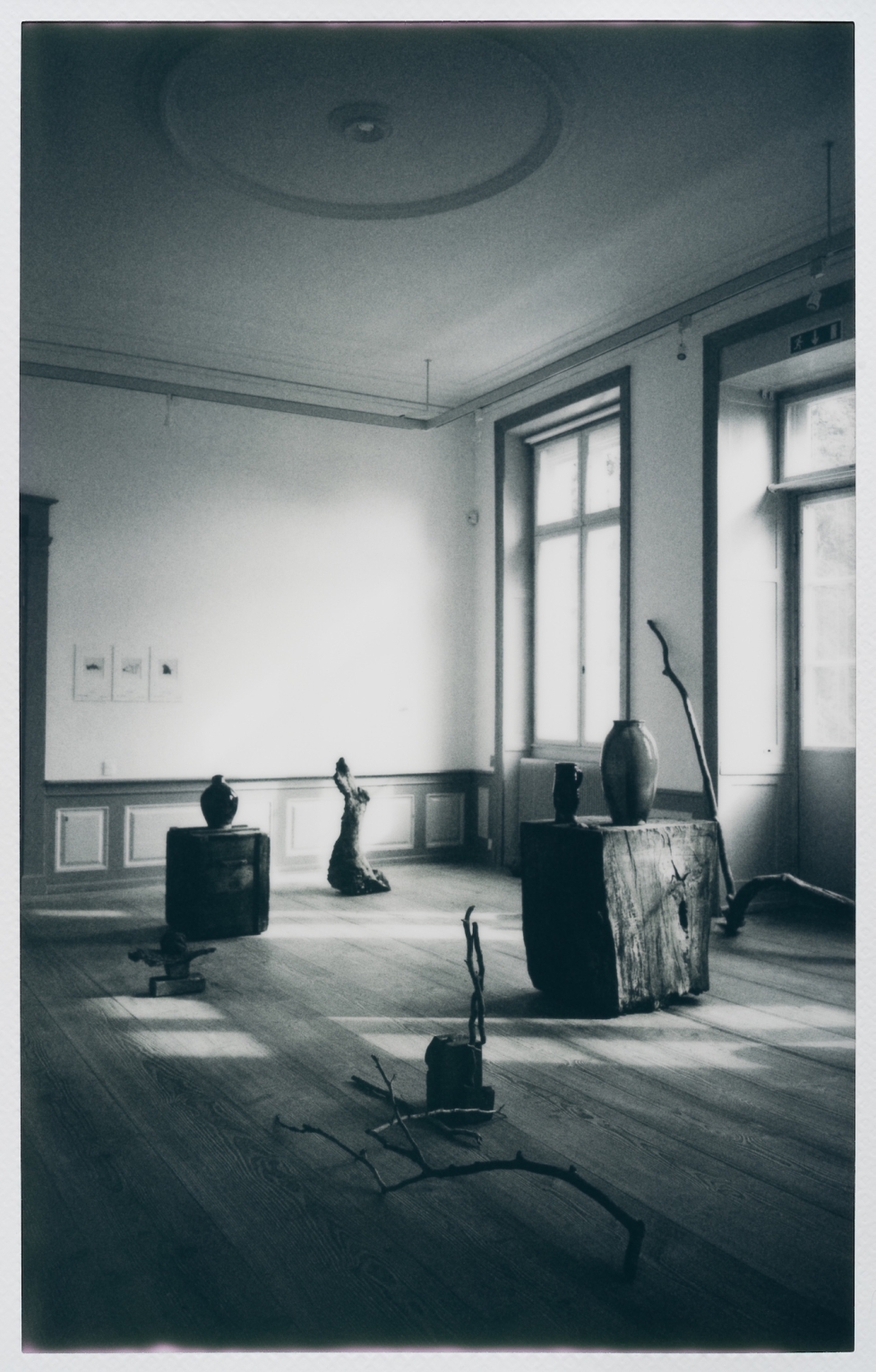
3. Natsuko Uchino, Forest Matter, 2026
The architectural duo Mentze Ottenstein are back at Sophienholm, where they curated that ever-so-snazzy exhibition on baskets and weaving back in 2024. This time, it’s all about what goes into the baskets: mushrooms. While I was lured here by those Paul Thek works, there was so much more on offer. Sanya Kantarovsky’s woven mushroom fellow with his snub nose. Or Günter Grass’s trippy, quite Raymond Pettibon-ish mushroom drawings. But what struck me most were the Japanese-French artist Natsuko Uchino’s arrangements of fermentation jars, tree stumps, branches and stones. It takes a very particular hand – and spirit – to create such loose, free, open arrangements in space without lapsing into cuteness or the preciousness of an interior stylist. It’s an extension of a Japanese tradition, of course, but one with a Danish counterpart too: the animism of the island of Bornholm, for instance, in Lisbeth Munch-Petersen’s high-fired ceramics, or Emil Westman Hertz’s loose arrangements in a wild rock garden. It’s that particular connection between pickled herring and punchy sake that Mentze Ottenstein have shown such a keen feel for before.
– On view in BEATA RURIS OTIA FUNGIS DANICIS Blissful Hours in Nature Among the Danish Fungi, Sophienholm Kunsthal, Kongens Lyngby, until 17 January.
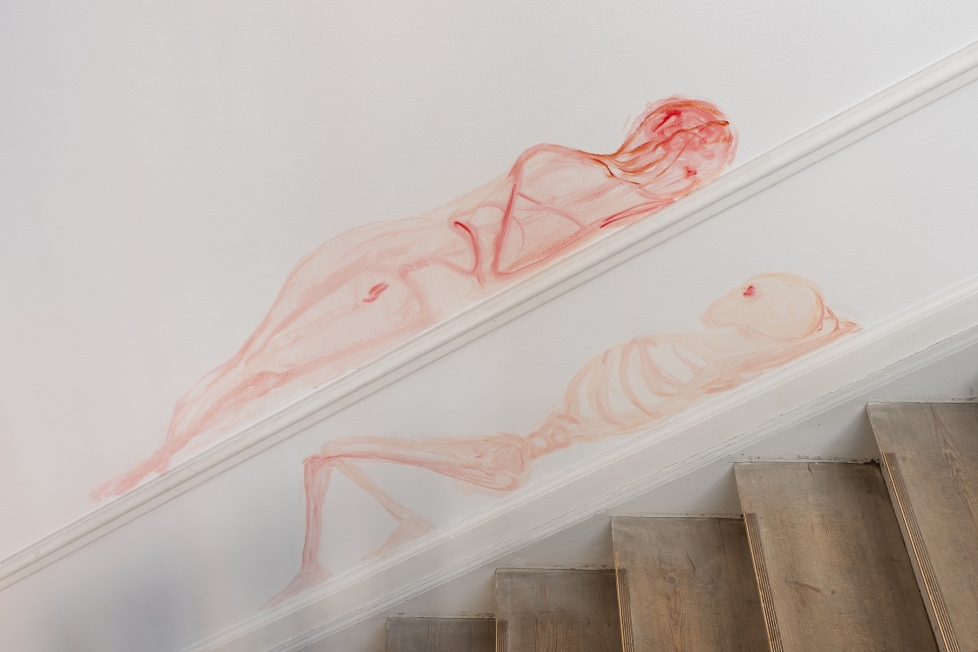
4. Kateryna Lysovenko, Regimens of Joy or Madness, 2026
Kateryna Lysovenko’s mural in the stairwell extends from the ground floor all the way up to the third. And its delicate, diluted acrylic paint somehow manages to overwhelm you by stealth. Halfway up the wall runs a strip of moulding, a narrow panel that Lysovenko subtly treats as a kind of demarcation line. Below it lies death: skeletons and skulls in heaps. Above is the world of the living, with its bald, flesh-coloured human figures. Some of them have open wounds, organs popping out here and there. Most are full of life, busy with a judicious mix of everyday and brutal pursuits. Catastrophe has lurked in Lysovenko’s paintings ever since Russia invaded her native Ukraine. The more washed-out and transparent the images, the more they become X-rays of something you can’t really bear to look at.
– On view in Still Joy, Gammel Strand, Copenhagen, until 10 January.
5. Henriette Heise, Untitled Ghost, 2026
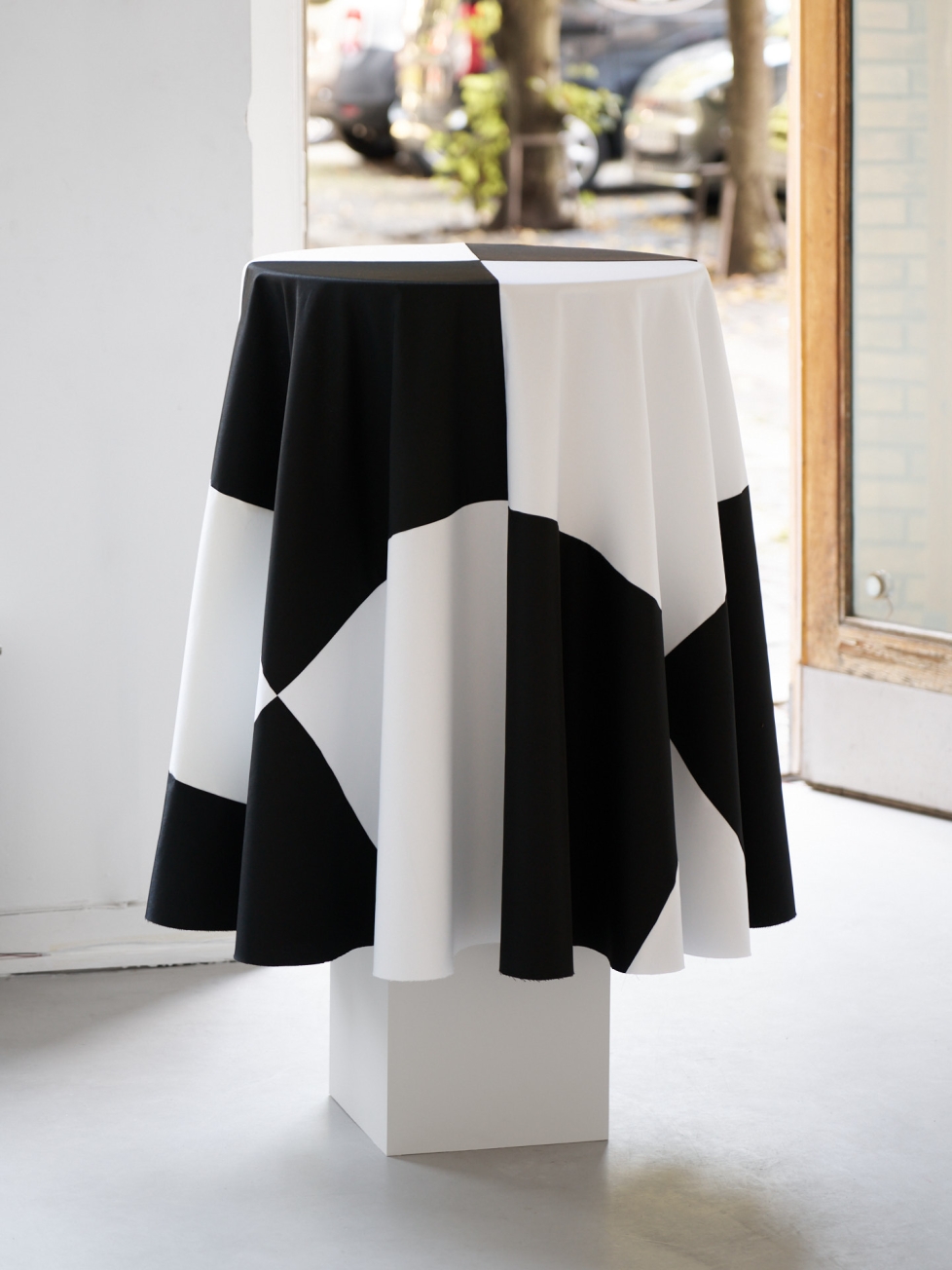
What Greenland, Denmark and the US signed last week was not a surrender of sovereignty but a so-called security agreement. Eight months earlier, things had been rather more fraught. Residents of Nuuk filled their freezers and stocked up on ammunition. Extra bags of blood were flown in from Copenhagen in case the Americans went ahead with the military operation the president had more than hinted might become a reality. On 14 January, the foreign ministers of Greenland and Denmark set out for Washington for some serious talks. Danish television broadcast from there all day. As everyone waited anxiously for the outcome, journalists stood outside the Danish embassy, stalling and waffling away. And all the while, the television cameras were trained on a tall cocktail table draped in a white cloth. Highly undramatic; almost comical, had the situation not been so serious. In Henriette Heise’s work, the diplomatic game of chess is suggested by a black-and-white patchwork cloth, stitched together from two tablecloths and draped over a plinth. The sculpture stands just inside the door of the former shop. Awkward and in the way, in a funny and striking elephant-in-the-room sort of way.
– On view in Invitation, All all all, Copenhagen, until 24 October.
Translated from Danish.