When Fatima Hellberg went from being director of Bonner Kunstverein to taking over Mumok – Museum Moderner Kunst Stiftung Ludwig Wien, she became one of the youngest directors of a museum of that size in Europe. Yet the appointment passed almost unnoticed in her native Sweden. More interesting than the prodigy’s young age, however, is what her programme suggests about the new generation of curators now beginning to succeed the art world’s 1960s and 1970s generation.
To investigate, I took the budget flight to Vienna, where Mumok towers like a dark ship above the city’s Museum Quartier. Instead of windows, the building has narrow slits resembling those of a medieval fortress. Saying a quiet prayer, I hoped to avoid a rain of arrows and boiling oil as I approached the museum in the heat of the blazing Central European sun. Hellberg has promised to open up and revitalise this institutional monolith, something that will surely require both a firm hand and a clear mandate.
Hellberg’s programme premiered last week with two exhibitions occupying the entire museum. In the basement, Tolia Astakhishvili’s process-based installation Figure of the Child, co-curated by Manuela Ammer, is on view. Across the remaining five floors is the collection-based exhibition Terminal Piece, co-organised by Mumok’s Danish chief curator Lukas Flygare.
The phrase “collection-based exhibition” is key because Terminal Piece is neither a thematic exhibition nor a traditional presentation of the museum’s collection, but a hybrid form. As an opening statement, it signals not only a new way of reading the museum’s holdings, but also a distancing from the pedagogically organised exhibition practices associated with the so-called educational turn, in which art primarily functions as an illustration of existing knowledge or social problems.
In Terminal Piece, there is instead a clear reluctance to reduce art to a pedagogical instrument. The curators make no sharp distinction between historical and contemporary art, but the important thing is not the dissolution of timelines. Rather, it is how works are activated through selection and spatial relationships. I interpret this as a shift away from a curatorial logic in which exhibitions are expected to explain how things are, toward an approach that emphasises selection and formal precision.
Where some curatorial positions over recent decades have been characterised by rapid production and pedagogical clarity – often in close alliance with institutional and art market demands for visibility – Hellberg and Flygare insist on a more restrained, almost classical curatorial stance.
Terminal Piece consists of over four hundred works from the collection paired with both borrowed and newly commissioned pieces. Its point of departure is the American feminist writer, activist, and artist Kate Millett’s eponymous installation from 1972 which was Hellberg’s first purchase as director. The show is divided into four acts and begins with Millett’s work on the top floor. Visitors then move downward through the building, ending in the basement where ‘Act 4’ is shown alongside Astakhishvili’s work.
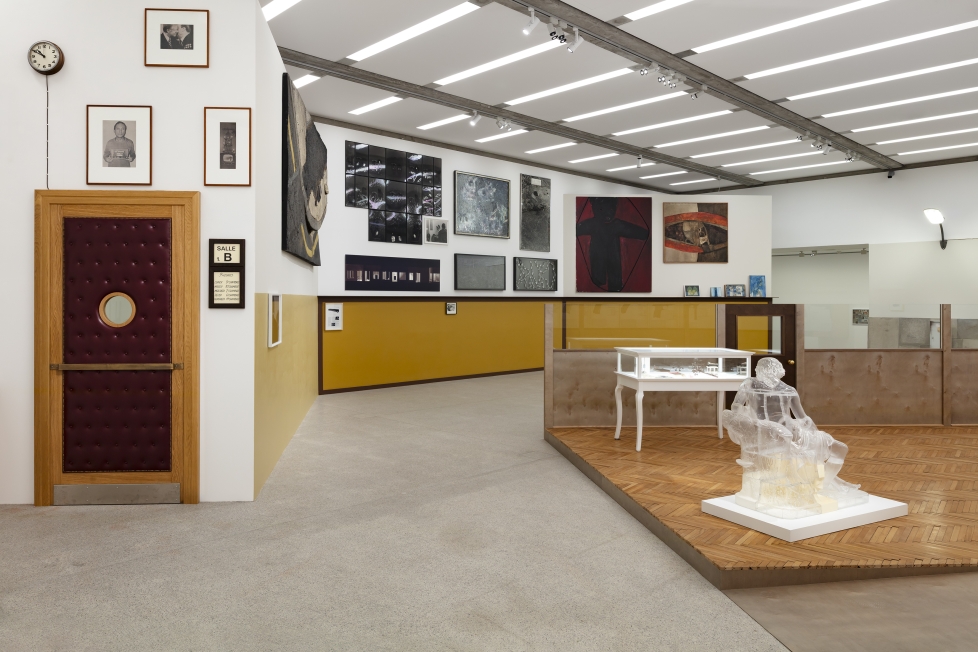
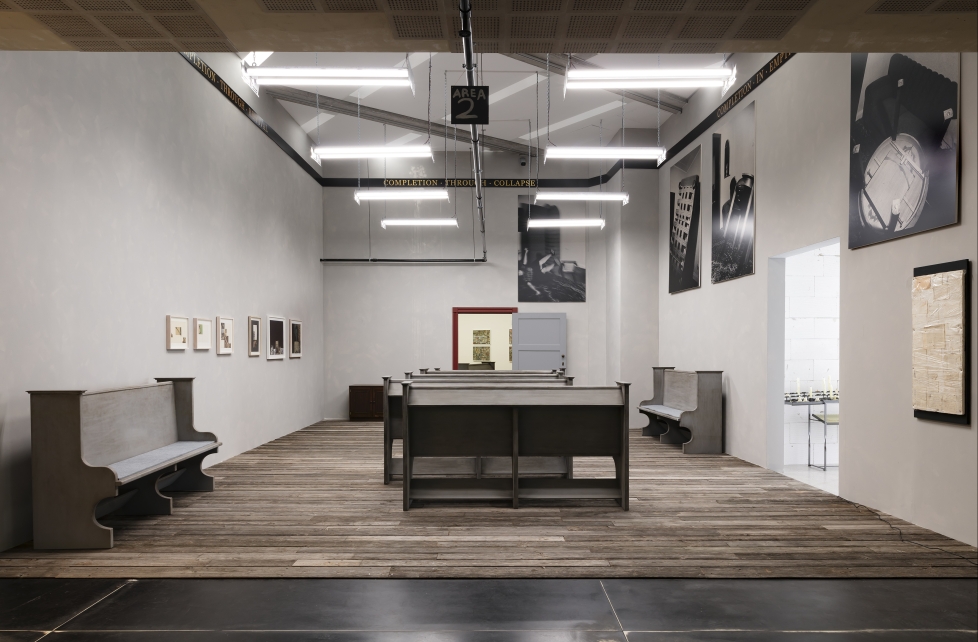
On the first floor, there is also a prologue in which works from the collection are displayed in a sequence of haunting rooms by the scenographer Anna Viebrock. What feels like remnants from some forgotten theatre play includes a bourgeois interior and a church hall with roughly planed floorboards. A series of distinct knocks from a cabinet makes me think that some old Fluxus ghost is making itself known. After consulting the almost illegible exhibition brochure, however, I realise it is a work by Leander Schönweger, an Italian artist from the same generation as the curators.
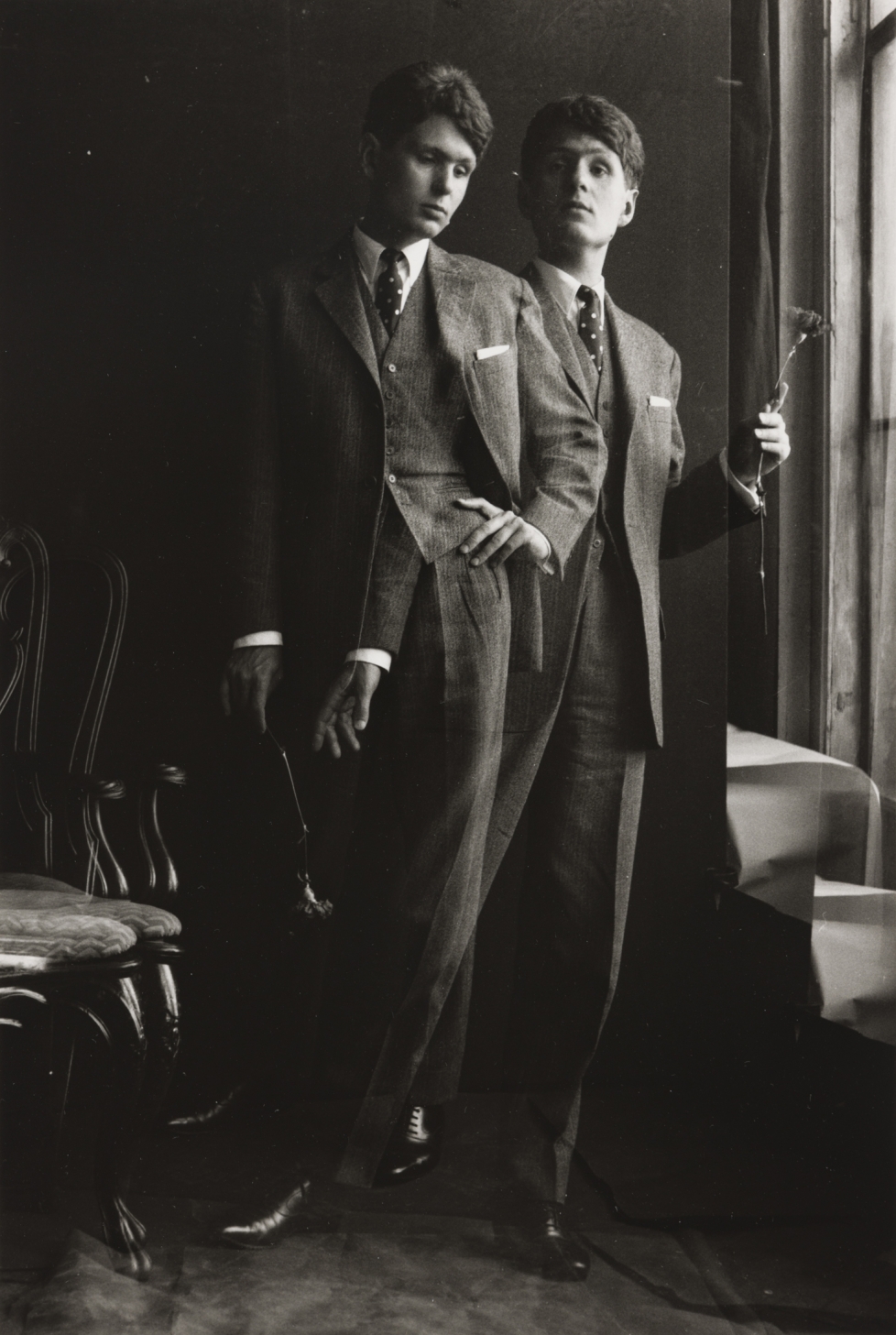
An undefined institutional milieu featuring artists such as Daniel Spoerri, Dieter Roth, and Paul Thek is followed by a corridor displaying photographs of the Viennese Actionist Rudolf Schwarzkogler dressed as a dandy and ending with a hotplate work by Rosemarie Trockel. More than seventy works, primarily by Central European and American postwar artists, are displayed in a disorienting exposition where it is not always easy to distinguish between artwork, environment, and stage design.
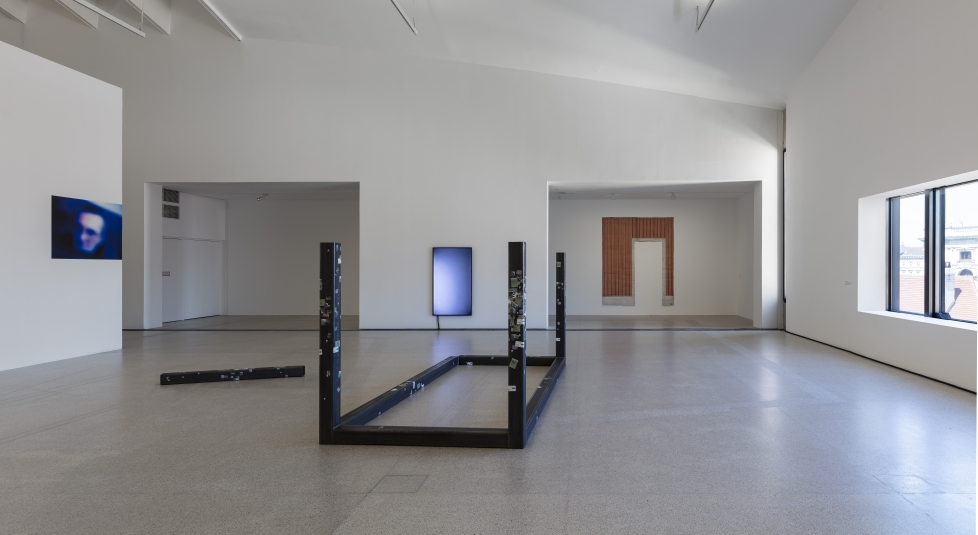
Viebrock’s scenography comes across as a portrait of an era that has ceased to believe in progress. In practice, however, it destabilises the viewer’s spatial expectations, as art, setting, and institution can no longer be fully separated. What is presented is less an idea of historical collapse than a demonstration of how perception itself is spatially structured.
In this way, the prologue anticipates what Terminal Piece refrains from doing: turning art into evidence for established historical arguments. Yet, this is not a retreat into a neutral or settled history. Rather, it suggests that that aesthetic problems can never be resolved by adopting a single correct political position. The point is not to abandon historical consciousness, but to remain attentive to how art demands continual re-examination.
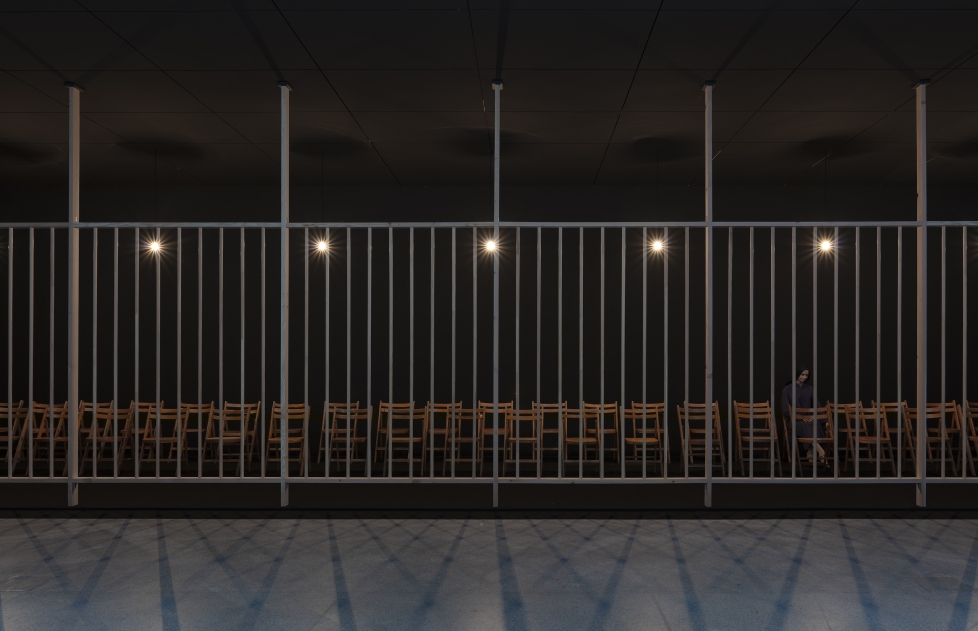
Next, I take the elevator through the shaft that cuts the building in half and arrive on the fifth floor. Here, ‘Act 1’ begins with Millett’s work, consisting of a wooden lattice running through a dark room. On one side stands the viewer. On the other side are rows of ordinary wooden chairs, all empty except for one. Sitting there is a lifelike doll – a self-portrait of the artist.
As a viewer, I am placed on a stage in front of the chairs where I imagine the audience would sit. At the same time, the chairs, illuminated by bare light bulbs, are also a kind of stage. As a viewer, I am simultaneously a performer and a spectator. What distinguishes this arrangement from an ordinary stage is the lattice, which transforms the stage into a cage. Both the doll and I occupy a stage and a cage at the same time, locked into a relationship of power that is strangely both coercive and dynamic.
In the adjacent corridor, Megan Plunkett’s large-scale photographs of upside-down household objects collected in bowls (Dissemblance 01–16, 2020–2026) lead into a large room where the building’s only window opens onto a panoramic view of Vienna’s rooftops. Melanie Counsell’s stage-like structure of steel beams, last moments seen from above (2026), brings to mind a public space, an association echoed by voyeuristic photographs of women taken by Czech artist Miroslav Tichý in the 1960s. In the room are also a series of vertical screens connected to a laboratory camera by Kobby Adi. At first they appear empty, but then I realise that they actually document the shifting atmospheres and light conditions.
What happens in ‘Act 1’ is that the position of the woman is centred, but not as a fixed fact. Rather, it emerges through changing relationships between space and vision. What does not happen is that Millett’s work is used to demonstrate, for instance, how patriarchal ideology is reproduced through art or how gender roles are culturally constructed. Instead, the primary concern is how her installation embodies an experience that is understood through direct sensory engagement with the work. Art is seen as a way of organising space that does not reproduce social hierarchies but rather destabilises relationships between subject and object, artwork and viewer. What matters is not the work’s message or content, but what it actually accomplishes in the room – and within the viewer.
In this way, what becomes important about, for example, Tichý’s work is not whether he was a good or bad person – whether his covertly taken photographs are reprehensible or not, or whether they should be exhibited or cancelled – but how it brings questions of vulnerability and surveillance directly into the viewer’s act of seeing. But not only that. The blurred women, often shown with their backs to the camera, also say something about transience and disappearance, and about the desire to hold on to that which is fading away. On my way out of the room, I realise that Plunkett’s household objects similarly deal with an almost ritual attempt to preserve what is fragile within a violent and exposed existence.
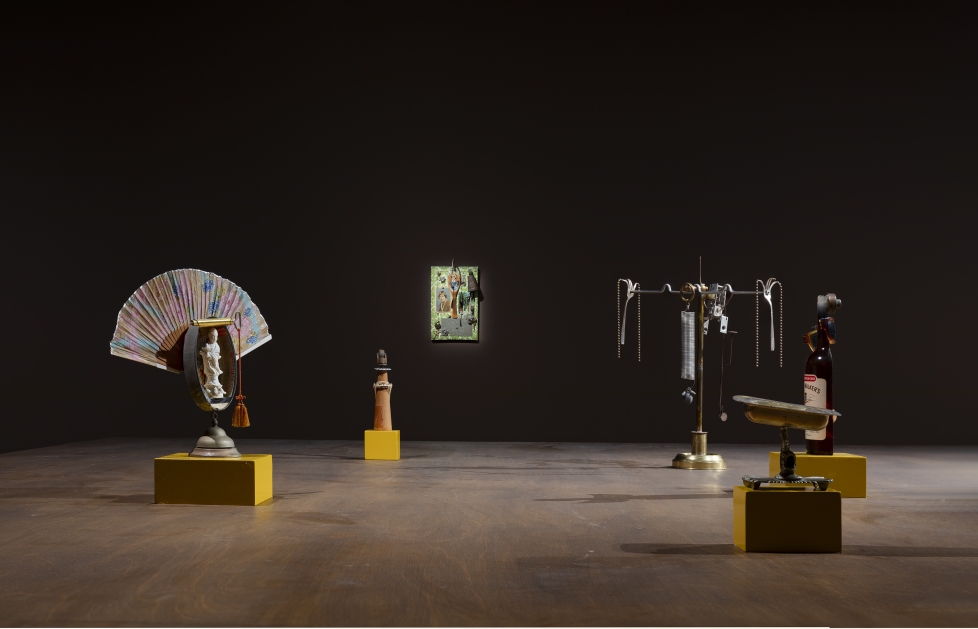
In this way, Plunkett’s works lead into ‘Act 2’, which shifts to a more intimate scale. Instead of LED screens and cold steel, we move closer to the body and the home. Louis Goodman’s post-Surrealist assemblages and Marc Kokopeli’s jewellery-like objects in exquisite boxes establish another kind of presence, one focusing on the fragmentary, the delicate, and the act of preserving. Here, Elisabeth Subrin’s montage film Swallow (1995), which deals with growing up as a girl, introduces a psychological dimension without reducing art to mere illustrations of an inner life.
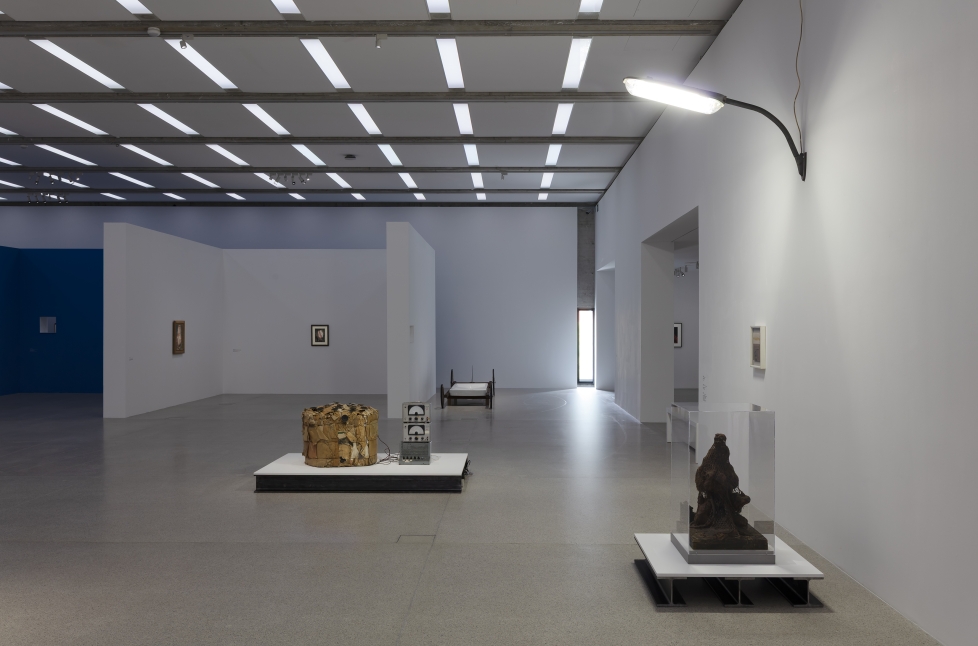
Nevertheless, the display insists on maintaining a strict frontal relationship to the works. Goodman’s objects, for example, are presented in a way that keeps the viewer at a distance, which feels more institutionally than artistically motivated and partly neutralises the works’ distinctiveness.
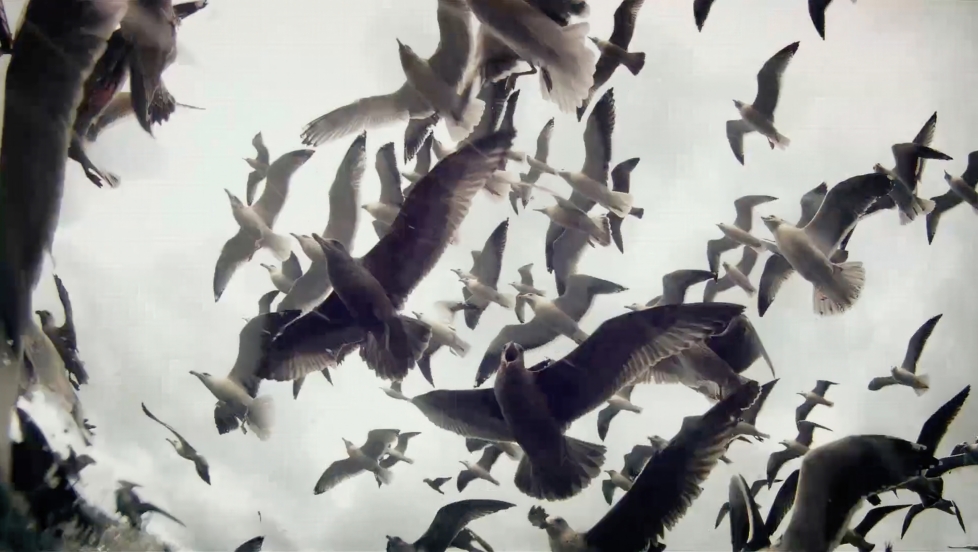
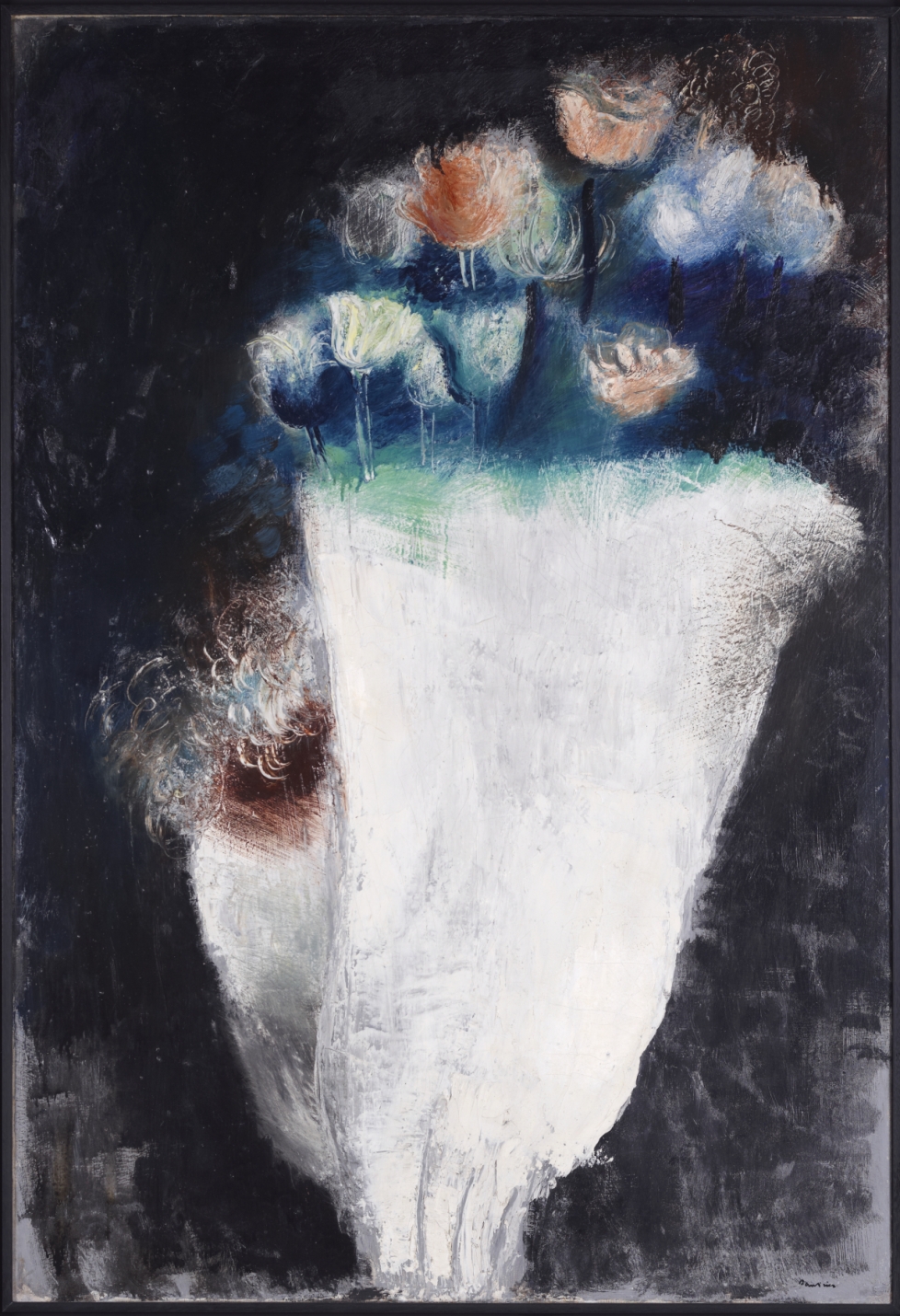
By contrast, in ‘Act 3’, Verena Paravel and Lucien Castaing-Taylor’s Leviathan (2012) throws us into a violent audiovisual maelstrom, decentering human vision through GoPro cameras going up in the sky or into the depths of the sea. The experience stands in sharp contrast to the more subdued works lined up on pedestals or shown in small chambers in the adjacent rooms. Here, Jean Fautrier’s ghostly head paintings depicting victims of Nazi violence, and one of Magdalena Abakanowicz’s severed old tree trunks echo the vulnerable objects and bodies upstairs.
This part of the exhibition most clearly extends the unsettling, difficult, and almost sublime relationship to art anticipated by Millett. At the same time, it is also here that it becomes most contradictory, balancing between a restrained curatorial control and a heavy canonical burden that continually risks pulling the works back into a more traditional art-historical reading.
Indeed, Terminal Piece does have something unfinished about it. Screens emptied of meaning make room for the viewer while suggesting an ethical stance where art is not about representing the world, but about opening up forms of attention that cannot be translated into humanist terms. This includes Astakhishvili, whose work might have more in common with the figure of the ghost than with that of the child. While both suggestive and beautiful, these exhibitions suggest a curatorial sensibility that favors mood over content, with openness sometimes slipping into indeterminacy.
But what is most remarkable about Hellberg’s programme is not that it presents a new theory about contemporary art. Most works on display can easily be categorised using established art-historical labels: Minimalism, Conceptual Art, Arte Povera, Fluxus, and their aftermaths. What matters is the discipline with which the ideas are executed. Terminal Piece trusts that artworks can speak through form, material, and relationships. At Mumok, visitors are neither schooled nor drawn into the museum through familiar positions of identification. The exhibition does something as radical as assuming that the audience is itself capable of feeling and thinking. The museum’s role, then, is neither to educate nor affirm the viewer’s beliefs, but to create conditions for concentration, judgment, and experience.
Nevertheless, we must ask what happens to the museum’s authority when it is expressed through spatial precision and perceptual control. When historical and contemporary works are brought into the same spatial logic, their differences risk dissolving into a general structure of experience. If a museum no longer explains art but stages how it can be experienced, its statements become difficult to challenge, appearing less as interpretations than conditions for the experience itself. Does this turn it into an authority operating through how the world feels, rather than how it is understood?