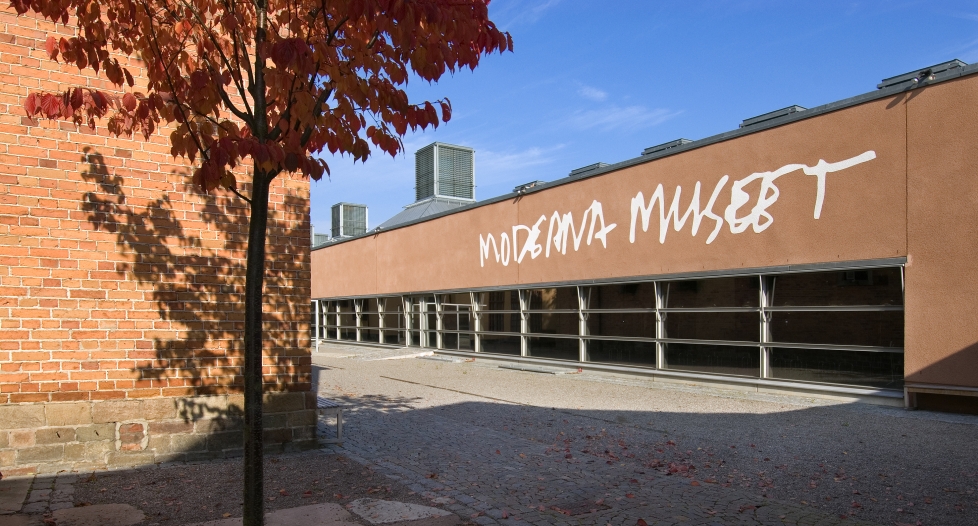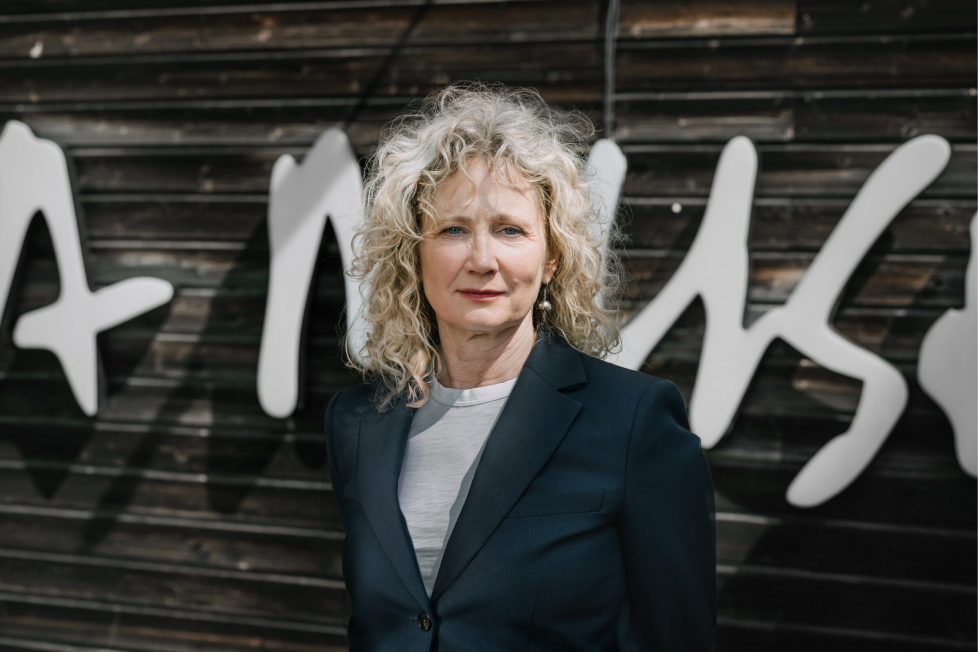
Moderna Museet is to become an international model, said board chair Lars Strannegård during yesterday’s press conference in the Swedish Parliament, something with which the institution’s new director agreed. Tone Hansen will become the first director of the new Moderna Museet – which, following a merger, will consist of what were previously three separate government agencies: the Public Art Agency Sweden, ArkDes, and Moderna Museet.
Born in Kirkenes, Norway in 1970, Hansen trained as an artist at the art academies in Oslo and Malmö. She has been director of the Munch Museum in Oslo since 2022, and between 2011 and 2022 was director of the Henie Onstad Art Centre in Oslo, which collaborated with Moderna Museet on several major exhibitions featuring artists such as Hilma af Klint, Yayoi Kusama, and Marina Abramović. She now succeeds Gitte Ørskou, who is leaving Moderna Museet after seven years as director.
Hansen’s new position means that she will move from one workplace marked by internal conflict to another. The Munch Museum was recently forced into major staff reductions, while there have also been reports of concerns about the working environment at Moderna Museet. The online journal Magasin K, which covers working conditions in the cultural sector, describes the Stockholm museum as characterized by “strict personnel policies, an increasingly hierarchical organization, and leadership that in parts has led to fear and anxiety.”
At yesterday’s press conference, however, the atmosphere was upbeat. Both Minister for Culture Parisa Liljestrand and board chair Strannegård radiated confidence. Hansen had traveled to Sweden for the announcement but was already back at the Munch Museum on Monday evening, where she will remain until 1 September, before relocating fully to Stockholm.
What made you accept the position?
I see it as a large and exciting challenge that three institutions are now being merged into one. There is a lot of potential in this new place. Now that I have become more familiar with the Public Art Agency Sweden and the extensive work it does across the country to support local art development and smaller institutions, I am even more excited.
Three of Sweden’s most important public art institutions are now becoming a mega-institution with significant influence over the nation’s art world. You yourself have a background as an artist and are now taking on an unusually powerful position. How do you view that?
I take my position of power very seriously, and I think it is a good question to ask and important to reflect on and be aware of. Moderna Museet has become a place with multiple voices that each know their areas of expertise, and it will be important for me to highlight these areas, although I cannot know everything myself and will need support and knowledge around me. My background as an artist makes me particularly attentive to the fact that the museum is also a workplace for the artists who exhibit there. It will be important for me to take responsibility for all parts of the artist’s work.
What risks do you see in so much power being concentrated in a single government agency?
I am concerned that we assess the risks associated with our position and take into account that many voices should have a place within the organisation. Public Art Agency Sweden will also continues to maintain its own decision-making structure for matters that fall outside my mandate – which I believe is wise.
You are leaving a museum in turmoil after major cuts to take over another museum where there have recently been reports of a strained working environment. What do you take with you from the Munch Museum regarding large and small conflicts within cultural institutions?
There is no doubt that the cuts have had consequences for the working environment at the Munch Museum. At the same time, we are in the process of rebuilding the institution with a new and ambitious program. One experience I bring to Moderna Museet is that there must be room for multiple perspectives, and that we show respect for each other’s knowledge.
Many contemporary museums have ended up in what could be described as an anxious and politically correct position lacking in bold gestures. What do you think about that?
In uncertain times, it is important to safeguard our cultural heritage and address difficult societal issues, but not necessarily to seek conflict for the sake of conflict. The central task of Moderna Museet is to remain relevant to its time. At the same time, it is important that artists feel they have full artistic freedom and security. Art can be a kind of micro-diplomacy that maintains good relations with the outside world when other areas fail in turbulent times.
What is your artistic vision?
The program is already set for some time ahead, so it will take a while before my vision becomes visible. An exciting part of the new institution is that we will do more research and build up an entire research milieu. There is an expectation of new knowledge as part of our mission, and this will be structured and formalised. It will also be exciting to get to know the role of ArkDes and the Public Art Agency Sweden, and I am pleased to discuss themes that we can work on further there. MoMA in New York, M+ in Hong Kong, MACBA (Museum of Contemporary Art of Barcelona), and Museo Reina Sofía in Madrid are some of my role models. I want Moderna Museet to become a place of warmth, care, and creative ideas.