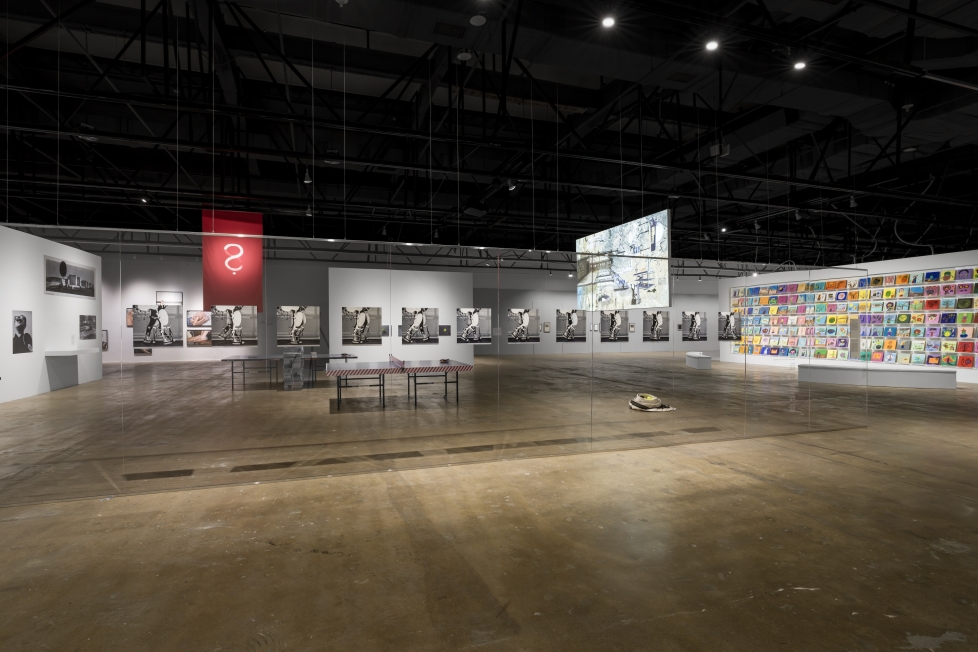
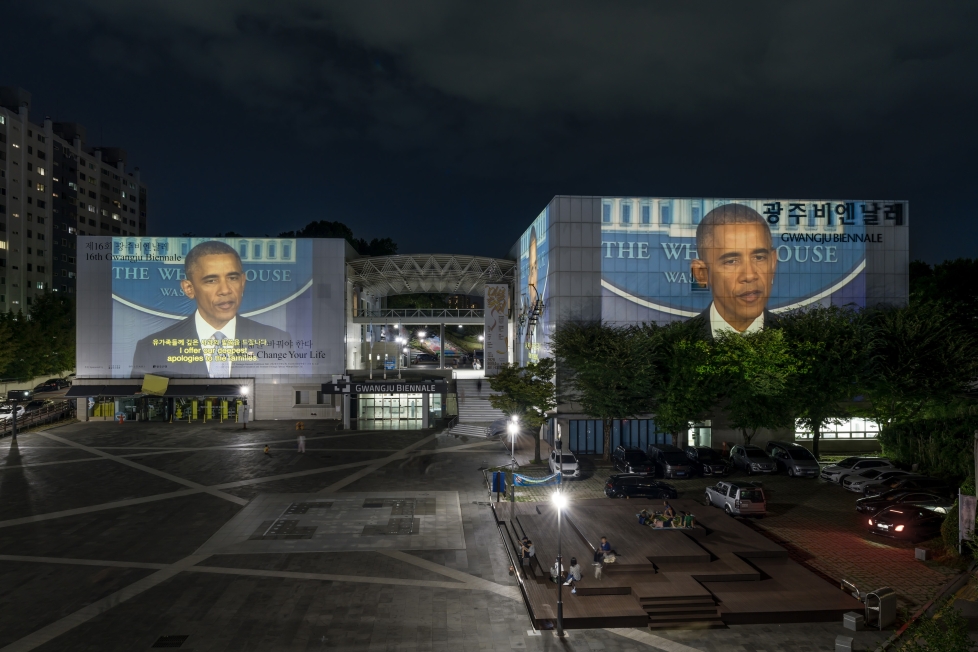
The title of this year’s Gwangju Biennale, You Must Change Your Life, does not feel ironic. It is a sincere imperative, albeit one that might have landed better at another moment. The biennial emerged in the wake of the city’s 1980 uprising against military dictatorship and South Korea’s subsequent process of democratisation and thus carries with it a history of collective change. But in 2026, the phrase sounds as though it has been lifted straight from a manual for techno-assisted self-optimisation – perhaps especially in a South Korean context, where the pressure exerted by looksmaxxing and similar social trends has never been more pervasive.
The curatorial team, with co-curators Che Kyongfa, Park Gahee, and Brian Kuan Wood led by Singaporean artist and filmmaker Ho Tzu Nyen, has taken inspiration from Rainer Maria Rilke’s poem “Archaic Torso of Apollo” (1908). Although it is not explicitly mentioned, Peter Sloterdijk’s book You Must Change Your Life (2009) is probably another source. The book opens with a reading of the same Rilke poem and goes on to present a theory of the human being as a creature that shapes itself through repeated practices, what Sloterdijk calls “anthropotechnics.”
Rilke wrote the poem during a period when he sought to render pure materiality in writing through his idea of the Dinggedicht, or “thing poem.” The injunction to change comes in the final line as a sudden encounter with something mute and fragmentary; the poet never explains why or how one is supposed to change one’s life. In this sense, the curators’ interpretation is entirely in keeping with the poem. At the same time, the unspecific emphasis on change for change’s sake dilutes the exhibition somewhat, applying the theme across five “chambers” to everything from the body’s porous boundaries and nature’s smallest building blocks, to the cosmos itself.
artist.
Dilution aside, the method underpinning the exhibition is interesting, because here the curators do in fact take their own title seriously: they have genuinely changed the structures governing what a major biennial is supposed to be. With just forty-two artists and a single venue (compared to seventy-three artists and nine venues in Nicolas Bourriaud’s 2024 edition), the emphasis falls far more heavily on artistic practices than on individual works. This allows the selected artists to recur throughout the exhibition, with the themes of its different sections illuminating different aspects of their practices. One might also imagine that the approach has freed up money for higher fees and deeper curatorial engagement with the participating artists. All are commendable priorities which, for the most part, benefit the viewer.
The curators’ presentation of Rossella Biscotti is a good example of the biennial’s ambition to explore an artistic practice in depth across several themes. Her contribution is described as an alternative portrait cycle in four different registers. In the first gallery, a 2019 series of rust-red and orange rubber carpets depict abstracted female figures from the period of Dutch colonial rule over Indonesia, using batik patterns printed onto one of that same colonial power’s most important raw material exports. In the next gallery, devoted to the body, Alfabeto (2018) presents Biscotti’s own legs during physical rehabilitation in a series of photographs that reference Eadweard Muybridge’s montage aesthetic.
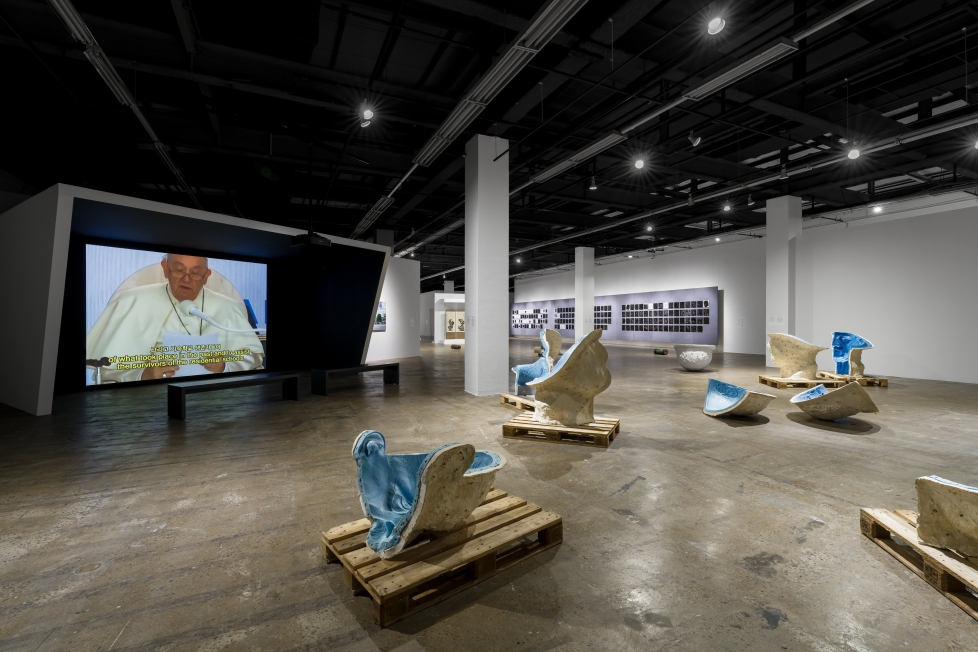
The Heads in Question (2015) recast heads of Mussolini and Vittorio Emanuele III in blue and white resin, allowing the hollow forms and soft material to introduce a sense of fragility into the stern Fascist monuments. In the gallery covering the cosmos, meanwhile, we encounter a neon sculpture of the 3.2-million-year-old hominin fossil Lucy (2026). Biscotti’s use of imprints, absence, and recasting as methods applied across colonial history, Fascism, deep time, and the artist’s own body neatly adheres to the exhibition’s organising principle, making its theme of change tangible without trivialising it or confining it to a single perspective.
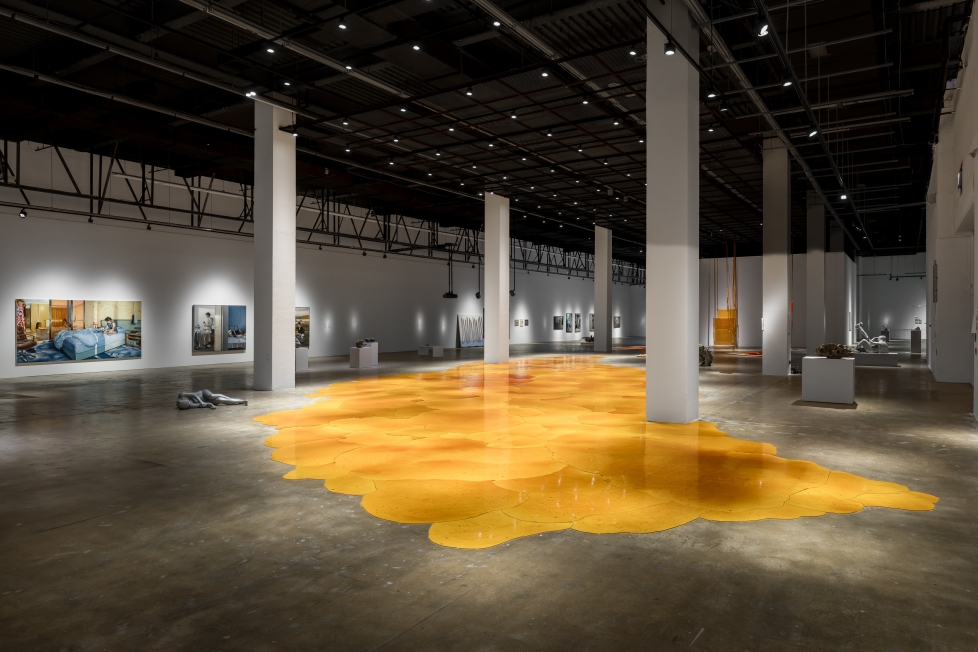
The artist duo Goldin+Senneby is likewise represented across multiple sections of the exhibition with works that combine humour and systemic critique. In an amber-hued dialogue with Biscotti’s rubber carpets, their two-tonne river of glowing golden pine resin, Resin Pond (2026), is the first thing you come across in the exhibition. The work hovers at the point where healing tips over into harm. It is rooted in Jakob Senneby’s own experience of living with multiple sclerosis, a disease in which the immune system attacks the nervous system’s protective mechanisms. Resin performs a similarly double function in nature: it acts as a sealing plaster scabbing over a tree’s wounds, while also being so energy-dense that it can be processed into aviation fuel.
In the duo’s Lego Pedometer Cheating Machines (2019), Lego robots stand on the floor in various inconspicuous corners throughout the exhibition. Each is outfitted with a smartphone that the robot shakes in a steady rhythm, allowing a pedometer app to register movement. The contraption is based on an existing practice described on online forums, instructing people as to how to build such devices to circumvent health insurers’ activity requirements. The work may be the only genuine example of an ironic subversion of the biennial title’s proactive injunction, uttering a different call: “Don’t change your life.”
Gallery.
Although several artists contribute explicitly political works (with Kiri Dalena, Maya Watanabe, James T. Hong, and Wang Tuo among the most prominent), the exhibition as a whole has a restrained and subdued tone. The connections between the vulnerable, the private, the empathetic, and the everyday form its strongest threads, which only further underscores the biennial’s slightly misplaced title: these are the works that sit furthest from it.
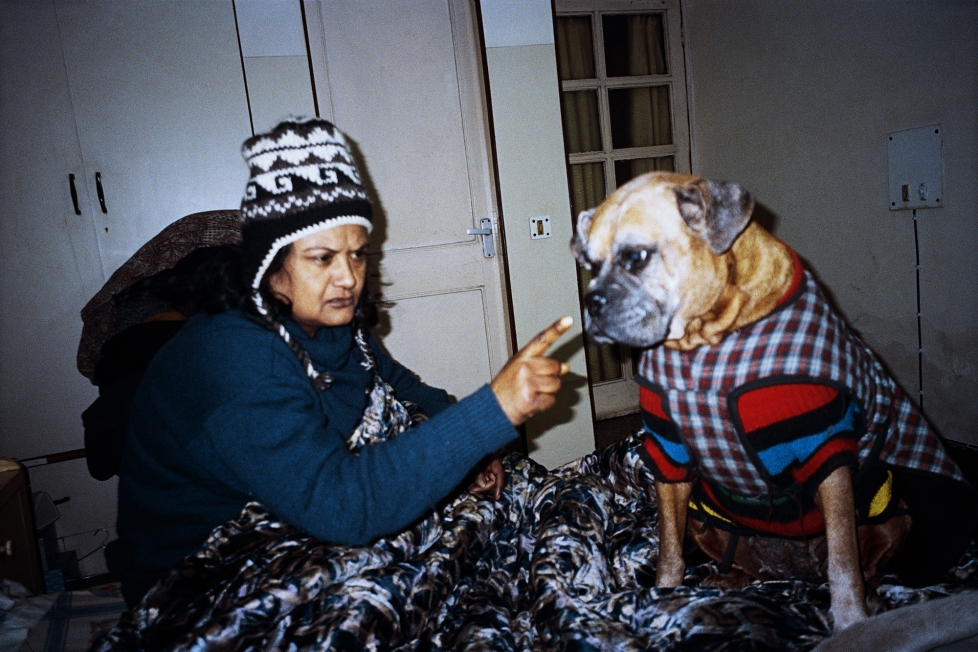
Resembling family albums, Sohrab Hura’s montage works Bittersweet (2019) and Life is Elsewhere (2005–2011) handle topics like his mother’s paranoid schizophrenia and his family’s vulnerability with an unsentimental tenderness, while Daisuke Kosugi’s film A False Weight (2019) soberly follows Tadashi, a retired architect loosely based on the artist’s own father, whose disciplined daily routine is gradually disrupted by a neurodegenerative disease. Tadashi is played by the butoh dancer Toru Iwashita, whose practice already revolves around finding expressive possibilities within the body’s limitations.
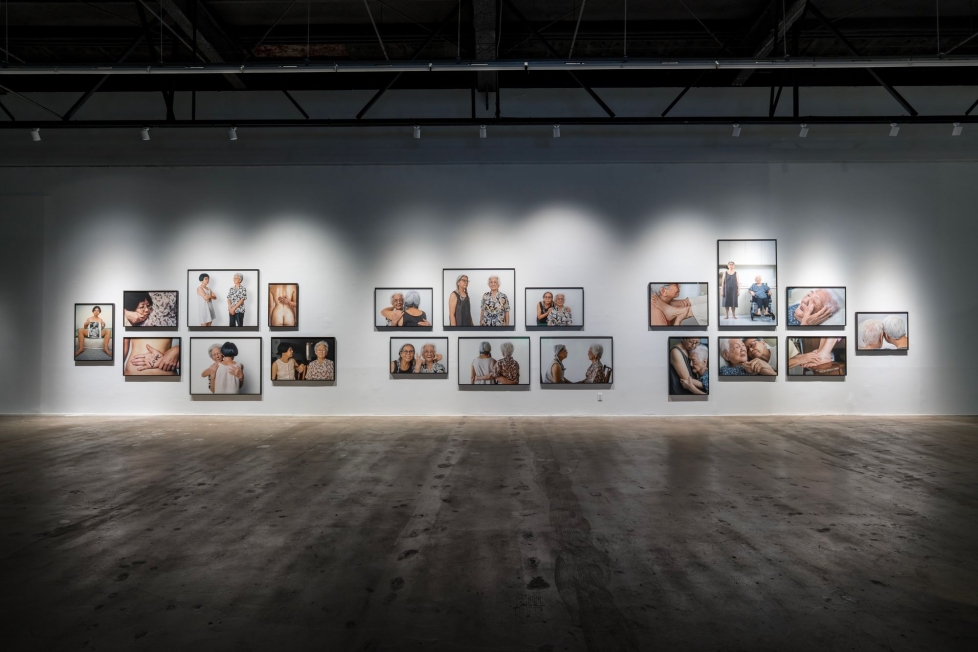
Amanda Heng’s long-running project Another Woman in Gwangju 1996/2014/2023 (2026) is the work that most poignantly fulfils the biennial’s premise of a practice repeated and transformed over time. Heng and her mother have posed together before the camera on three occasions. The resulting body of photographs resemble one another, but their subjects’ roles change with each new iteration. Where the mother once supported the daughter, it is increasingly the daughter who supports the mother, while the glances they exchange move between self-consciousness, gentleness, and concern.
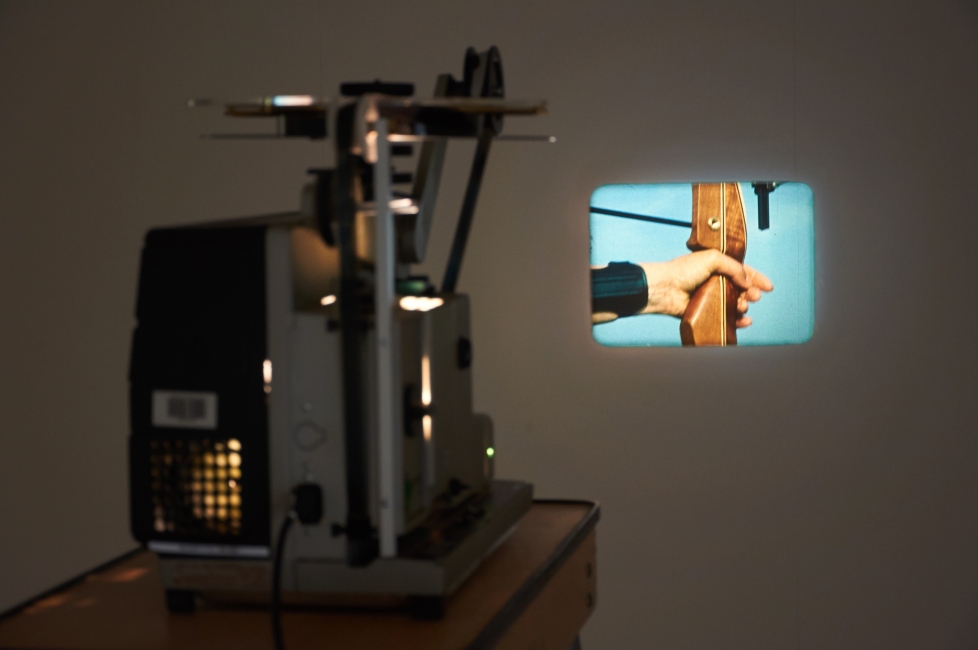
A K Dolven’s contribution is similarly and deliberately interested in time and repetition. Her works in the exhibition range from the spare, near-identical text panels of the series one day more (2019–) – hung almost as a reflection of Biscotti’s Alfabeto – to the forceful, Yves Klein-subverting hitting a mountain (2022), which the artist created by pressing her own paint-covered body against a vast aluminium canvas, and the 16mm film amazon (2005), which revisits the myth of the Amazon warrior’s removed breast through the lens of the experience of breast cancer.
While the principle of showing fewer artists and multiple works from each practice generally works well, in places it is blown entirely out of proportion. The painter Sasaki Ken has somewhere between fifty and sixty works scattered throughout the exhibition, all of them figurative paintings of objects such as shoes, tablecloths, tea towels, tennis balls, and a fire extinguisher, all rendered in a consistent and relatively neutral style. No obvious reason is given for why this particular artist should occupy so much more space than the others.
The same problem arises with the repeated inclusion of volcanic rocks from Jeju (listed, in New Materialist fashion, on equal terms with the human participants, meaning that they are not a contribution made by an artist). According to the wall labels, the stones are supposed to “echo one another” across the rooms, but in practice they feel like the same mute objects repeatedly recurring without adding anything new. I often had much the same feeling when reading the wall texts, whose tone I generally found didactic. Each gallery opens with an instructive maxim attempting to balance the specific and the universal, such as “we can always change the way we learn.”
Having said that, it should be added that the curatorial team moves skilfully and knowledgeably between Eastern and Western traditions, and the aphoristic, maxim-like form may be rooted in a rhetoric that in some contexts would perhaps not be perceived as didactic, but simply as another way of bringing wisdom and public engagement together. In other words, the didacticism is not necessarily a flaw in itself, but it sits awkwardly within a biennial that simultaneously and consistently situates the works within a Western critical and literary context, whether through Rilke’s poem or the opening wall text’s comparison of the recurring artists to Virgil guiding Dante through the successive circles of hell and purgatory in the Divine Comedy (c. 1321).
At one point, the curators state that they understand artistic practice as techniques repeated at regular intervals in order to bring about change, an idea that once again comes close to Sloterdijk’s concept of anthropotechnics. This describes the exhibition’s actual form far more accurately than any of its didactic passages. Here, repetition itself functions as an exercise in change, both within the individual works (Dolven’s and Biscotti’s montages, Heng’s and Hura’s growing archives of family photographs) and in the curating of artists who return in new constellations throughout the exhibition. The format of fewer artists and a deeper focus makes for an unusually organic biennial experience, in which repetition strengthens the artists’ practices in relation to one another. Hopefully, the model will inspire more major biennials to follow suit.
Barbara Wien, Mendes Wood DM, Kaufmann Repetto and 303 Gallery. Photo: Robin Watkins.
Translated from Danish