If the autumn season was characterised by an obsessive focus on the medium of painting (or so I claimed), the coming spring sees an uptick in institutional exhibitions marked by social engagement and technological curiosity, and where space rather than the pictorial surface – to put it in broad terms – emerge as a primary format.
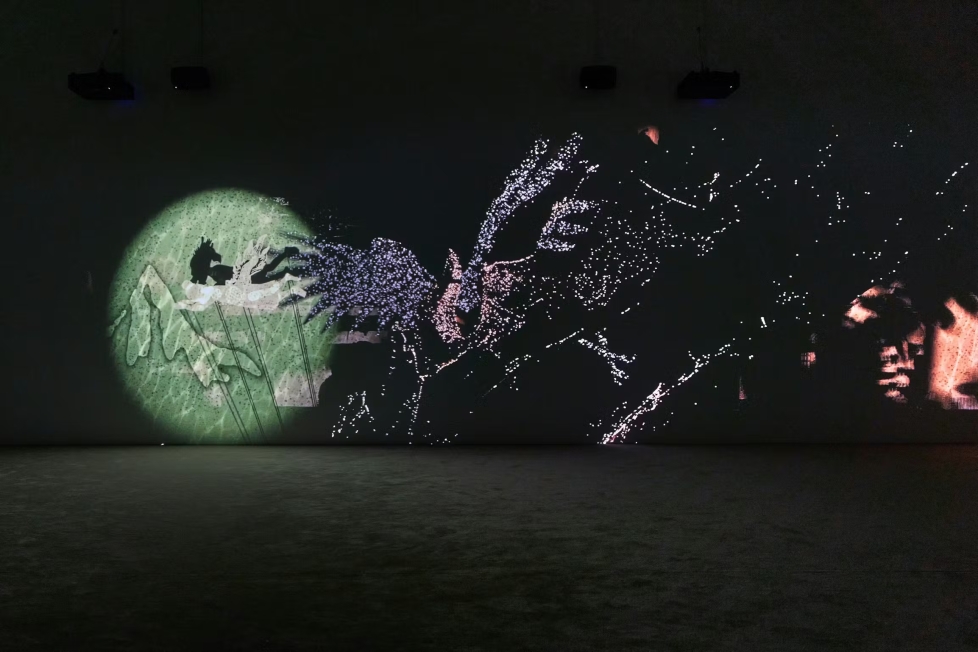
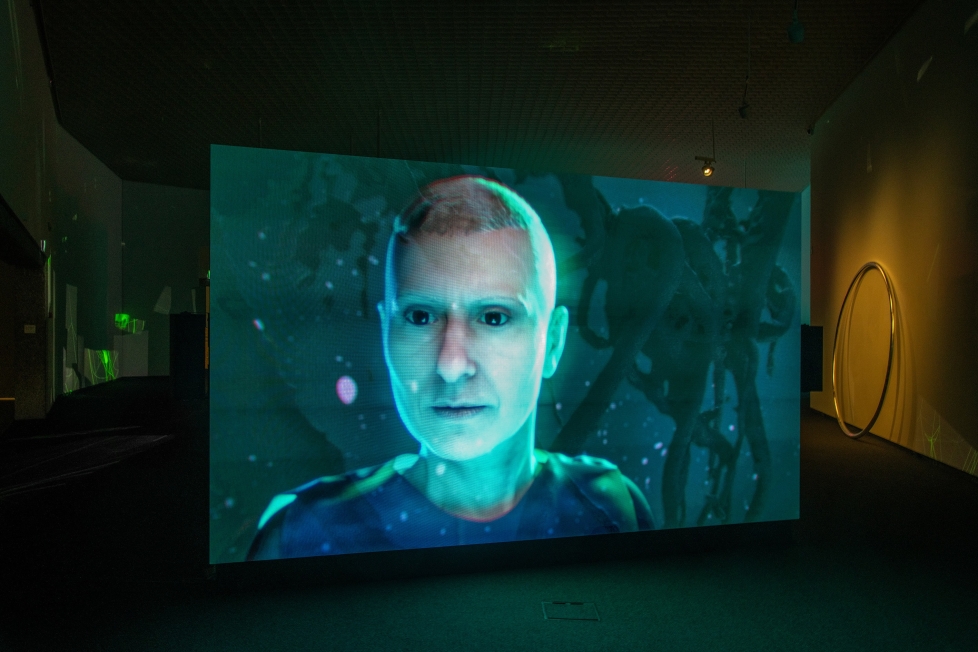
Ann Lislegaard has long been a familiar presence in group exhibitions with technological and/or ecological inflections – and there have been quite a few of those in Norway in recent years, most recently last autumn’s Munch Triennale, still on view, where she is, unsurprisingly, included. Now this influential practice is finally allowed to unfold on a larger scale. Last week saw the opening of her first solo exhibition in Norway in nearly twenty years, at Henie Onstad Art Centre, featuring, among other things, drawings made under hypnosis and the sounds of extinct bird species. In early February, it will be followed by Grammars of Light at the Astrup Fearnley Museum, where Lislegaard appears alongside Cerith Wyn Evans and P. Staff in an exhibition in which the use of artificial light and an expansion of Minimalism’s spatial vocabulary serve as common denominators.
Bergen Kunsthall opened the year in a literally darker register, with a rereading of Ludvig Holberg’s Niels Klim’s Underground Travels (1741) – the Nordic region’s first science-fiction novel, it is claimed – in the group exhibition Iter Subterraneum. An unmistakable new-materialist enthusiasm runs through the exhibition text, which calls for entanglements with plant intelligence and with unruly, unclassifiable forms of existence. Among the participating artists are Mira Adoumier, Ovartaci, Kaare Ruud, and Anicka Yi. A far more sober and practically oriented approach to environmental questions is taken in Nitja’s Imagine New Stories, Write New Rules, which opened last week. Bringing together artists who work with strategies adapted to the climate crisis – including Paweł Stypuła, Hilde Frantzen, and Katja Høst – the exhibition promotes extensive material reuse and enforces a ban on air travel and new productions.
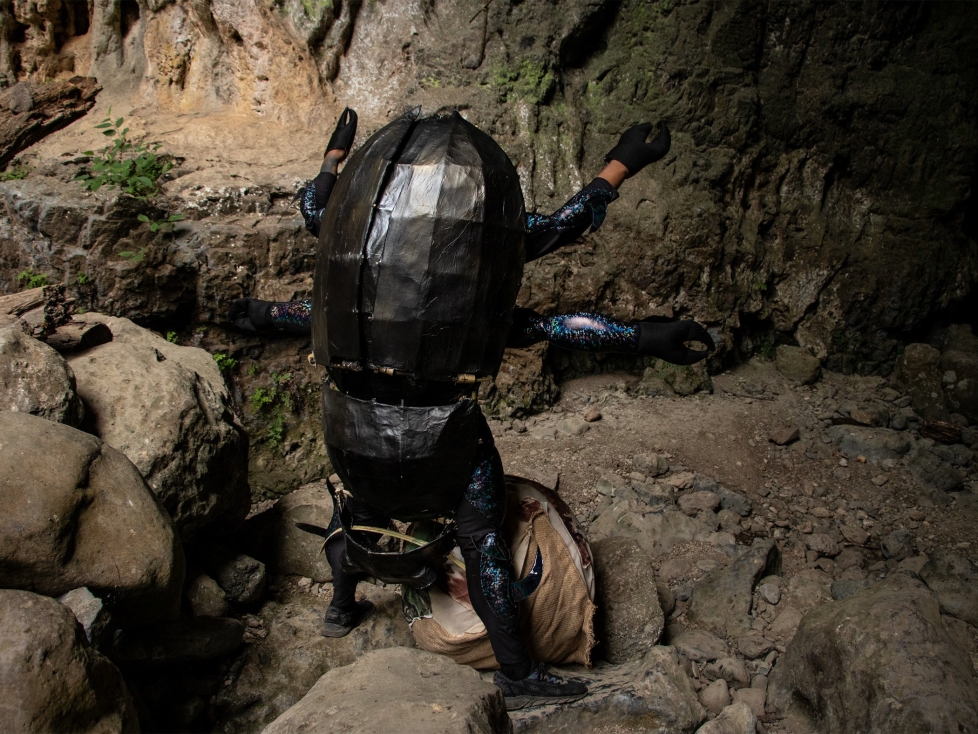
In February, Trondheim Art Museum opens the most extensive solo exhibition of Outi Pieski on Norwegian soil to date. Produced in collaboration with Malmö Art Museum and centred on the artist’s home region of Ohcejohka (Utsjoki), the exhibition stages a Sámi worldview “in which all beings – visible and invisible – are interconnected and mutually dependent.” The message is similar to the one Pieski delivered when her monumental public commission in Oslo’s new Government Quarter was unveiled toward the end of last year. Synnøve Persen is another Sámi artist with a major solo exhibition this spring. A broad presentation of Persen’s work as a visual artist, poet, and activist is on view at Northern Norwegian Art Museum from early February. In May, the museum’s Bodø branch will host an exhibition by artist, filmmaker, and self-described “sexological body therapist” Melanie Bonajo, including a return of When the Body Says Yes, previously shown in the Dutch Pavilion at the 2022 Venice Biennial.
The year’s first exhibition at Kunsthall Trondheim, opening in late February, surveys the first twenty years of Finnish artist Pilvi Takala’s practice. Takala specialises in a form of comic interventionism designed to expose the unwritten rules that govern everyday life – attempting to enter Disney World dressed as Snow White, for instance. A hint of the comedic may also surface later in February, when kinetic-sculpture prodigy Kim Hankyul presents what is billed as his “most complex and ambitious installation to date” at Munch Museum. The exhibition is the fifth in the Solo Oslo series, the museum’s initiative dedicated to a new generation of artists (and mediators). In April, the museum shifts to a more austere gear with an exhibition devoted to Paula Rego (1935–2022), including an entire room of pastel works that “demonstrate how authoritarian regimes shape women’s sexuality, bodies, and psychological health.”
Kunstnernes Hus takes the political present head-on this spring with two exhibitions. The historically oriented No Master Territories, opening in mid-February, brings together feminist art and documentary film with a particular focus on the period from 1970 to 1990, offering “a decentralised history of gender, power, and solidarity, read through the lens of contemporary political and social tensions.” In March, Ramallah-based Shuruq Harb will present an exhibition combining architecture, film, and political history, described as “a deep-reaching reflection on independence, resilience, and the Palestinian struggle for autonomy in the period following the Oslo Accords.” Kunstnernes Hus is not alone in wanting to address the situation in Palestine; next week Kunsthall 3.14 in Bergen starts off the season with a group exhibition devoted to films by Palestinian artists, while in May the artist-run space Podium – in collaboration with the Vestbredden Festival – will host an exhibition curated by Ayman Alazraq, bringing together artists from Gaza.
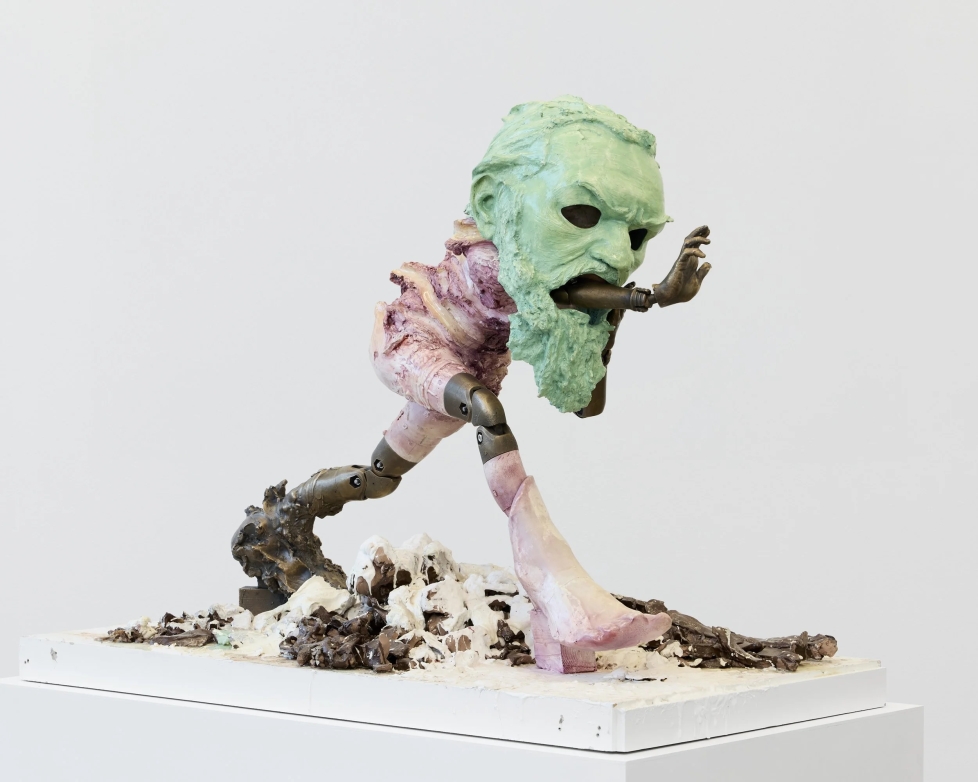
Oslo’s artist-run scene keeps up the pace, not least the relative newcomer Snails, which from early February presents a programme largely dedicated to young and newly graduated artists. Things are, of course, just as busy at the powerhouse Centralbanken a stone’s throw away. Its programme includes, among other things, one of the leading figures of diaristic video art, Michel Auder, who will make an appearance in May. Tenthaus opened last week with an exhibition in which Filip Matić draws on experiences from growing up in the former Yugoslavia – without, it is underscored, lapsing into nostalgia. Hulias is up and running this week with an exhibition by Marius Mathisrud, while Pachinko joins in during the first week of February with an exhibition by Zida Bruun, set to guide us into consumerism’s paradoxical relations to objects, and in April they host a return of Kjersti G. Andvig and Lars Laumann – something that can hardly fail to be worth seeing.
February sees Standard (Oslo) open its new premises in Frogner – by now something of the city’s official gallery district – with a group exhibition alongside a solo presentation by painter Aqeel Khilji. In the same area we also find OSL Contemporary, which got underway earlier this month with Bjarne Bare’s sumptuous photographs. Galleri K inaugurates the season next week with Anne-Karin Furunes’s characteristic, perforated acrylic paintings, while Isca opens this week with Ingrid Toogood’s unsettled, coarse-grained illusionism, and QB is already up and running with an exhibition of Sebastian Helling’s energetically clogged canvases. A few blocks closer to the city centre is eiklid/rusten, which since early January has housed Anders Holen’s cleverly morbid “system art,” where, among other things, built-in heat sinks ensure a continuous exchange between image and environment. Riis joins the fray in late February with its first exhibitions of the year: a parallel presentation of Lisa Tan and Tone Vigeland (1938–2024).
Bergen’s two largest art institutions step up in May with two major solo exhibitions. First out is Anawana Haloba’s Bergen International Festival exhibition at Bergen Kunsthall. Following her participation in last year’s Berlin Biennale and a recent solo presentation in the Light Hall at the National Museum – on view until well into April – Haloba is arguably among Norway’s most visible artists at the moment. For the festival exhibition, she takes women’s craft traditions as her point of departure, focusing in particular on connections between textile practices in Tongan culture and Hannah Ryggen’s political tapestries. Later in the month, Kode opens what it claims is the most comprehensive presentation of Vibeke Tandberg’s work to date. They Live spans more than thirty years, with theatricality and identity play serving as connective themes across a wide-ranging practice that resists easy categorisation.
In May, the National Museum joins in with the consoling Don’t Be Afraid. An Exhibition About Death. Here, urns, death masks, and memento mori from the collection are set in dialogue with works by, among others, Sverre Fehn, Nan Goldin, Utagawa Hiroshige, Gustav Vigeland, Sandra Mujinga, and Adolph Tidemand, inviting us “to reflect on how death shapes life – and how art helps us confront the inevitable.” The exhibition’s hospice-like ambition runs stubbornly counter to the season’s otherwise extroverted tendencies. In doing so, it also symbolically affirms a perception of the museum as an institution that stands above its political moment – a self-image that has been widely contested over the past couple of years.
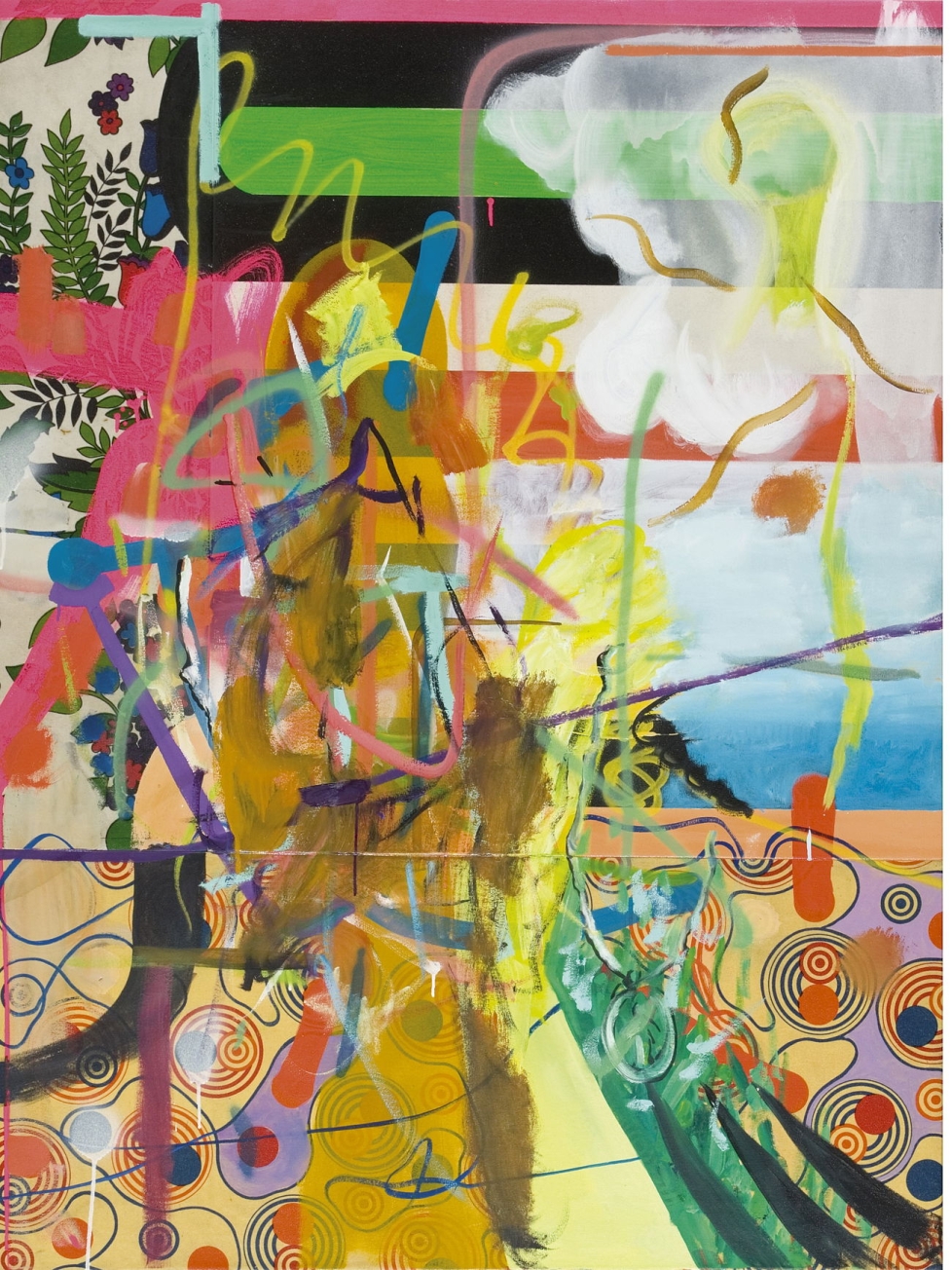
If you are looking to see contemporary painting in a museum setting this spring, Kistefos is the place to go. Its doors open only toward the end of May, when the distinctively twisted museum building will host a group exhibition featuring Ragna Bley, Ida Ekblad, Oscar Murillo, and Albert Oehlen. Concurrently, the neighbouring Nybruket Gallery will feature a solo exhibition by Issy Wood. (Read Andreas Schlaegel’s astute observations on the artist’s claustrophobic photorealism from last year here.) It is also worth noting that shortly before Christmas, Kistefos Museum announced plans for a new museum building. No illustrations accompanied the press release, but the climate-neutral structure designed by the Swiss architects Christ & Gantenbein was described, enigmatically, as both a “giant, shimmering river mussel” and “a large, gleaming volcano smouldering in the river valley.” The idyll of the surrounding sculpture park, then, remains undisturbed.
In June, Jamie Fitzpatrick opens his first solo presentation in Scandinavia at Kunsthall Trondheim. Supposedly, Fitzpatrick’s exhibition, featuring AI-generated sculptures and landscape paintings, “strips away the varnish from art’s complicity in power, using the British experience as a case study to expose the treacherous agency of the stories we tell ourselves about who we are.” In the same premises a parallel exhibition, not unrelated in spirit, by Jelsen Lee Innocent will turn our attention to the afterlife of colonialism in Haiti, linking debt, exploitation, and environmental loss to contemporary global power structures – an undertaking not unlike what he pursued in his exhibition at Nitja roughly a year ago.
I’ll conclude with a pair of exhibitions that will remain on view through the summer, and that allow me to point to another through thread this spring: exhibitions proudly billed as “the largest presentation in Norway to date of [insert name of female artist].” Henie Onstad Art Centre, which opened the year with a large-scale survey of Ann Lislegaard, follows up in June with a presentation by Lap-See Lam, known for her atmospherically charged amalgam of Chinese tradition, diasporic experience, and digital mediation. Astrup Fearnley Museum brings the season to a close with an extensive retrospective of Colombian Pop Art veteran Beatriz González and her subversive reworking of Western iconography. Spanning five decades, the exhibition has to be the most comprehensive presentation of her work yet seen in Norway.