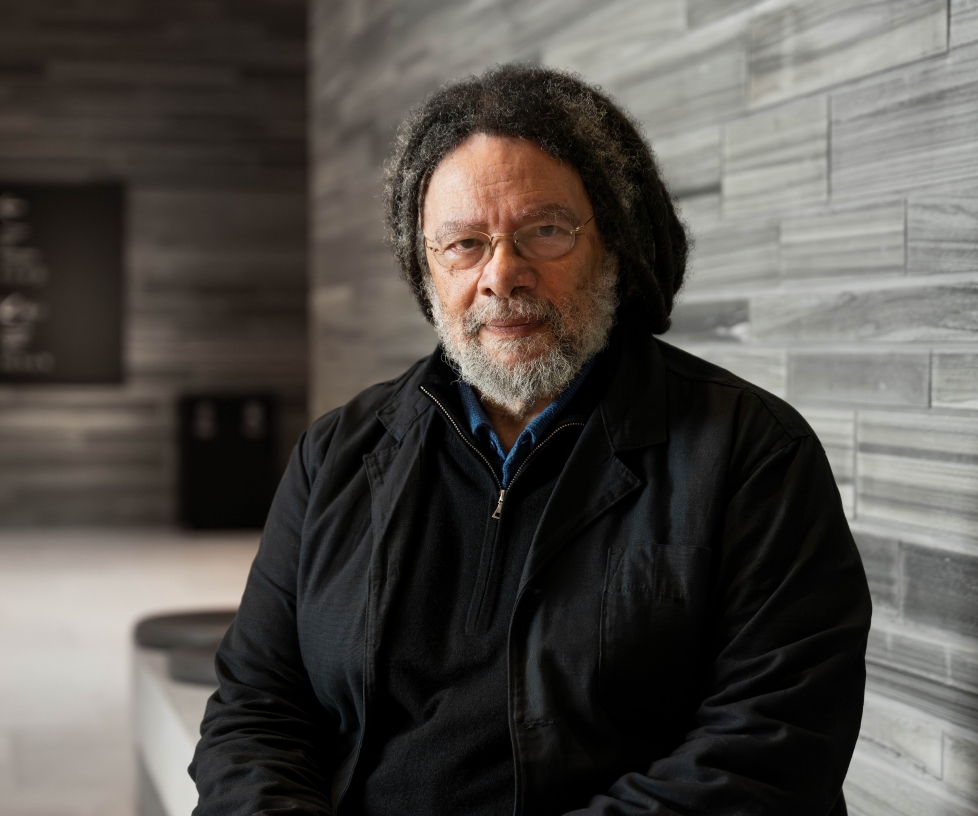
British cultural theorist Paul Gilroy’s seminal book The Black Atlantic: Modernity and Double Consciousness, originally published in 1993, is set to come out in Norwegian on Cappelen Damm later this spring. So when Gilroy visited Oslo this week, to give a lecture as part of the public programme of Anawana Haloba’s exhibition I Want to Tell You Something, I seized the opportunity.
In his lecture, Gilroy took the opportunity to engage with our current political moment through the lens of satire. It’s an approach that comes naturally to a thinker for whom culture is not a reflection of politics, but where politics begins. In The Black Atlantic, he argues that the movement of people, music, and ideas across the Atlantic – through slavery, migration, and exile – is central to the formation of the modern world.
Gilroy’s book has obtained canonical status in the field of cultural studies, but its reach is much wider. Three decades after it came out, it is among the most widely circulated theoretical works in the art world. As such, it seemed a good jumping-off point for discussing the influence of art on his thinking and vice versa.
I first came to your book as a work of political and cultural theory. But when I started engaging more with contemporary art, I noticed your book kept appearing – in press releases, in exhibition libraries, in curatorial discourse. Were you surprised?
Kind of, but I began to write about art before The Black Atlantic came out. Working with artists has been a part of my practice for more than four decades, so art has always been important in my thinking. I collaborated with a number of people who later on went on to become prominent or celebrated, but none of us expected it at the time. You know, you’re young, you’re young together, you have a shared set of interests, a constellation of problems that connect you. When I wrote that book, it was rejected by the publisher, so I was always very happy that it had any life at all, and especially life in different languages. That is actually the most precious thing of all.
When I look at that period, artists like Black Audio Film Collective, Sonia Boyce, Isaac Julien, and Keith Piper were working with many of the same ideas – diaspora, the history of slavery, migration, and belonging. So I’m curious about the direction of influence. Were you in dialogue with them at the time, or did these things happen in parallel?
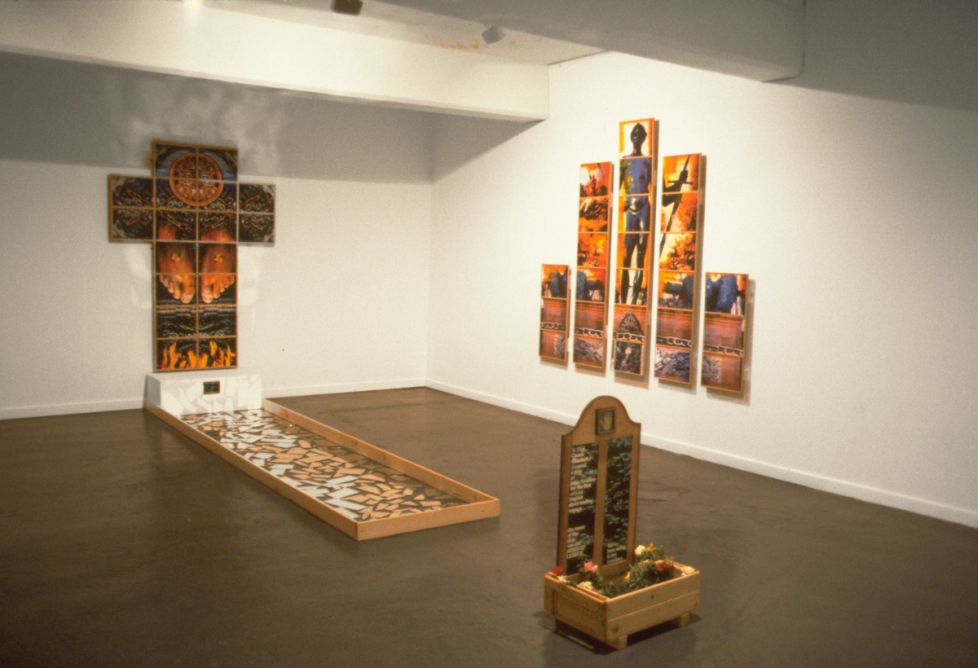
It was an interesting time, there was a lot of fire in artists with migrant heritage, people who’d come into Britain from the outside or been born there to parents who’d migrated. That’s really to do with the situation in the country at the time. In 1981 in Brixton, there was the biggest rioting that we had seen, and a lot of things changed as a result of that. I was working closely with many of the artists active at that time. I wrote about Sonia Boyce’s work in Third Text in 83 or 84. I collaborated with Isaac Julien on a film called Territories [1984], where he took some words I’d written in an essay and made it part of the film. Keith Piper’s work was really important in connecting theory and art practice – perhaps one work in particular, A Ship Called Jesus [1991]. He was thinking through all of these questions, but he’s not someone who has received the kind of recognition I feel he merits. Not only was there fire in the generation that started that movement, but it was reproduced across the rising generation of younger artists who came along. Artists have always been early adopters – they were onto many of these questions before people who were interested in politics or literature or institutions.
You conceived The Black Atlantic as an intellectual framework. But looking at contemporary art now, I wonder whether it has also become an aesthetic. There’s a shared visual language emerging: the ocean, the wreck, the archive, the fragment. Do you agree?
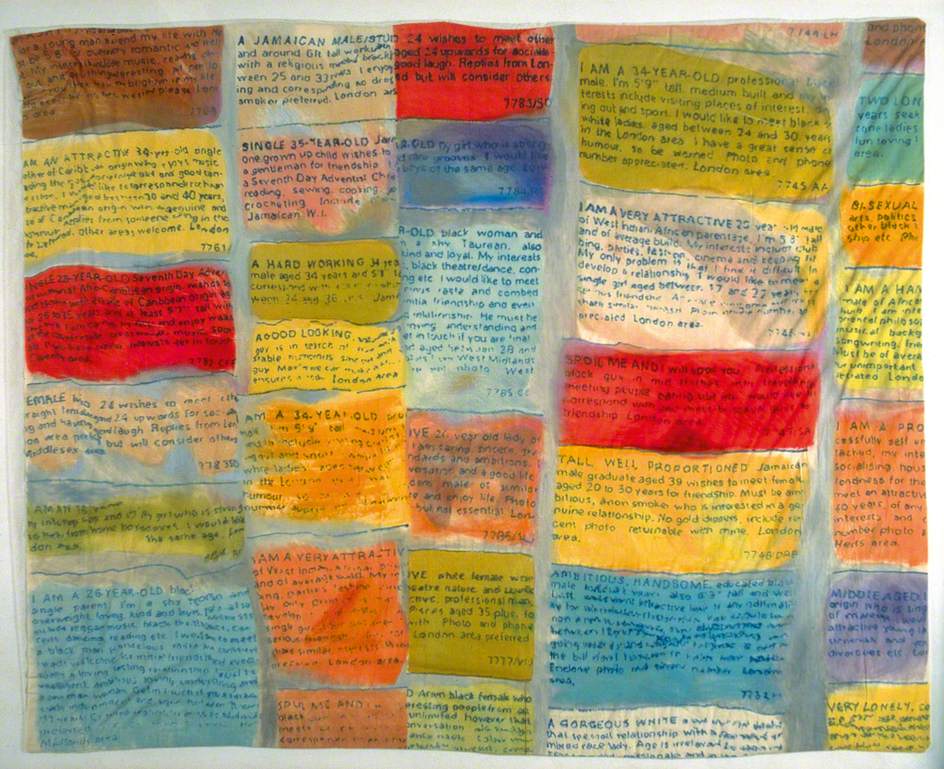
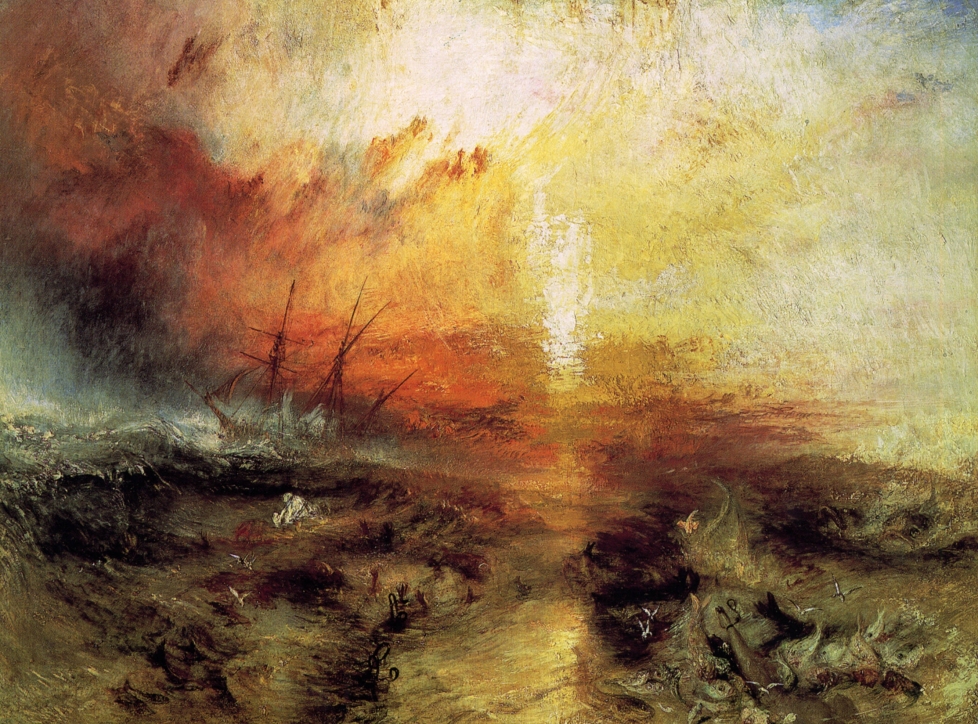
When I first wrote about Sonia Boyce’s work, I wrote about it in the context of [J.M.W.] Turner’s painting The Slave Ship [1840]. I was very shocked when I found that painting and its history. Now people refer to it all the time, but in the mid-late 80s, the Turner world was not able to accommodate it; the painting wasn’t even in the Tate, it was in Boston. It had been shown at the Royal Academy in 1840, at the same time as the Abolitionist Convention was meeting in London. So these questions go back a long, long way. Any version of the aesthetics of the Black Atlantic that I’m interested in would have to include that history, which precedes the book.
I do feel that the moment of cultural life that made the idea of the Black Atlantic possible is kind of gone now. The internet, the shift to digital, the retreat of musical life, the transformation of Africa itself. The diasporic relationships we have now don’t really belong to the Black Atlantic. They belong to some other, yet unnamed, set of circuits and networks that are mostly digital in character. That’s a new situation, and it probably needs a new name.
But the aesthetic strategies you’re describing haven’t disappeared. In your essay ‘Sounds Authentic: Black Music, Ethnicity, and the Challenge of a “Changing” Same’ [1991], you argue that sampling, montage, the radical unfinishedness of Black musical forms are consequences of the historical experience of slavery and diaspora. I recognise that in a lot of artists working with film and video today, in the way they reassemble and layer archival fragments. Isn’t there a continuity, even if the tools have changed?
Yes, absolutely. But when people began to sample things, the software version of that bricolage, that sort of citation, I think the ease with which that could be done digitally took a lot of the work out of the process. For me, the Black Atlantic as an idea works better when the work is there and people struggle to bring it out, not when you just look at a line on a monitor and you can even look at the sounds and tell from the shape of the waves on your screen what that sound sounds like without having to listen to it. The Black Atlantic is really an analogue idea. Something else is going on when you do it digitally. Which is not saying that something else isn’t wonderful. I love a lot of the music that’s come out with digital tools. But I also like the slow labour, the patience, the struggle to learn to play an instrument – that belongs to a different world of creativity.
You have argued throughout your career – notably in books like There Ain’t No Black in the Union Jack (1987) and Against Race (2000) – that race is a category produced by racism, not the other way around, and that treating it as fixed or essential, even in the name of resistance, risks accepting the terms that were imposed through the violence of racism. But looking at the art world’s reception of your work, it sometimes seems like The Black Atlantic has been used to do something close to the opposite: to consolidate a Black diasporic identity, to turn it into a curatorial genre.
It bothers me, of course, but people will do what they want to do, and mostly they’re working out their own issues. I’ve never had any proprietary claim around the idea of the Black Atlantic. Appropriation is the fundamental law of culture. But the Black Atlantic got to a point where it’s like a Rorschach blot: people bring their own preoccupations. I’m not going to have fights with them about it.
I do believe that being against racism is the most important thing, and nobody can say that I’ve not done that. I’ve maybe wasted too much of my life trying to make anti-racism come alive in different ways, and I know that a lot of that labour is doomed to fail. The people who think that race can do all the things they want it to do – good luck to them. When the sea levels are rising and the water’s over this building, I’m not sure race will have the same power.
In recent years your work has moved toward what you call a planetary humanism – thinking beyond race and national borders in the face of rising fascism and ecological crisis. But you’ve also always argued that cultural expression is where solidarities are built, where people find each other across difference. Does that still hold?
Yes, of course, more than ever. The critique is fine as far as it goes, but people need help. They need a hand, and we have to be imaginative enough to speak to that need. These cultures in the North are stuck and there are revitalising forces coming from the Global South that they desperately need in order to live again – though I don’t like to use a geographical term because we can walk from this building and find the Global South. The idea of culture we needed was never something that starts somewhere in the world and travels here unmodified. It’s transformed in transit.
.