All opinion polls point to a change of government in the upcoming Swedish election. This would mean that all Nordic countries except Finland would have Social Democratic-led governments. Are we seeing the end of the Nordic right-wing wave? Or does public opinion reflect the fact that parties on the left have taken over right-wing policies that appeal to voters – while the implementation of authoritarian right-wing policies has temporarily repelled a large part of the electorate?
The curators of The Defeated at Bonnier’s Konsthall would certainly consider it premature to dismiss the threat from right-wing nationalism. Bonnier’s artistic director Joanna Nordin Asp, critic Kim West (well known to Kunstkritikk’s readers), and French curator François Piron have assembled a thematic exhibition that takes Peter Weiss’s three-volume anti-fascist novel The Aesthetics of Resistance (1975–81) as its starting point, bringing together the work of nineteen living and deceased artists.
The boundary-crossing artist and writer Weiss came to Sweden as a jewish refugee in 1939, making him the perfect symbol of resistance to fascism. Unfortunately, resistance has become one of those contemporary buzzwords which are frequently invoked but seldom qualified. Crucially, The Defeated does not take the notion for granted, but rather seeks to examine the historical and material circumstances under which a work of art becomes, as the curators put it, “politically useful.”
While the spring season was characterised by solo exhibitions and younger artists, the autumn revolves largely around thematic group exhibitions. Accelerator is presenting two of them: Aerpiemaahtoe and The Owl of Minerva. The first is curated by Anneli Bäckman and Therese Kellner, and concerns Sámi ancestral knowledge. The second is curated by Kellner and Richard Julin and takes on lived experience, intuition, and rhythm as forms of knowledge through performance art and graffiti among other things.
Will Tensta Konsthall ever recover from early-2000s archive fever? This autumn, they showcase Remnants, curated by Tawanda Appiah and Cecilia Widenheim. It was presented last year at Heirloom in Copenhagen, and revisits a largely marginalised Black cultural history in the Nordics.
The fourth edition of September Sessions will be a season highlight. This year’s programme is curated by Italian curator Joel Valabrega, who promises a mixture of adolescent gloom, sincerity, and irony. As someone with three teenagers at home, I am naturally looking forward to this.
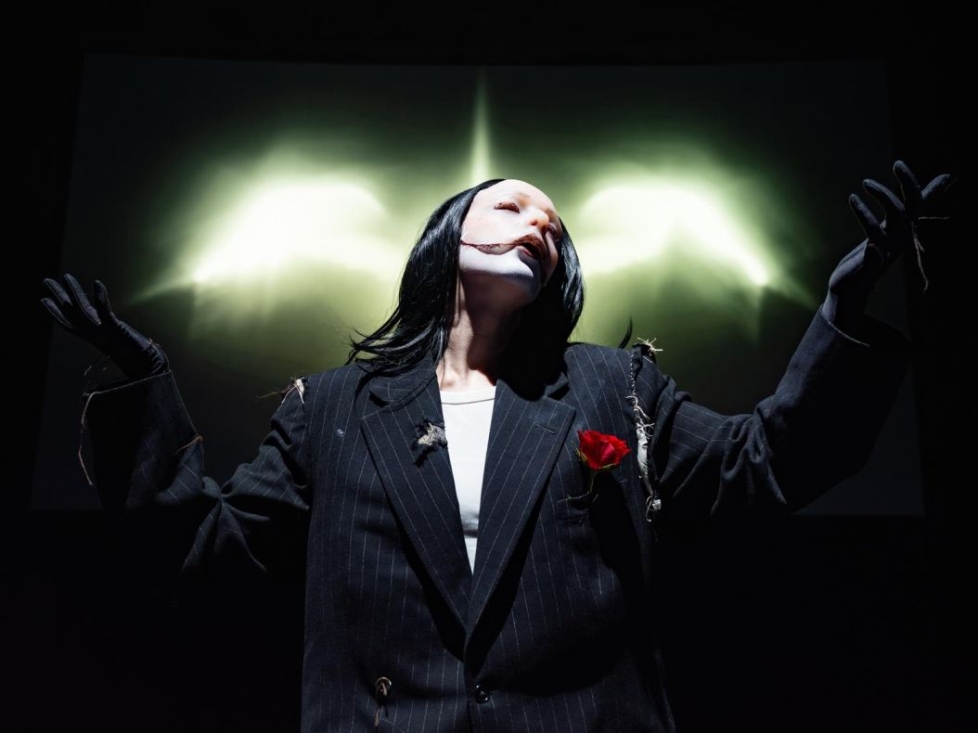
The annual festival is organised by Index and Mint, which are also opening their own exhibitions with themes connected to Valabrega’s programme. Index is showing Malmö artist Ruby Nilsson, who presents a dramatisation of the exhibition space dealing with trans misogyny. The week after, Mint will inaugurate its renovated premises – where it will become neighbours with the experimental music and art venue Fylkingen – with a group exhibition curated by Georgian artist Tolia Astakhishvili.
I regret not having more space to devote to Astakhishvili in my report from Mumok in Vienna. She had turned the basement into an environment where spatial and conceptial distinctions seemed to dissolve. You could spend hours exploring it, and still stumble upon something unexpected.
While the small and mid-sized institutions are moving to the forefront, there is little to speak of when it comes to major museum exhibitions. Neither the National Museum of Sweden nor the large art museums in Gothenburg and Malmö have much interesting to offer. Meanwhile, Moderna Museet offers alternatives to the canon: Iranian artist Monir Shahroudy Farmanfarmaian (1922–2019) and Sámi artist Aage Gaup (1943–2021) in Stockholm, and Estonian artist Anu Põder (1947–2013) in Malmö. Interesting but quite obscure choices, and an oddly backward-looking programme for a museum of modern and contemporary art.
Perhaps things will look different when Norwegian Tone Hansen takes over as new director in September. At the same time, Index will also get a new director: Övül Ö. Durmuşoğlu. One institution is Sweden’s most important art museum, the other is doing its best to run an international programme on a minimal budget. Yet perhaps the jobs have certain similarities?
Both involve reinforcing their institution’s artistic relevance at a time when cultural policy and funding leave little room for experimentation and risk-taking. In recent years, Moderna Museet has lost some of the distinctive identity that separated it from other Swedish art museums. Meanwhile, Index – once Stockholm’s leading contemporary art institution – is likewise struggling to redefine its role in a situation where much of what it does is also being done by others with substantially greater resources.
How Durmuşoğlu handles this remains to be seen. As for Hansen, I am a bit sceptical of the enthusiastic response to her appointment. Her programme at the Munch Museum in Oslo 2022–2026 always struck me as eclectic and contrived in its search for contemporary relevance. As when Gitte Ørskou was appointed in 2019, I wonder whether the ambition to make the institution more democratic and inclusive has sometimes been allowed to overshadow artistic vision. I would be happy to be proven wrong.
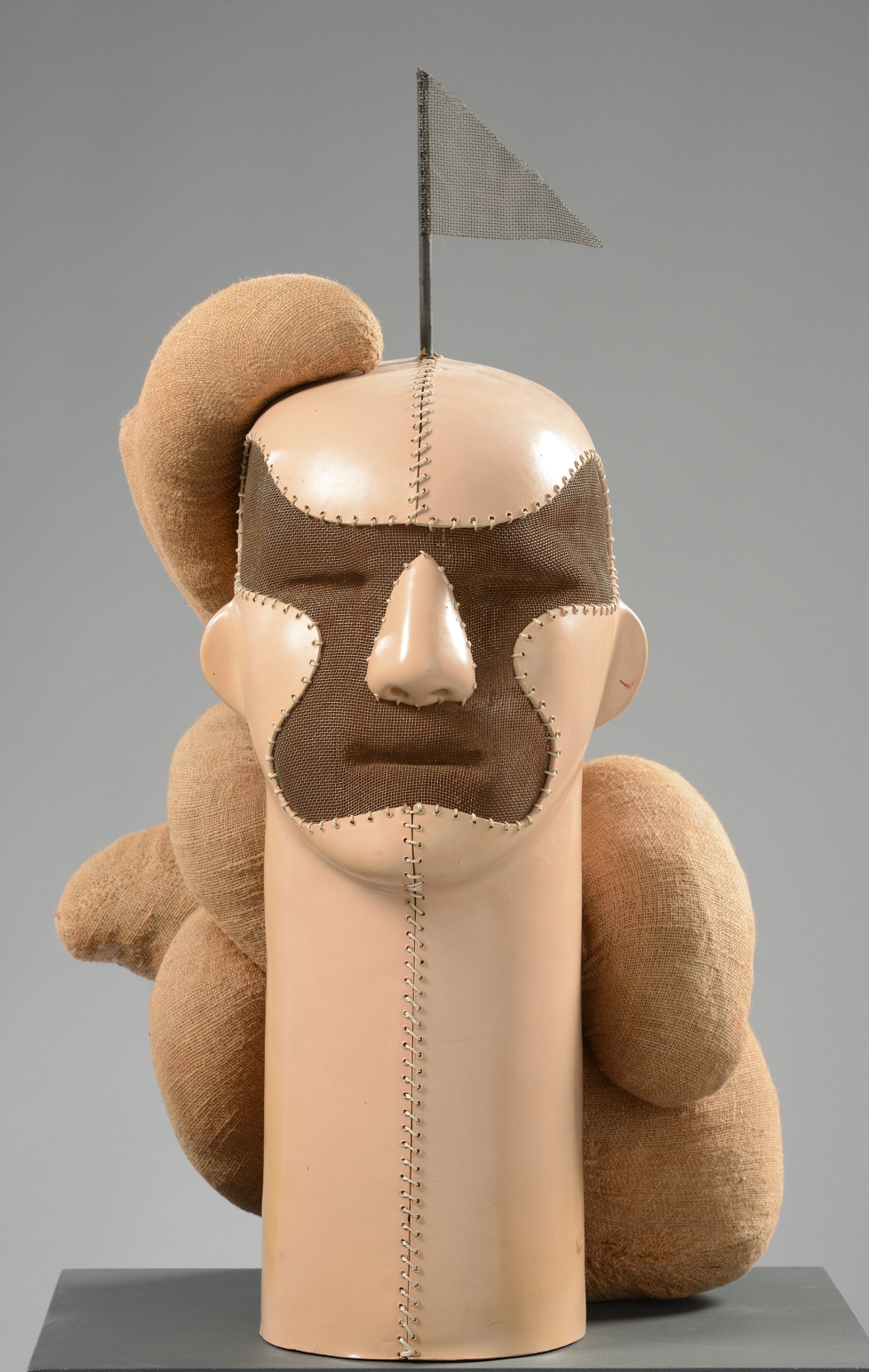
A certain conformism remains a defining trait of the Swedish art scene, and this season is no exception. Marabouparken is showing Éva Mag, who had an major exhibition at Bonniers Konsthall in 2020, while Liljevalchs is showing Sara-Vide Ericson, who currently has an exhibition at Norrköping Art Museum. Both rank among our foremost sculptors (Mag) and painters (Ericson), but Carl Kostýal/ Hospitalet showing Klara Lidén feels almost more original, since the Swedish luminary has barely exhibited here in the last fifteen years. Maybe curators should put more effort into constructing the canon in the present, as they do when revising it retrospectively.
Addressing colonialism is still a priority for many institutions. Malmö Konsthall is showing Nigerian artist Otobong Nkanga, famous for her evocative installations, while Färgfabriken is presenting the lesser known Nigerian artist Ndidi Dike. Both address extraction, migration, land, and memory. Meanwhile, Lund’s Konsthall is presenting Malmö-based artist Carla Zaccagnini, whose work revolves more around epistemological questions concerning borders, movements, and classifications.
Swedish museums seem more concerned with the domestic colonial history. Bildmuseet in Umeå is showing Gothenburg artist Nina Mangalanayagam’s research into Saint-Barthélemy, which was a Swedish colony from 1784 to 1878. And Kiruna’s museum of contemporary art seems under Maria Lind’s leadership to be aiming to become the country’s unofficial museum of Sámi art. This autumn, KIN is presenting drawings by Sámi artist Johan Turi alongside works by Outi Pieski and Johanna Minde.
The autumn season thus exposes a contradiction: although institutions are eager to talk about resistance, colonialism, marginalisation, and political change, they are considerably less willing to take risks when it comes to their own operations. It is easy to see which power structures are supposed to be exposed, and which historical narratives need to be rewritten. There is a sense of security in this, perhaps even a kind of conservatism, which ironically reinforces established ways of thinking, while leading institutions to recycle names and themes that feel safe and not too challenging.