Nnena Kalu, Creations of Care, Kunsthall Stavanger, Stavanger
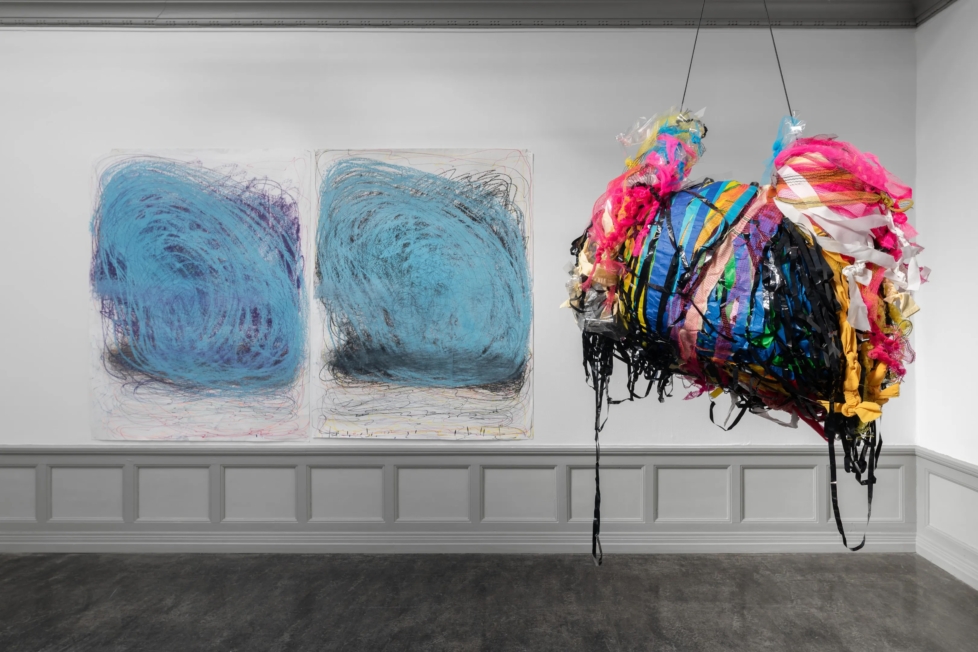
I first encountered Nnena Kalu’s sculptures at Manifesta 15 in Barcelona, where they appeared as a playful, humorous presence within the biennial section titled Imagining Futures. Kalu’s freely hanging explosions of colour evoked pupae, larvae, cocoons, or fantastical creatures, and were composed of a variety of synthetic materials – like motley debris of the oil age spun into unfamiliar life forms. In her solo exhibition at Kunsthall Stavanger, Kalu also presented a series of drawings that echo the circular movements of the coloured ribbons wrapped around the sculptural bodies she crafts. The intense and chaotic, yet tightly controlled repetition of circles and whorls in her works on paper appeared to me as a succession of emotional storms, or as a visualisation of cosmic forces.
Artists from Gaza, For You, Tenthaus and Podium, Oslo
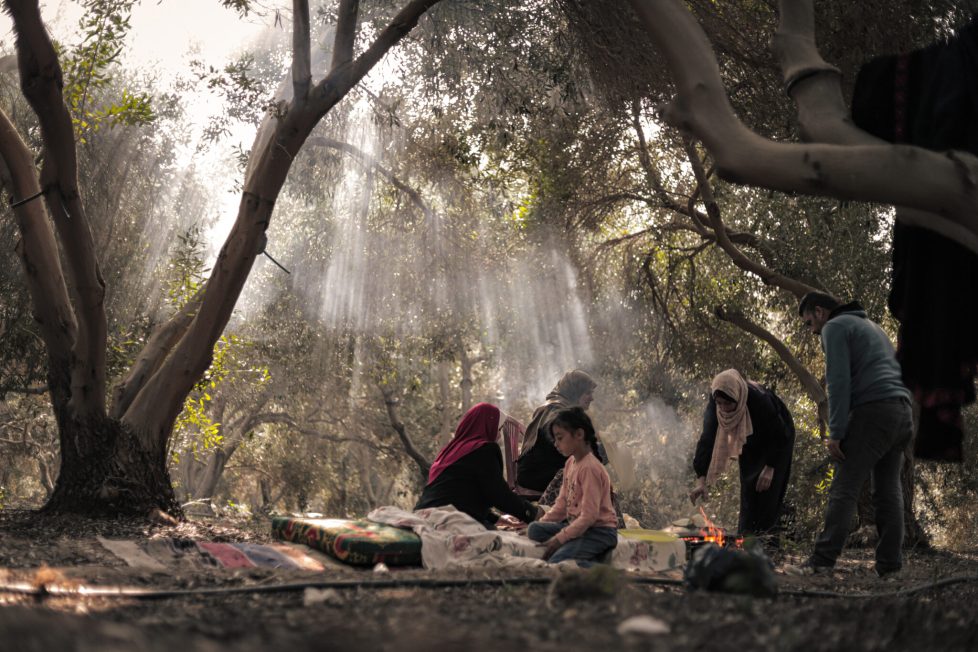
The group exhibition For You was dedicated to the young photographer and artist Fatma Hassouna, who was killed in Gaza along with her family on 16 April this year. A small memorial space for Hassouna was created within the show at Podium. The project Artists for Artists, an initiative by the artists Ayman Alazraq in Oslo and Shareef Sarhan from the Shababeek Art Center in Gaza, served as a point of departure for the exhibition. For You was a powerful testament to how important art can truly be. Many artists from Gaza are turning to art as a form of memory work: to remember the lives that have been lost, the people, the homes, and the landscapes.
Jannik Abel, Back to the Land, Kunstnernes Hus, Oslo
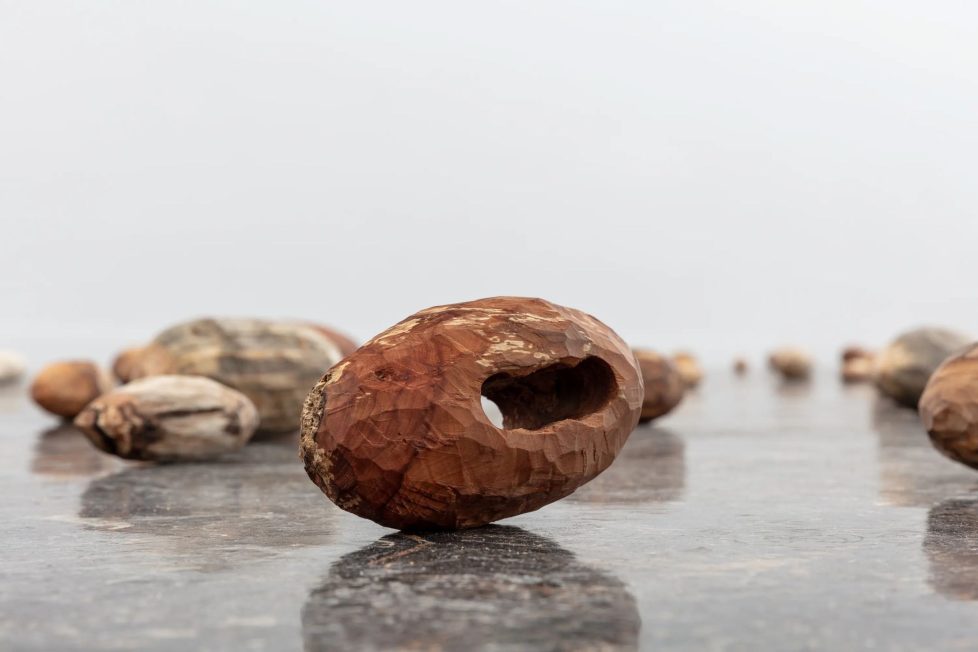
It is striking that the artist and photographer Jannik Abel, who has spent considerable time documenting and preserving popular movements, also works so explicitly with transience, making use of ephemeral materials – matter that will not last, but return to nature, to the earth. The installations in Back to the Land were formed from materials gathered in the forest and then crafted with saw, knife, and axe. The exhibition emerged as a place for grief and stillness, but also for conversations about the time we live in. I can still draw strength from the experience of community in the skylit galleries, and from the feel and scent of a rough, egg-shaped wooden sculpture between my hands.
Translated from Norwegian.
For this year’s contributions to the Advent Calendar, see here.