In the dreary grey of November, Stockholm’s art scene was meant to perk up under the banner of Gallery Weekend Stockholm (GWS) – yet another grand initiative in the lineage of September Sessions and Stockholm Art Week, designed to lure visitors with an overload of openings, exhibitions, talks, screenings, performances, and parties, all at once.
Such undertakings can easily seem like an attempt to pour yet another round of lukewarm beer onto a party the institutions are already hosting and are perhaps justified by the belief that “united we stand, divided we fall.” Or are they, rather, symptoms of wavering self-confidence among individual art platforms uncertain of their own relevance?
Scrolling up and down the GWS website, the whole thing seemed, at best, a bit loose. Since 2019, the event has been organised by the Swedish Gallery Association and Artlover Magazine. Two panel discussions, a handful of guided tours, and some forty galleries – many of which weren’t even opening new shows. “Lowered expectations may bring pleasant surprises,” my editor chirped, as I prepared to taxi-hop between all the inner-city corners from Thursday through Saturday.
And yes! What first seemed flaccid rose to the occasion, leaving me both satisfied and hungover by Sunday. The seemingly chaotic and sometimes opaque programme – where I couldn’t tell when to be where, or what I was meant to see there – turned out, by weekend’s end, to stem not from confusion at all, but from big dick energy.
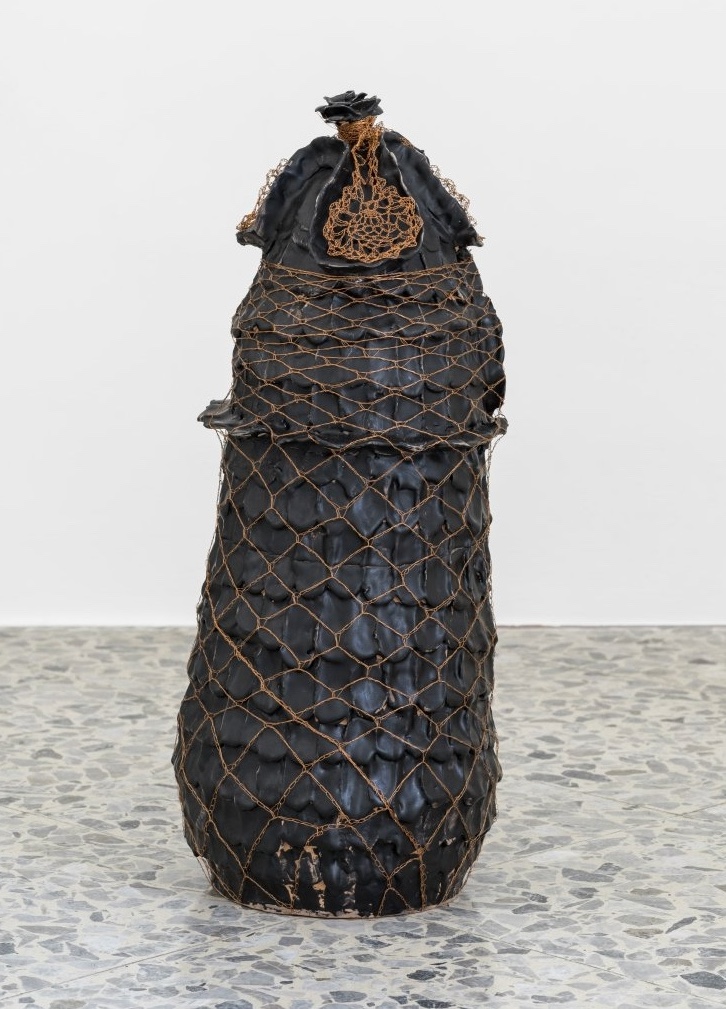
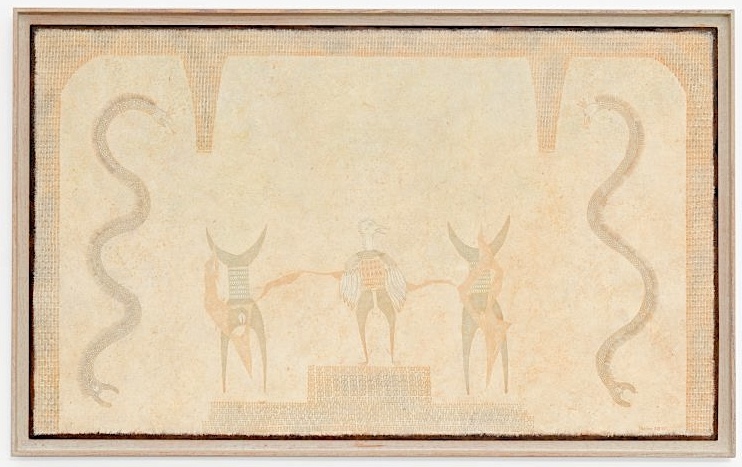
I started Thursday evening in the Östermalm district with Mark Makers at Galerie Nordenhake, where I was immediately drawn to Thea Ekström’s (1920–1988) hieroglyphic oil panels. In the corners, the American artist ektor garcia’s slick clay vessels rose from the floor. Along the shafts, the imprint of the hand’s pressure and grip remains, where touch has both shaped and smoothed the clay; some of them have pointed lids with a hole at the top, while others are open. The Brazilian painter Ana Cláudia Almeida’s abstractions, by contrast, felt timid next to Ekström’s mythic scenes of hairy serpents, cryptic symbols, and a bird-man with a raging boner painted on a surface that looks like stone. There was a sly erotic tension running through the whole exhibition.
At Saskia Neuman Gallery, I was ambushed by a photographer the second I managed to squeeze through the door – no small feat, since all sixty-seven participating artists had brought at least six friends each. The long horizon line of postcard-sized works includes both international heavyweights like Tobias Rehberger and Jordan Wolfson and local newcomers like Kasper Nordenström and Lydia Ericsson Wärn, and everyone in between, like Jens Fänge and Dan Wolgers.
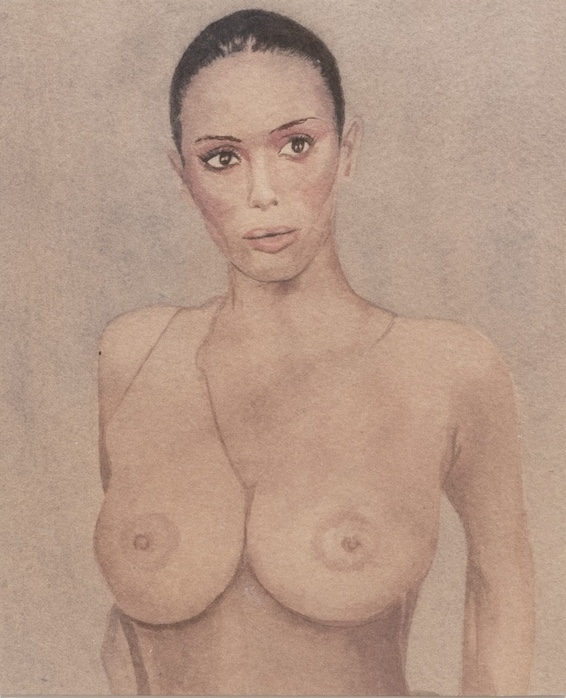
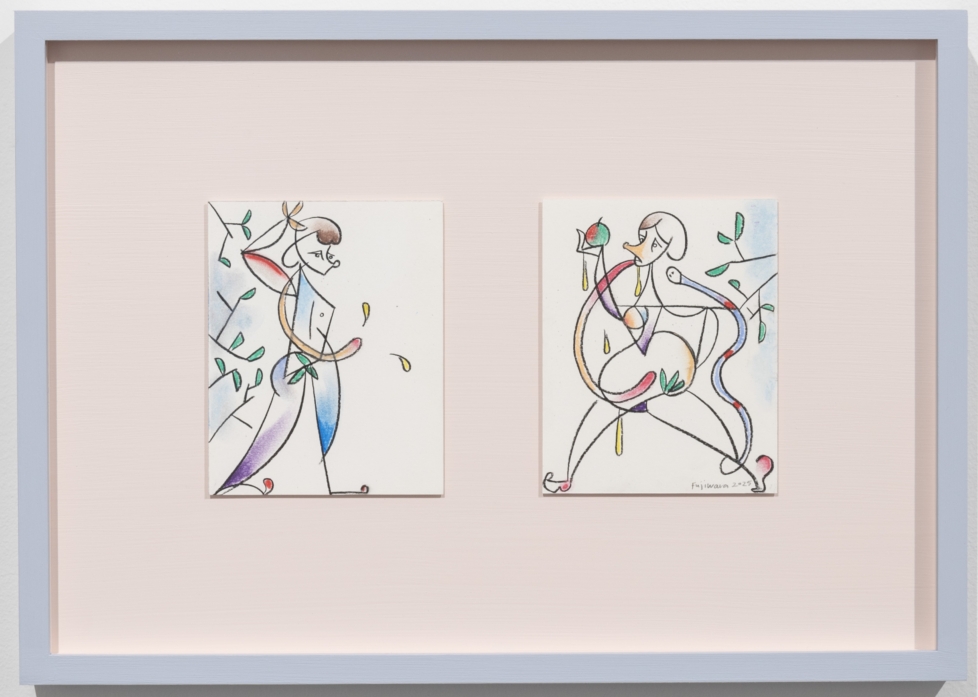
Predictably, the winners are those who refused to play by the rules. Susanna Marcus Jablonski had stacked a billion postcards into a pillar stretching floor to ceiling – no motif, just mass. The show reads like a cabinet of contemporary curiosities, full of small discoveries. Even if none of the works is a career peak – and some are mere offshoots of livelier installations – it was entertaining to see Simon Fujiwara’s drawing of an ejaculating teddy bear hung beside Fredrik Söderberg’s portrait of Bianca Censori in the naked dress from the 2025 Grammy Awards.
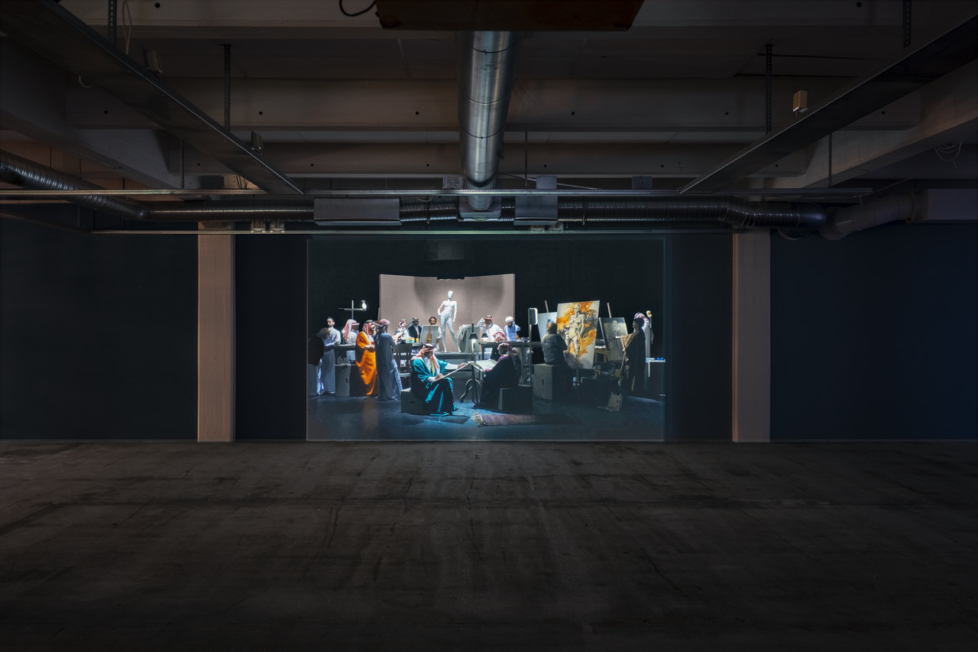
On Hudiksvallsgatan, I drifted frictionlessly between two painting-heavy shows at Larsen/Warner and Coulisse, before taking a freight elevator up to this weekend’s new venture, SHAME, an art film festival initiated by Hans Berg and Nathalie Djurberg, curated by Silvana Lagos and presented in collaboration with Artlover Magazine. It was delightfully abrasive in all the right ways.
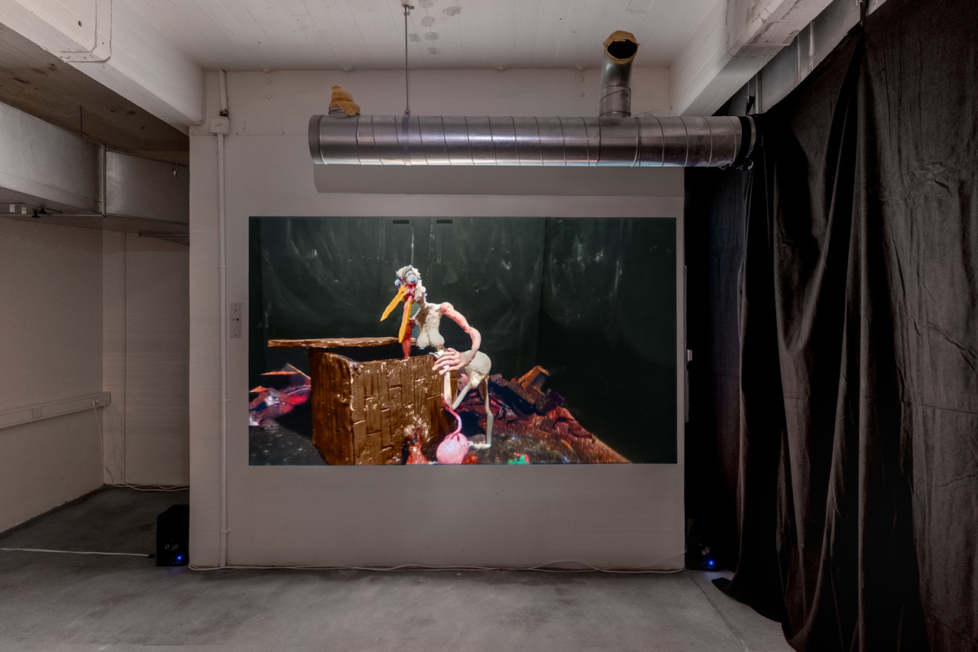
A security guard with an AirPod in lieu of an earpiece ushered me into the lift that took me to a massive two-story venue divided darkroom-style with black drapes. Right away I was confronted with Kara Walker’s now-historic shadow play Testimony: Narrative of a Negress Burdened by Good Intentions (2004). The black-and-white film, in which all figures emerge as dark silhouettes against a white ground, traces the love affair between an enslaved woman and a white plantation owner – culminating in her killing him by lynching. In the closing scene, the slave owner hangs from a tree, sporting a hard-on; the woman offers it a kiss before the screen dissolves into splattering cum. Walker’s work offers no easy answers, only a confrontation with the pitch-black legacy of slavery and its moral grey zones.
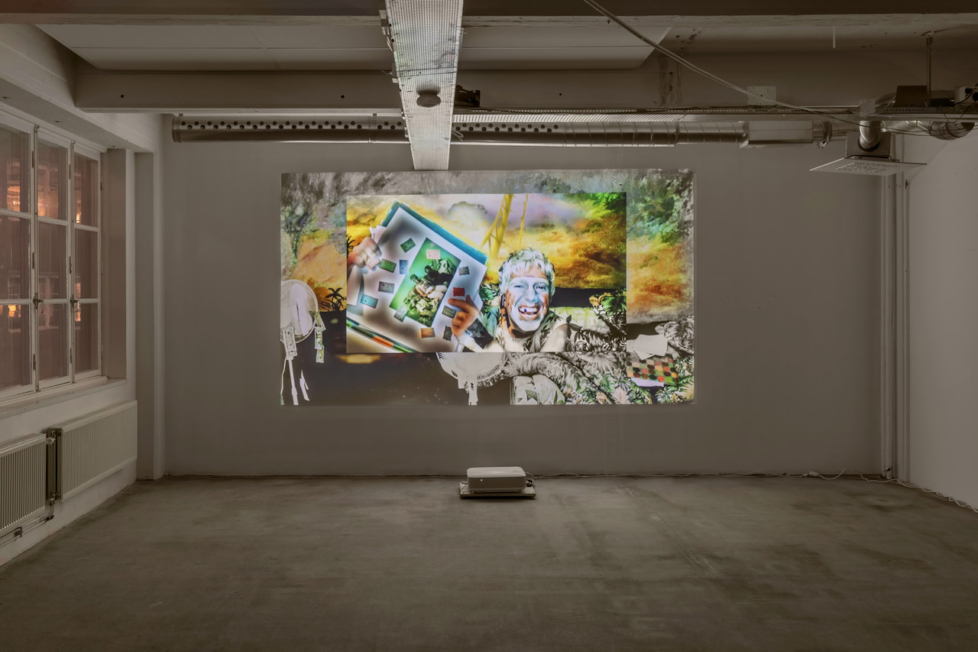
Behind another curtain lurked Paul McCarthy’s 45-minute film A&E Adolf & Eva Adam & Eve Mother (2022) an utterly deranged, mayo-drenched, sado-macho shit-fuck fest. Projected 4 by 5 metres, this fever dream stars Adolf Hitler (played by McCarthy) and Eva (Braun and Eden in one, played by German actor Lilith Stangenberg) going off on each other (“I wanna fuck mommy,” Adolf whimpers in a key scene). It’s unbearable in its brutality, yet equally irresistible in its complete embrace of abjection, shame, and evil – all at once. It engages the entire body, gag reflex included; you blink, look, and blink again, then it lodges in your body, whether you like it or not.
Nearly every piece here turned me on: Cory Arcangel’s iconic role-playing game /roʊˈdeɪoʊ/ Let’s Play: HOLLYWOOD (2021), Lotte Andersen’s ultra-charming video Marketjuice, Mudgirl (2019–2025), Ryan Trecartin’s hysterical film Roamie View: History Enchantment (2009–2010). It’s banger after banger, and a privilege to see all these works under one roof. Also, there was more cock: in works by both Raf Fellner and Pipilotti Rist. Despite the celebrity factor, one protagonist dominated both the SHAME festival and the whole Gallery Weekend: by the end, I saw dicks everywhere.
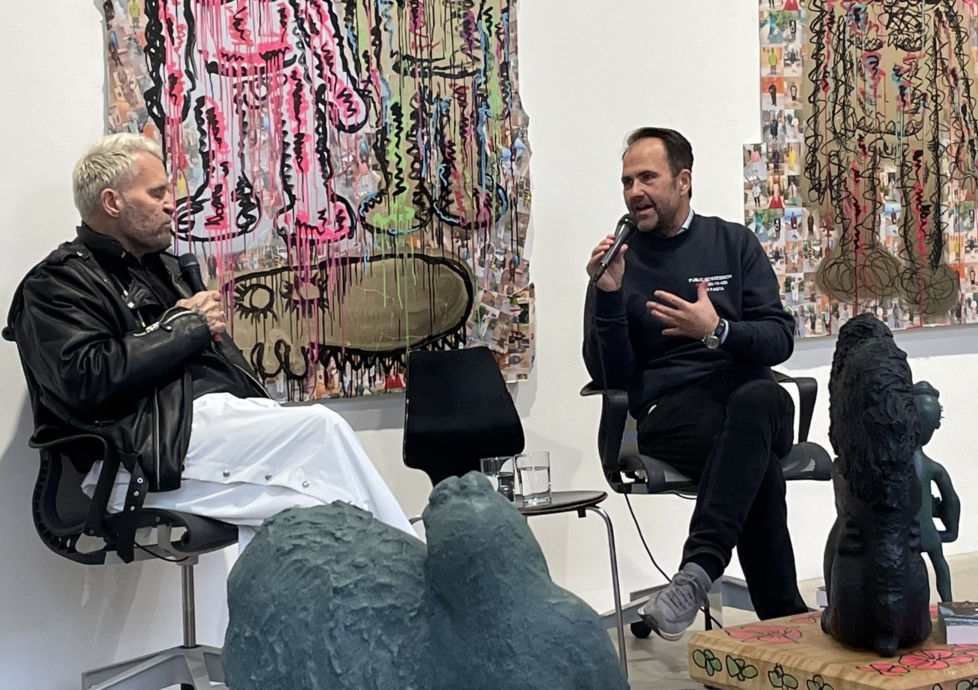
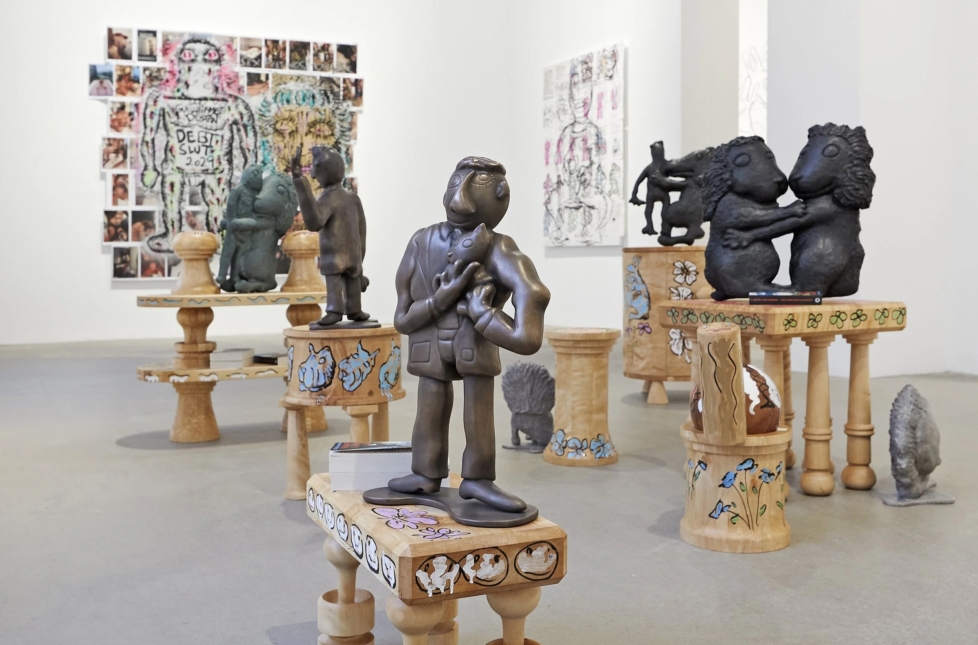
By pure accident, I found myself one floor down from SHAME, where galleries such as Hammarén and Thomassen from Gothenburg, along with Ping-Pong and Thomas Wallner from Malmö, were guesting in what’s apparently called GWS Extended. Set up like a small fair amid folding chairs, I came across Lars Olof Loeld’s (1930–2023) steadfastly abstract line paintings standing shoulder to shoulder with the artist’s impressively upright phalluses. And it went on – not least, and hardly surprisingly – at Anna Bohman Gallery’s solo exhibition of drawings, collages, paintings, and new sculptures by the Norwegian macho bear Bjarne Melgaard. I attended Saturday’s artist talk with Melgaard and art critic and curator Erlend Hammer. The takeaway: more risk, sex, and shame in art, please!
Nudity is almost everywhere in today’s sex-fixated visual culture, yet the penis – with its unruly promiscuity and insistent direction – has, in our age of soft values, been shamefully relegated to the closet. Not least during the #MeToo movement, it became a symbol of toxic masculinity, of the patriarchal body and unchecked destructiveness – something we’d rather not see at all. Perhaps that’s precisely why there’s a certain thrill in waving it about right now. On a more symbolic level, of course, the phallic form also alludes to thrust, impulse, and direction – images that refuse to wait for interpretation but insist on their own presence.
While phallic art insists on its own needs, the weekend also offered pliant pussy art that doesn’t dare to stand out. On Friday night, I circled back to Östermalm for openings at Elastic Gallery and Galleri Flach, but both spaces gaped like empty holes, devoid of visitors and energy. Niklas Holmgren’s photorealism at Flach is skilful but flat. Elastic’s twentieth-anniversary show – its second of the year – felt more like a boutique than a gallery, the works jammed together as if to say, “pick whatever suits you.”
A similar soft-edged sensibility haunted Coulisse’s group show Through This, That, whose text speaks of “flows between states” and “co-producing gazes.” Painting here dissolves into a vessel for projected desire, a pliant blob where nothing needs fixing, meanings forever deferred to the viewer. The logic of fluidity may sound progressive, but it’s also perfectly in tune with late capitalism’s self-image, where the commodity must mirror, flatter, and accommodate without friction.
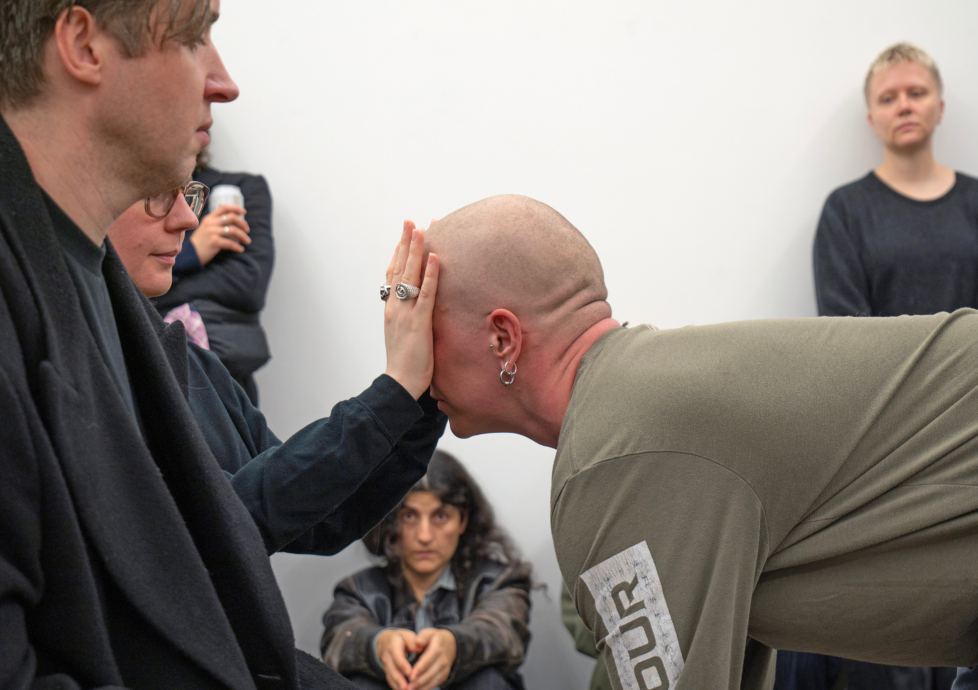
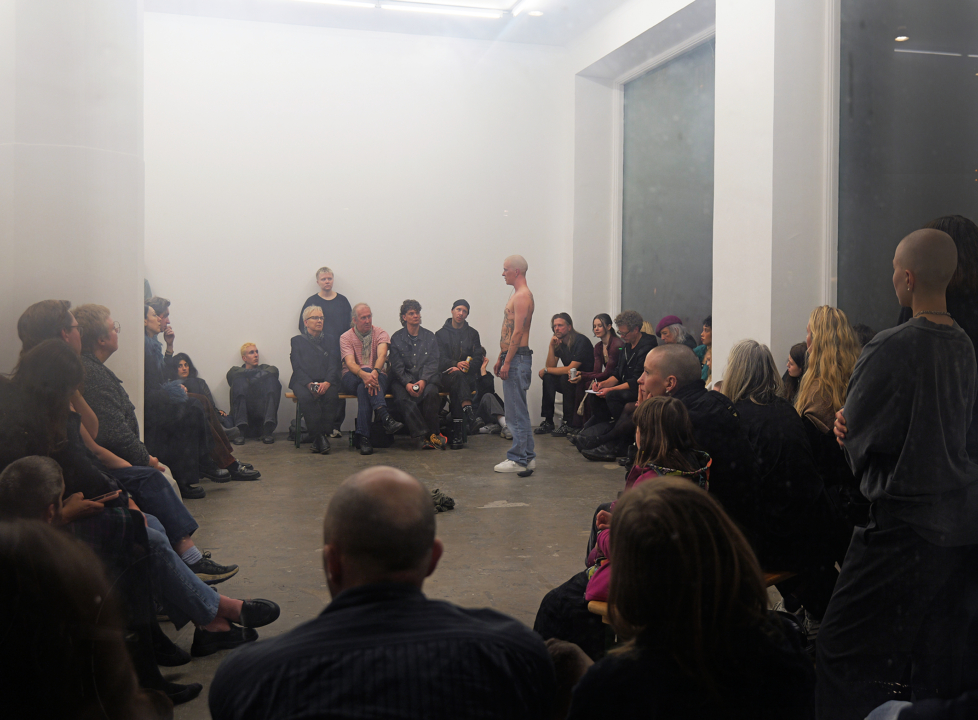
It all came to a head in Finnish artist Teo Ala-Ruona’s performance Anabolic Spectacle at Gallery Steinsland Berliner. Set to a low, throbbing soundscape, the artist invited the audience to help shave his head – a gesture oscillating between ritual, submission, and purification. Whispered phrases like “would you help me, please?” mixed with quotes from electric razor reviews: “best trimmers for men, top-rated by grooming experts.” The body’s intimacy merged with the language of consumption.
In the first act, Ala-Ruona struck poses he calls “exhibits” and invited the audience with a cynical wink: “I absorb your gazes as a protein shake.” His body became a vessel, a sculpture to consume. In the second act, he repeated each pose, now reframed through his own experience as a trans man, transforming open projection into a lived, concrete narrative.
Anabolic Spectacle is, among much else, an argument for art’s duty to tell, not merely to stage. What carried the piece was Ala-Ruona’s extraordinary presence and his star power, which commanded the room. Like many of the weekend’s brightest moments, it is about images that refuse to merely be looked at but demand entry into the viewer.
The cock, after all, does what it wants – emerging as a symbol of resistance against a consumer logic defined by compliance. After Gallery Weekend Stockholm, I felt thoroughly penetrated – and oddly exhilarated from the feeling that art, if only for a moment, had regained its sense of potency.
Translated from Swedish.