Few places cultivate freedom as consistently as contemporary fine art education. Artistic freedom is, in fact, the very essence of a liberal world of ideas, just as academic freedom is fundamental to the entire higher education sector.
That is why we at the Royal Institute of Art (also known as “Mejan”) raised our eyebrows when the right-wing think tanks Timbro (neoliberal) and Oikos (national-conservative) last autumn presented a new policy program ahead of the 2026 parliamentary election. In the section on culture and civil society, the following formulation appears: “The Royal Institute of Art is recast. The Royal Institute of Art is transformed into Sweden’s central educational institution for classical art and architecture.”
The wording is astonishing, not least because the same policy program opens with a strong defense of freedom as an inalienable right.
The policy program must be understood in its political context. Its title, Tidö 2.0, refers to the Tidö Agreement – the agreement that the Swedish right-wing government entered into with the right-wing populist Sweden Democrats to secure power in 2022. The agreement covered several policy areas, including culture, with promises to safeguard the arm’s-length principle and the independence of the cultural sector.
In practice, the Tidö Agreement has so far been insignificant for the Royal Institute of Art. Small increases in research funding have been eaten up by inflation and sharply increased rents, which in reality have worsened our financial conditions. We have seen no genuine investment in culture or higher artistic education.
Now that culture is suddenly given a more prominent role in Tidö 2.0, it is all the more remarkable that such a far-reaching intervention in the autonomy of an art university is formulated so casually. What does it mean that the Royal Institute of Art will be “recast”?
The concept of “classical art” is not defined. The word “recast” evokes associations with casting, perhaps in bronze. We currently offer a popular bronze course, but we closed our own bronze workshop five years ago due to financial and work environment reasons. The purpose of the course, however, is not to train students in any particular style, but to provide material knowledge that students can freely use in their artistic practice.
Another possible interpretation is that a classicist ideal of art is intended. This would imply a return to the norms of the 19th century and a tradition that even then encountered strong resistance from artists themselves. French Realists and Impressionists such as Édouard Manet and Claude Monet, as well as Swedish artists educated at the Academy of Fine Arts in Stockholm, opposed the academy’s ideals.
These were no minor figures. Carl Larsson, Anders Zorn, Ernst Josephson, and Karl Nordström were among those who formed the group known as The Opponents and who in 1886 founded the Artists’ Association in protest against the Academy’s classical teaching. That same year, Josephson wrote that academic art education counteracted artistic freedom and independence.
Today, Carl Larsson, Anders Zorn, and the other “opponents” are among Sweden’s most beloved artists, but in their own time they were radical innovators who fought for artistic freedom. Today they are regarded as classical, but their stance laid the foundation for the modernist and democratic view of art on which contemporary art rests.
Creating freely is today a self-evident starting point in teaching at the Royal Institute of Art, as at many other art schools. Students’ freedom of choice, individual supervision, and the diversity of methods make this possible. As a higher education institution, we operate within a system in which academic and artistic freedom are the very prerequisites for legitimacy in a democratic society.
To “recast” the Royal Institute of Art according to a narrow and undefined concept of art would therefore not only represent a historical regression, but also a direct departure from the principle of artistic and academic freedom.
Ultimately, what is at stake is not the orientation of the Royal Institute of Art, but the principle of free knowledge and art production in a democratic society. Artistic and academic freedom are not privileges, but prerequisites for an open public discourse. They cannot be “recast” without something fundamental being lost.
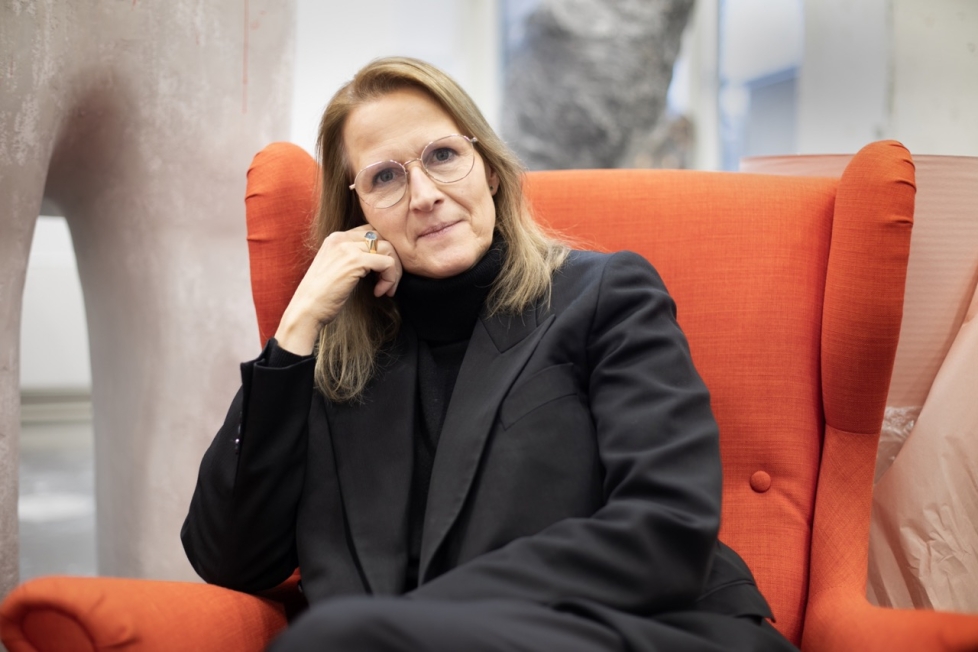
– Sanne Kofod Olsen is Vice-Chancellor of the Royal Institute of Art in Stockholm.
An earlier version of this text was published on the Royal Institute of Art’s homepage.