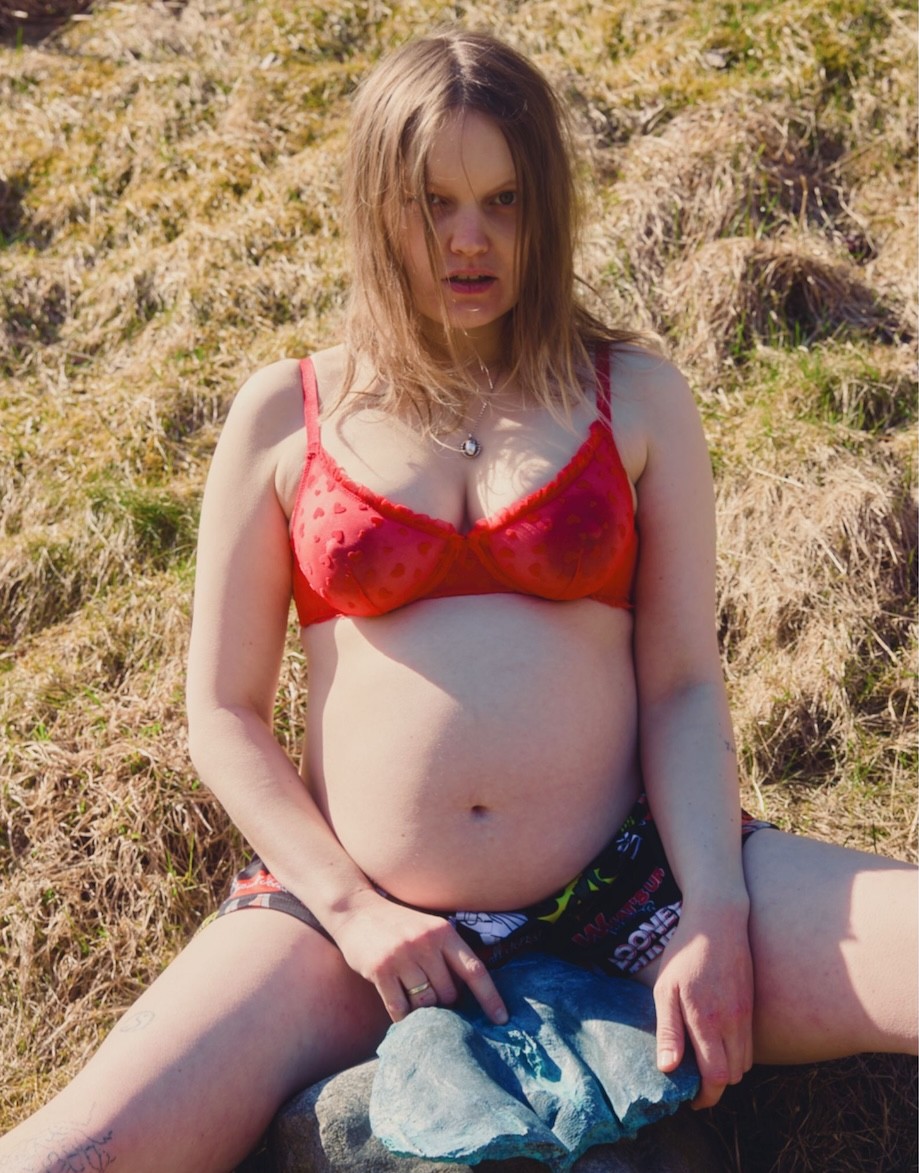
One thing that can be said for certain is that Maria Pasenau has made good use of her time. But then, things become less certain as time goes on. I think that is how it should be. Her artistic practice, for those who don’t already know, is a rough and often naked affair, with no safety net. It descends in a direct line from the most raucous feminist performance artists of the 1960s. There has never been any shortage of human flesh or bodily fluids.
However, no matter how far she stretches things – trademarks, diary entries, and, in this case, fucked up interior design (let me come back to that) – everything keeps gravitating back to photography – as a medium, as a weapon of choice and as an extraordinary tool for conveying the actual experiences of one’s own body in real time. There’s even a little extra experience this time around, as a pregnancy helps to complete the bigger picture. As we know, all sorts of strange things happen to a woman’s body over the course of a lifetime – as a man, you simply get bigger – and therefore a deep instinct is embedded in every man to protect himself against all this unspeakable female impurity. That is also why things like this will hit some people harder. Not everyone voluntarily looks their fear of the other straight in the eye. That’s just the way it is.
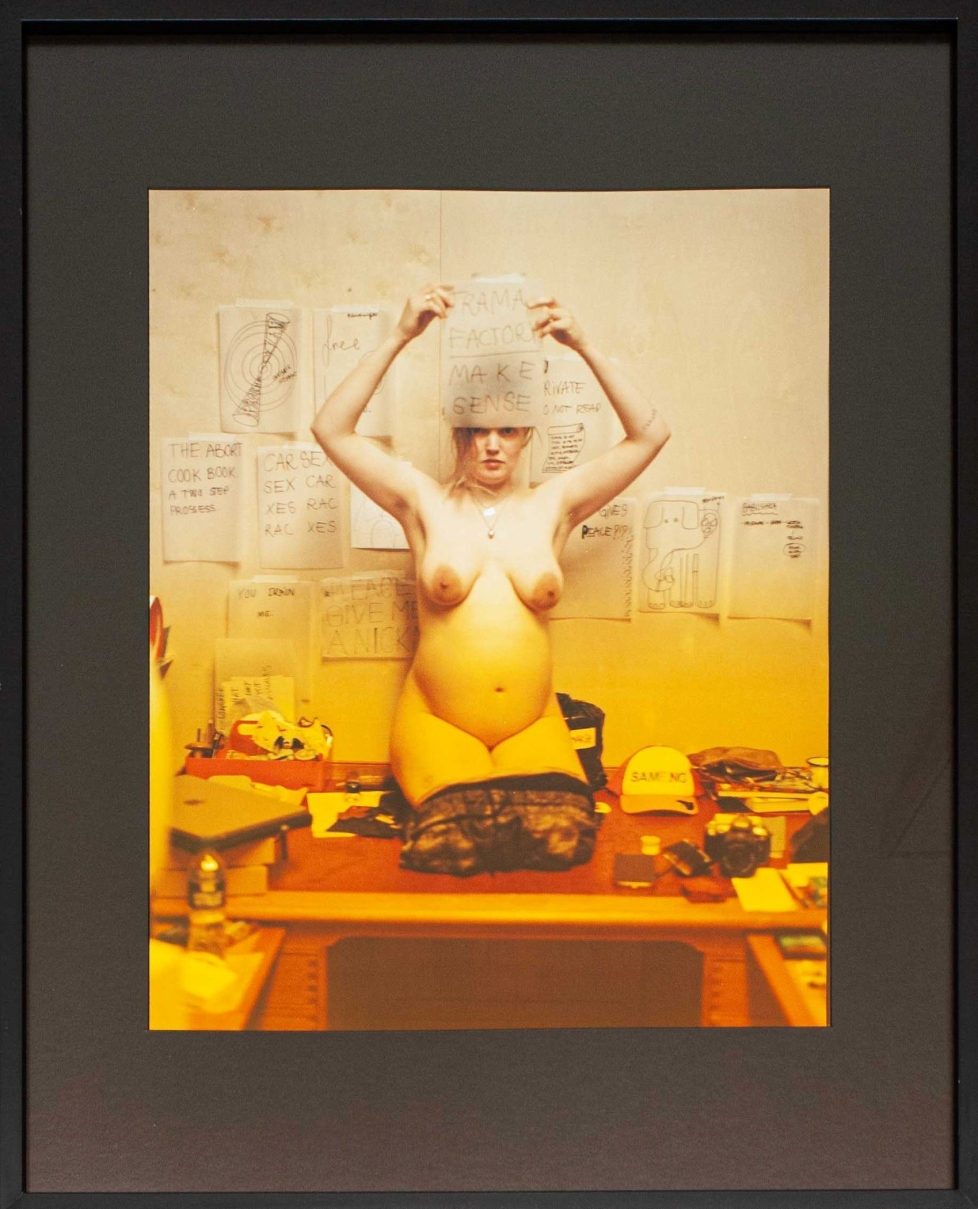
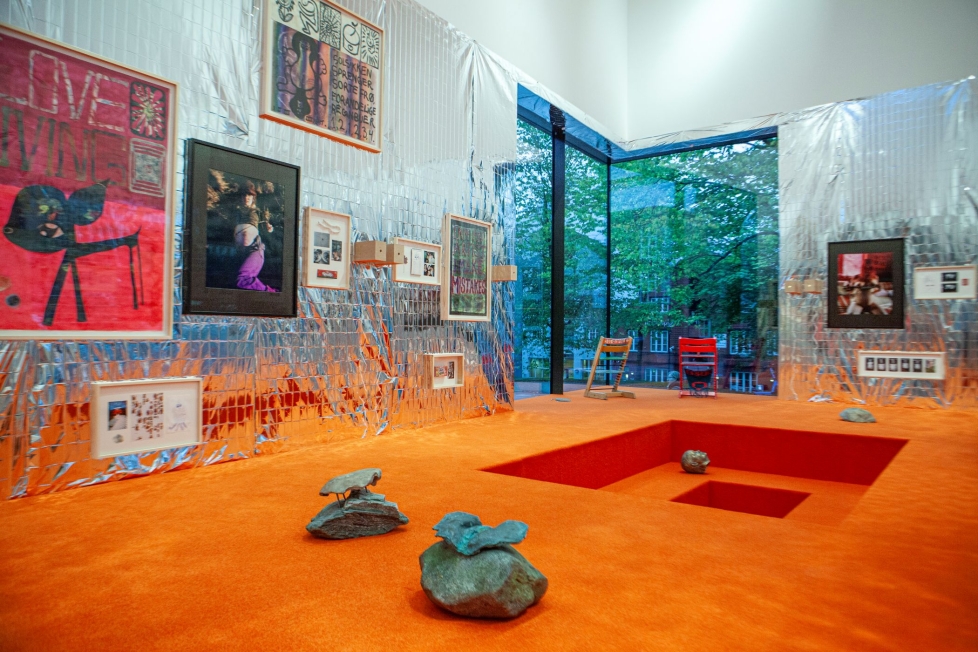
But back to the interior design: Pasenau occupies the corner gallery at Kjøpmannsgata Ung Kunst (KUK), where the ceiling height is something like two kilometres. This means there are no obstacles to lifting the floor a metre and placing a conversation pit – I don’t know what it’s called, but you understand what I mean – right in the middle of the room, where a worn-out art critic can sit down and rest a bit, with their head at just the right height for a football. The floor is a screaming orange; a couple of Tripp Trapp high chairs covered in graffiti are parked in a corner. It’s on the walls that the action takes place, including a series of birdhouse-like peephole boxes. ‘Here are the nudes,’ I think to myself. My suspicion is immediately confirmed, only to then be met by a packet of muesli in the next cabinet, since predictability is a mortal sin.
There is a rather generous helping of that sort of disturbance elsewhere, too, but it doesn’t really matter, because even if this exhibition had taken place in a strictly institutional setting and had consisted solely of photographs of the same size, meticulously hung at the same height, it would have been just as unsettling. Because even though everything comes down to the body itself – if not the actual person Maria Pasenau – vast amounts of everyday junk are torn up along the way: clothes (where you can find them), posture, milieu, and whatever else is around. How much of it is accidental? And how much of it is calculated?
One thing I do know for certain: to a visual artist, turning the camera on oneself is a special kind of high-risk pursuit. It establishes a dialogue with the demons in the right hemisphere of the brain and accelerates a progression driven by equal parts panic and desire, fear and wickedness. I’ve learnt a great deal from it myself. But it’s worth recalling the old saying that photography is the devil’s tool, designed to steal the human soul. Carrying on like this leads to a kind of symbiosis with the tool. After a relatively short time, it is no longer clear where the soul resides, since it appears to be simultaneously in the body, in the camera, and on the exposed film.
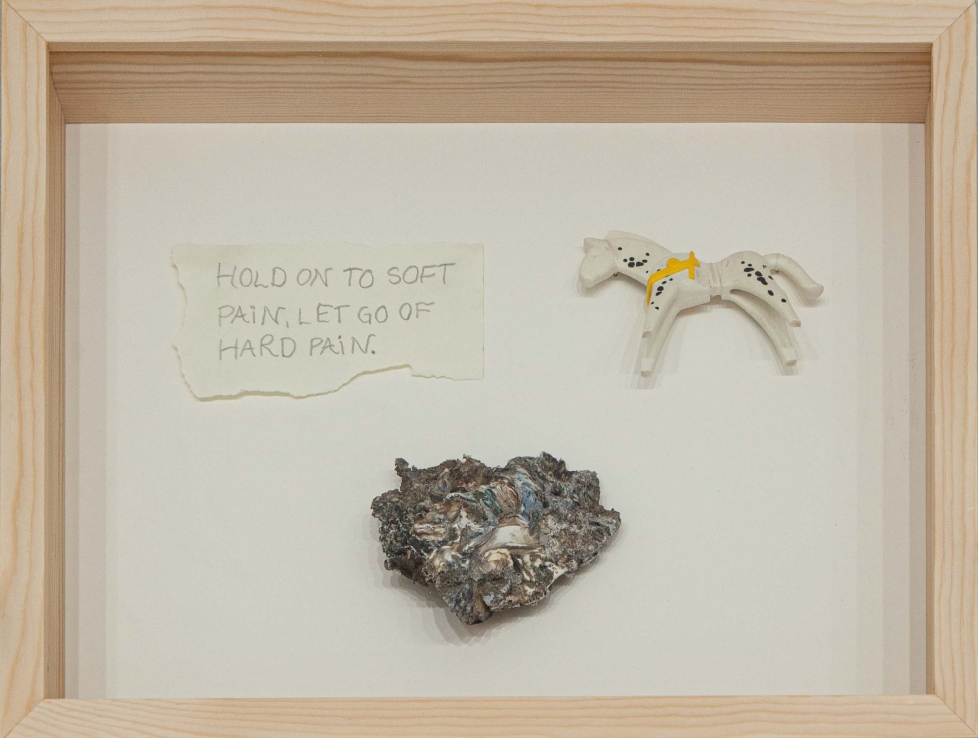
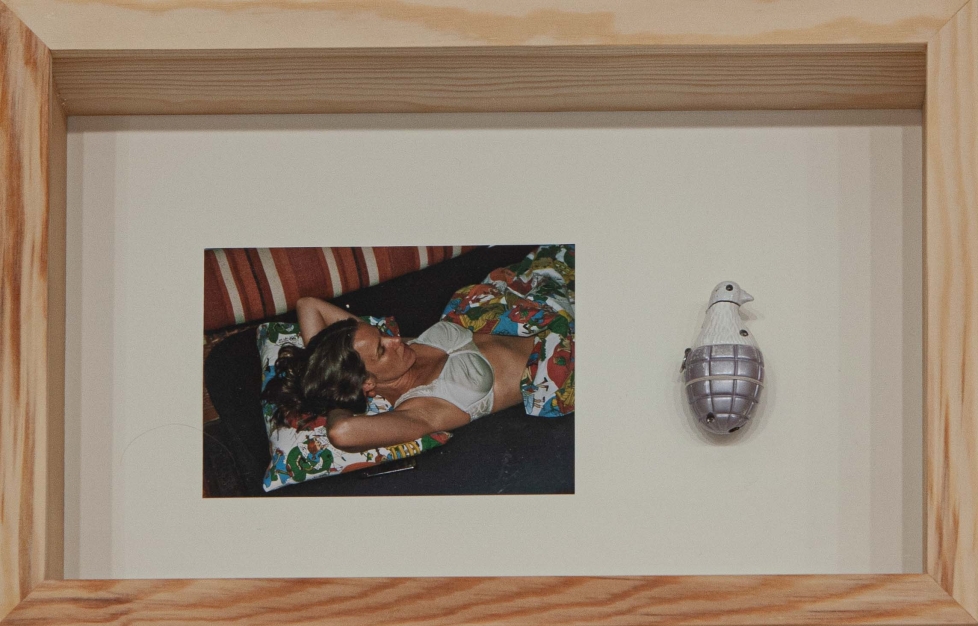
Although she has only just passed 30 – I did say she’s made good use of her time – Pasenau has been at this for quite a while already, and her practice has been reasonably well defined right from the start. The question is whether it will continue like this, and for how long. I don’t know, but I reckon it’s a lifelong endeavour. It’s difficult to see any deviations arising without being subsumed into the tyrannical whole; one’s own flesh will still be one’s own flesh, and, as mentioned, things change quite dramatically inside a woman’s body over the course of a few decades. As for me, as I’ve also already mentioned, I’m simply getting bigger.
What’s amusing to dwell on here is how easy it is to place this within one or two established traditions, even though it seems to be more a matter of experience than actual planning. Life just happens, sort of, regardless of what you do or don’t do. In a way, Pasenau comes across as an archetypal 1990s artist, but with a distinct hipster sensibility, filtered through the undergrowth of that fantastic and terrible invention we call the internet. But in reality, all that’s being registered is time passing and what happens along the way. Like Nan Goldin, only out in the countryside.
There’s no better way to sum it up, because it simply can’t be summed up. She’s absolutely raw. And by that I mean raw in every sense and nuance of the word.