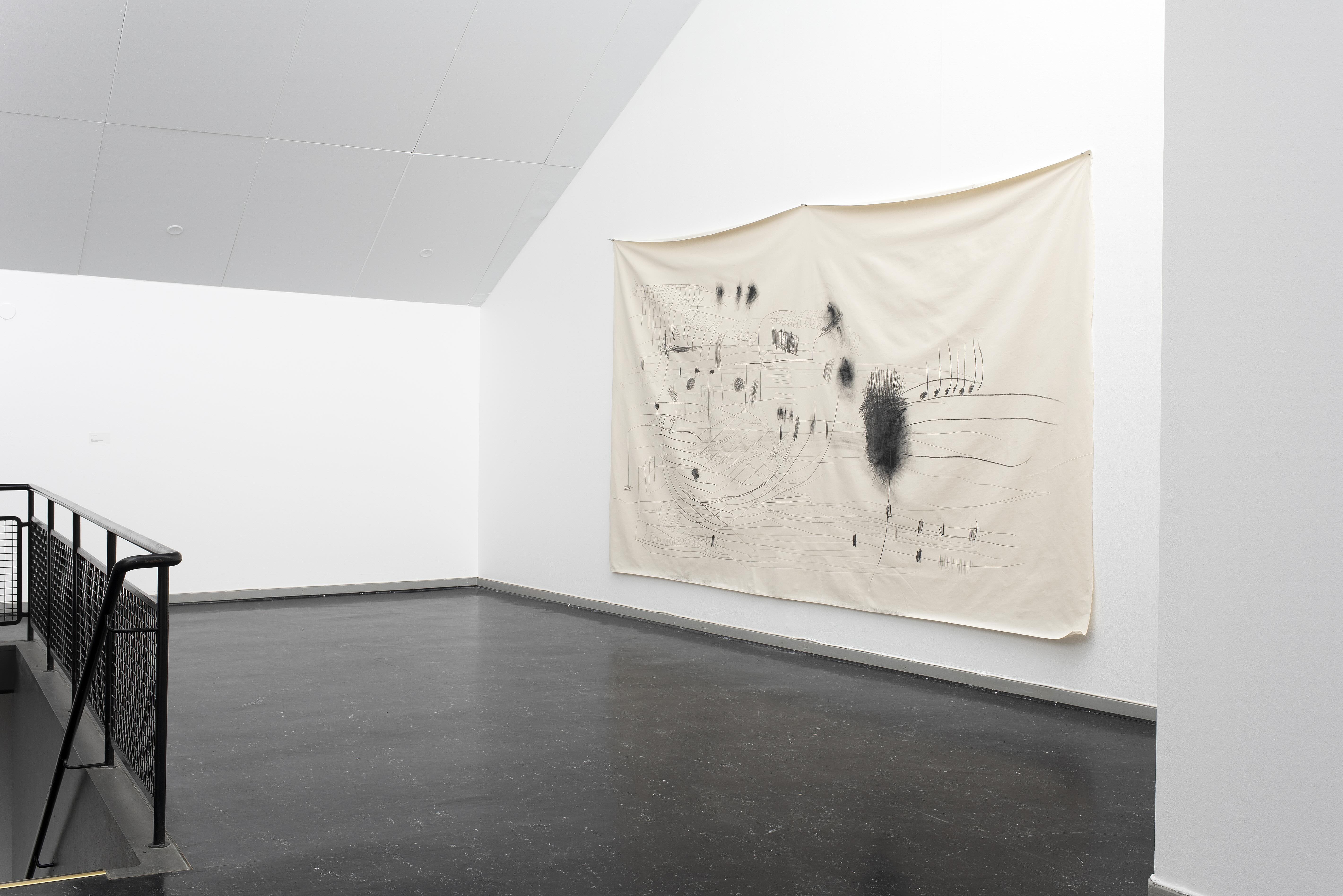
3 summers, Lund Konsthall, Lund
This understated exhibition centred on memories of migration, often across generations. Tarik Kiswanson, Fatima Moallim, and Lisa Tan work in very different formats and techniques, yet all invite a slow, attentive way of looking that leaves ample room for interpretation. During installation, Moallim worked on-site at the kunsthalle and created drawings inspired by the building, her own memories of migration, and the stories told by the other two artists. Partitur (Score, 2025) is a large graphite drawing on cotton cloth with long thin lines and figures reminiscent of musical notation. Sketch-like and seemingly made with swift movements, it felt as though the many lines were attempting to trace journeys and patterns of movement across an extended span of time.
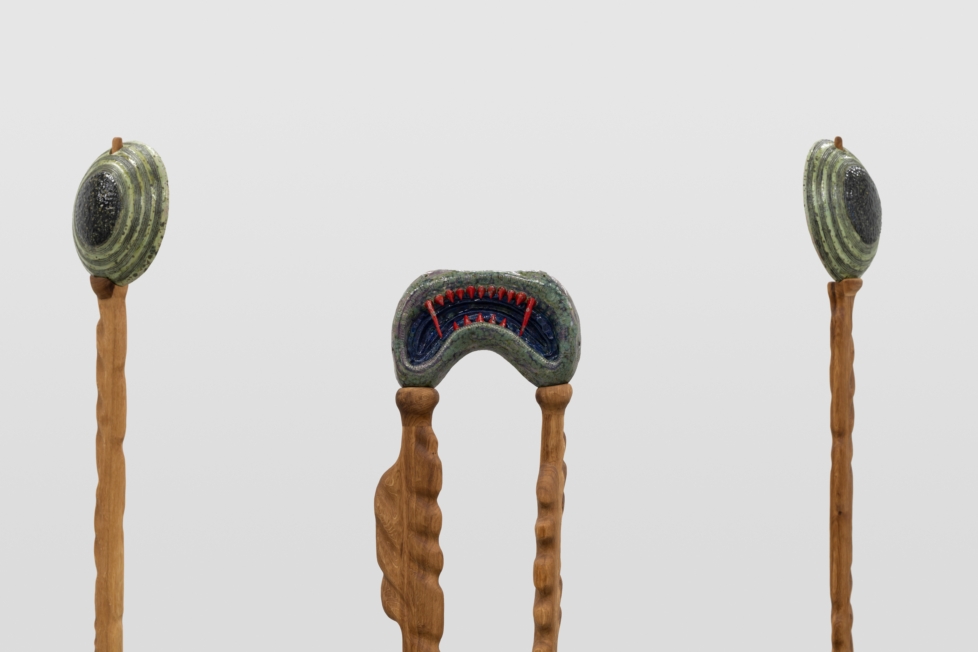
Samara Sallam, A Speaking Puddle of Blood, O-Overgaden, Copenhagen
Three minimal sculptures occupied the lower gallery at O-Overgaden: a tall pointed oak portal you could enter; a dead raven made from fired clay with its abdomen spliced open; and a dismembered fish, also in clay, held up on slender oak supports. Passing through the portal felt like entering another world. Drawing on Palestinian folklore and Sufi mysticism, Samara Sallam offers just enough to spark the viewer’s imagination and suggest that something ominous is going on. I’ve seen a great deal of world-building in art over the past year: Ayoung Kim at Hamburger Bahnhof, Lu Yang at Amant, and Ed Atkins at Tate Britain, to name a few. By comparison, Sallam is more restrained, leaving much open to interpretation, without this in any way diminishing the force of her works.
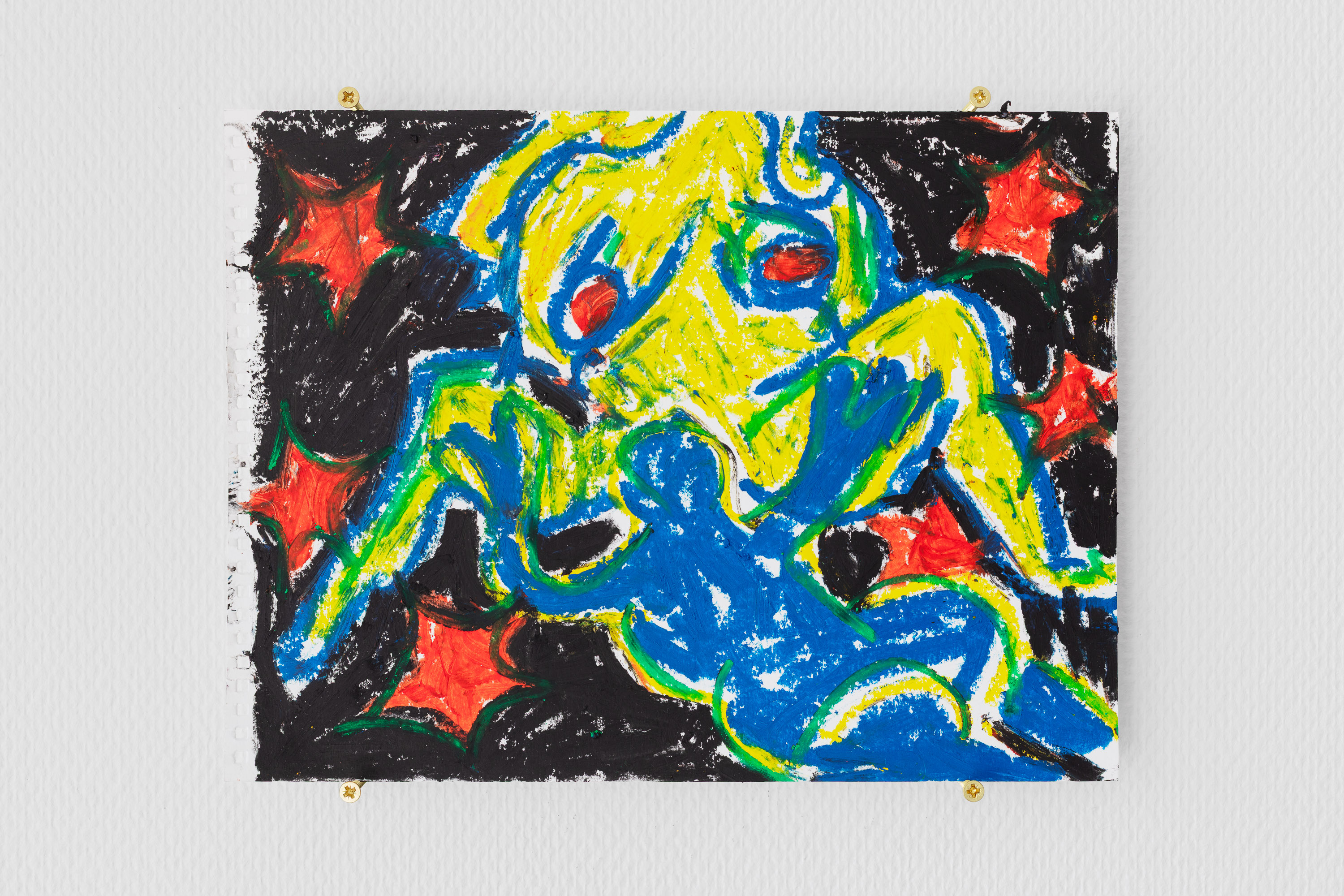
Come on in, Snails, Oslo
The studio collective Snails established itself as an exhibition space and became an important addition to Oslo’s art scene in 2025. The artists convert their studios and a small project space into viewing rooms hosting exhibitions by both local and international colleagues. Among the first was the small group show Come on in, curated by Anna Clawson and Nicole Ward, which featured four artists: Naeun Kang, Tala Madani, Tuda Muda, and Belladonna Paloma. If the works had any features in common, they would be playfulness and intimacy, and also that the body was treated as a wellspring of fluids and shit, as well as restlessness, desire, and other intense affects. Muda’s small, colourful and vital oil pastels had titles such as Fruit Salad and Banana Split, and portrayed naked female figures in various poses in vivid primary colours. Kang contributed a drawing of two crying houses.
– Abirami Logendran is an artist and curator. She contributes to Kunstkritikk, is a film critic for Klassekampen, a film curator at Kunstnernes Hus, and serves as editor-in-chief of Norwegian Art Yearbook.
Translated from Norwegian
For this year’s contributions to the Advent Calendar, see here.