Gothic Modern, National Museum of Norway, Oslo
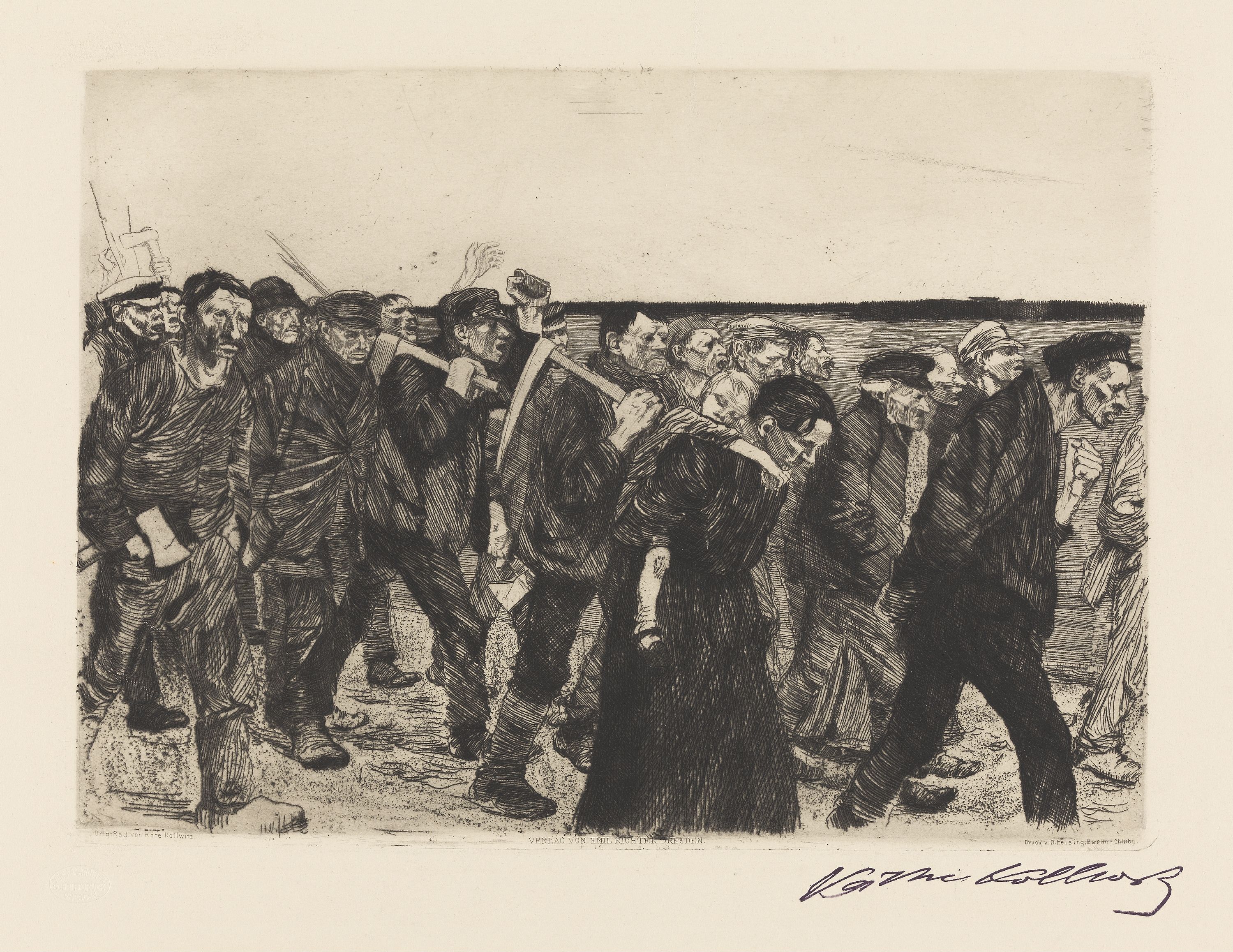
With unlimited resources at its disposal, a museum can achieve a great deal. And since this appears to be the prevailing condition in Oslo’s museum sector, we are currently living through the age of the blockbuster exhibition. Produced in collaboration with Ateneum in Helsinki and the Albertina in Vienna, Gothic Modern introduced a few art-historical reshufflings in which the late Middle Ages were drawn into the early modern period, often in the service of critiquing modernity. Even if these Benjaminian “tiger’s leaps” were not made explicit in the exhibition materials, they were easy to discern in Emmanuel Vigeland’s apocalyptic stained-glass works and Käthe Kollwitz’s revolutionary depiction of the German peasants’ war of 1524-25.
Passing Motherhood, Trondheim Art Museum / Hannah Ryggen Triennial, Trondheim
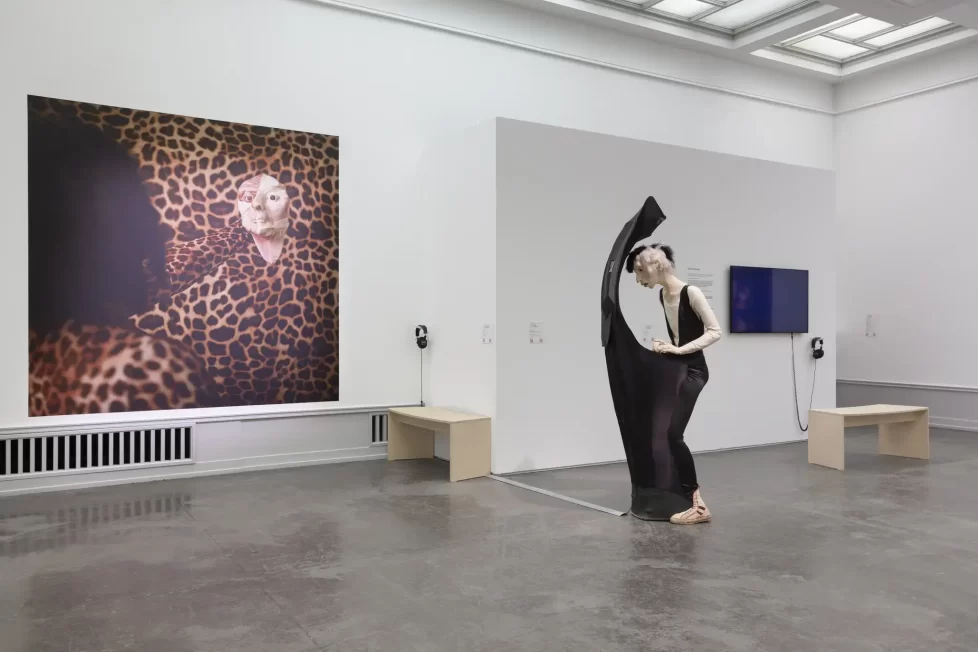
In the art world, one law of gravity holds that everything eventually becomes a biennial, and so it is with Hannah Ryggen. There is nothing wrong with this, especially when it provides the occasion for a group exhibition such as Passing Motherhood. An artwork’s task is often to address the mysteries of existence, and so it is hardly surprising that art does not always offer clear answers. Curators Yaniya Mikhalina and Marianne Zamecznik set the works in Passing Motherhood in motion around some of life’s big questions, such as origin and belonging, with Gitte Dæhlin’s work as one of several anchor points. The triennial also comprised a group exhibition at the National Museum of Decorative Arts, a punchy solo exhibition by Liv Bugge at Kunsthall Trondheim, and a number of other interventions in and around Trondheim.
Taterlandet, Nitja Centre for Contemporary Art, Lillestrøm
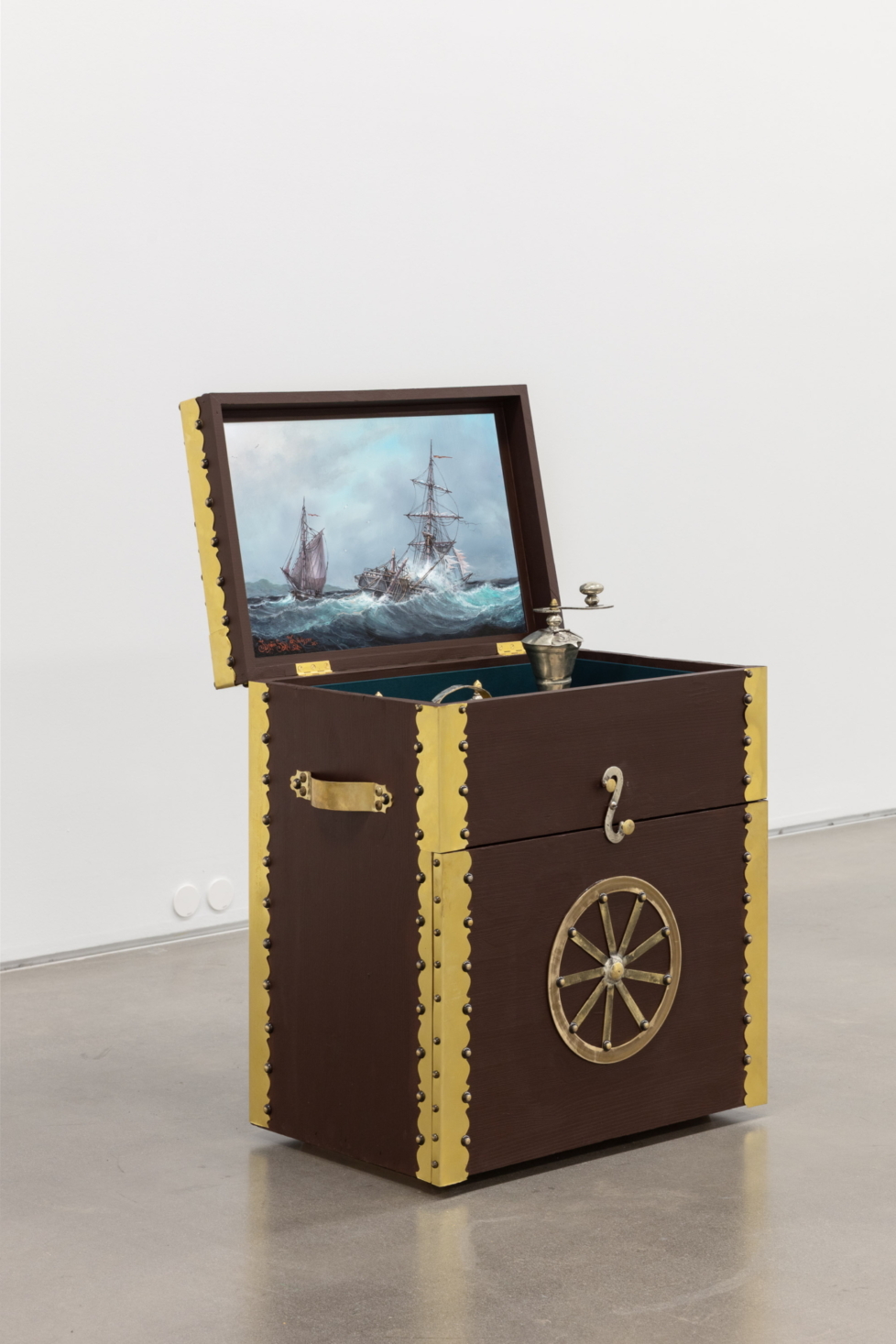
A collaboration between Guttormsgaards Arkiv and Nitja Centre for Contemporary Art, yet unmistakably a museum exhibition in its own right. The Guttormsgaard Archive’s instinct for craft and form, the pressing need to confront the collective injustice inflicted on the Romani people, and Nitja’s rather sterile exhibition spaces all came together with surprising clarity in Taterlandet (Travellers’ Land). The exhibition was realised with a respectful attentiveness that only highlighted the absence of such efforts from the national institutions. Who would have imagined that the mannered stiffness of museological gestures could strike with such impact?
– Steffen Håndlykken is a curator at Haugar Art Museum in Tønsberg. He trained as an artist at the Oslo National Academy of the Arts. He served two terms as chair of the Young Artists’ Society (UKS) and was involved in establishing the exhibition space 1857. Håndlykken curated the Norwegian Sculpture Biennial 2017 at the Vigeland Museum. He has previously been an editor of UKS-forum and contributed to Kunstkritikk and Billedkunst. He currently chairs the expert committee for exhibition spaces under Arts Council Norway.
Translated from Norwegian
For this year’s contributions to the Advent Calendar, see here.